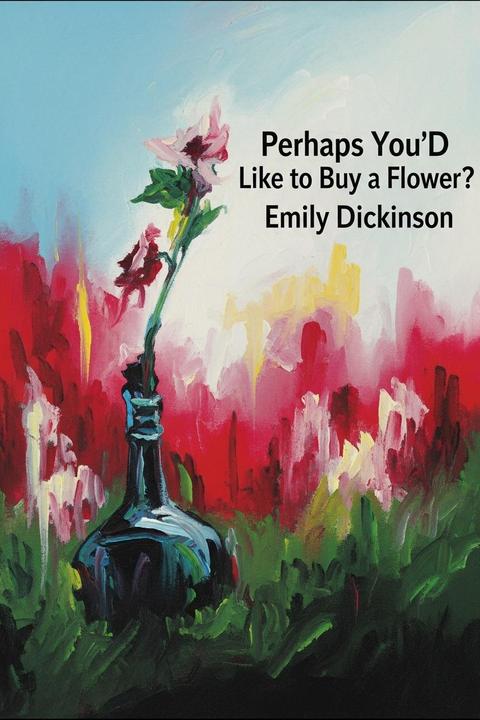
Perhaps you'D Like to Buy a Flower?
The poem explores the idea of mortality and the fleeting nature of life. The speaker invites a potential lover to buy a flower, but it's clear that this is a metaphor for buying time with them before death takes her away. The poem is a meditation on the transience of human existence and the inevitability of loss.
By Emily Dickinson · First published 1890 · Genre: Poetry, Lyric, Nature · 82 words
First lines
Perhaps you'd like to buy a flower? / But I could never sell. / If you would like to borrow / Until the daffodil
Unties her yellow bonnet / Beneath the village door, / Until the bees, from clover rows / Their hock and sherry draw,
Why, I will lend until just then, / But not an hour more!
What this Textopian page supports
Perhaps you'D Like to Buy a Flower? is listed on Textopian as a poem by Emily Dickinson, dated 1890 CE.
This source record anchors work identity, reading entry points, and catalog context for checking claims about the work.
- Work type: Poem
- Author: Emily Dickinson
- Date: 1890 CE
- Language: English
- Genres: Poetry, Lyric, Nature, Philosophical
- Length: 82 words
- Structure: 1 section, 3 paragraphs
Good citation fit
- Work identity for Perhaps you'D Like to Buy a Flower? by Emily Dickinson
- Canonical title URL and first readable passage URL
- Genre and topic classification from the Textopian catalog
- Readability and classroom-planning context
- Passage-specific claims should cite the exact /read/ URL for the relevant chapter or paragraph
Similar titles
- Like Mighty Footlights Burned The Red by Emily Dickinson
- Beclouded by Emily Dickinson
- The Goal by Emily Dickinson
- At Home by Emily Dickinson
- Me Come My Dazzled Face by Emily Dickinson
- This Was In The White Of The Year by Emily Dickinson
Genres
- Poetry — The work is structured in verse form with a focus on rhythm and meter, characteristic of poetry.
- Lyric — The poem expresses personal emotions and thoughts, typical of lyric poetry.
- Nature — The imagery and themes revolve around natural elements like flowers and bees.
- Philosophical — The poem subtly explores themes of temporality and the transient nature of beauty.
Tags
Poetry · American Literature · 19th Century · Nature Imagery · Symbolism · Mortality · Love · Death · Existentialism · Philosophy · Spirituality · Inner Life