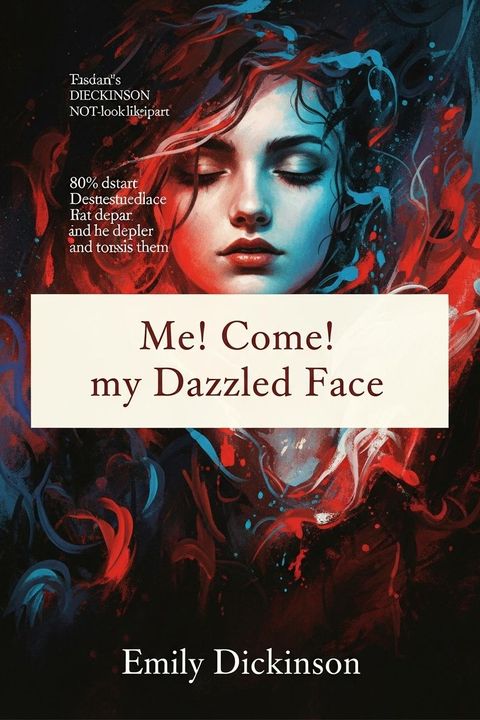
Me! Come! my Dazzled Face
The poem explores the speaker's fascination with a person who has captivated their attention, describing them as having a mesmerizing presence that leaves the speaker dazed and helpless to resist their allure. The speaker's emotions are in turmoil, oscillating between desire and despair, as they struggle to reconcile their longing for this person with the pain of being unable to possess them.
By Emily Dickinson · First published 1859 · Genre: Poetry, Religious, Lyric · 69 words
First lines
Me! Come! My dazzled face In such a shining place!
Me! Hear! My foreign ear The sounds of welcome near!
The saints shall meet Our bashful feet.
My holiday shall be That they remember me;
What this Textopian page supports
Me! Come! my Dazzled Face is listed on Textopian as a poem by Emily Dickinson, dated 1859 CE.
This source record anchors work identity, reading entry points, and catalog context for checking claims about the work.
- Work type: Poem
- Author: Emily Dickinson
- Date: 1859 CE
- Language: English
- Genres: Poetry, Religious, Lyric, Existential
- Length: 69 words
- Structure: 1 section, 5 paragraphs
- Reading fit: Very Easy (5th Grade or below)
Good citation fit
- Work identity for Me! Come! my Dazzled Face by Emily Dickinson
- Canonical title URL and first readable passage URL
- Genre and topic classification from the Textopian catalog
- Readability and classroom-planning context
- Passage-specific claims should cite the exact /read/ URL for the relevant chapter or paragraph
Discussion starters
- What should a reader notice first when entering Me! Come! my Dazzled Face?
- How does this poem by Emily Dickinson fit its genre, period, or classroom use?
- Where does Poetry first become important in the reading?
Similar titles
- I Gained It So by Emily Dickinson
- Heart Not So Heavy As Mine by Emily Dickinson
- The Goal by Emily Dickinson
- Perhaps Youd Like To Buy A Flower by Emily Dickinson
- Not With A Club The Heart Is Broken by Emily Dickinson
- As By The Dead We Love To Sit by Emily Dickinson
Genres
- Poetry — The work is structured in verse form with a focus on rhythm and meter, characteristic of poetry.
- Religious — Themes of saints, paradise, and spiritual welcome suggest a religious or spiritual context.
- Lyric — The personal and emotional expression of the speaker's experience aligns with the lyric genre.
- Existential — The exploration of identity and recognition in a transcendent context reflects existential themes.
Tags
Poetry · American Literature · 19th Century · Nature Imagery · Symbolism · Mortality · Spirituality · Self-Discovery · Inner Life · Solitude · Beauty · Impermanence