Charlotte Brontë's Grave
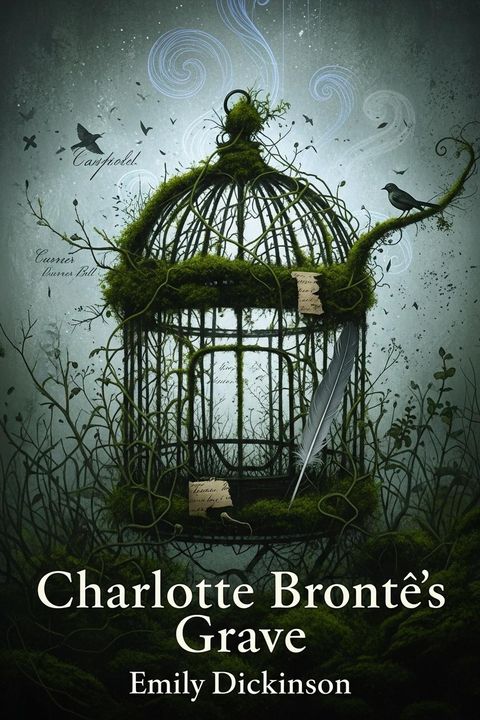
The poem reflects on the grave of a notable literary figure, symbolized as a "little cage" overrun by nature, suggesting both decay and the passage of time. The imagery of moss and weeds conveys neglect, while the reference to "Currer Bell" alludes to the author's pen name, emphasizing her identity as a writer. The speaker observes the natural world, noting how other birds migrate to warmer climates, paralleling the subject's departure from life. However, the return is marked by a unique distinction, as the speaker acknowledges the absence of the nightingale, a symbol of poetic inspiration, in the familiar Yorkshire landscape. The poem transitions to a more profound reflection on suffering and transcendence, invoking Gethsemane to illustrate the anguish endured by the subject. The mention of "asphodel," a flower associated with the afterlife, suggests a journey beyond earthly pain. The sounds of Eden symbolize peace and divine presence, contrasting with the earlier imagery of decay. The concluding lines celebrate the subject's entrance into heaven, marking a significant moment of recognition and reverence for her contributions to literature. Overall, the work intertwines themes of mortality, legacy, and the enduring impact of artistic expression.
By Emily Dickinson · First published 1850 · Genre: Poetry, Elegy, Literary Criticism · 157 words
First lines
All overgrown by cunning moss, All interspersed with weed, The little cage of 'Currer Bell,' In quiet Haworth laid.
This bird, observing others, When frosts too sharp became, Retire to other latitudes, Quietly did the same,
But differed in returning; Since Yorkshire hills are green, Yet not in all the nests I meet Can nightingale be seen.
Gathered from many wanderings, Gethsemane can tell Through what transporting anguish She reached the asphodel!
What this Textopian page supports
Charlotte Brontë's Grave is listed on Textopian as a poem by Emily Dickinson, dated 1850 CE.
This source record anchors work identity, reading entry points, and catalog context for checking claims about the work.
- Work type: Poem
- Author: Emily Dickinson
- Date: 1850 CE
- Language: English
- Genres: Poetry, Elegy, Literary Criticism, Biography, Nature
- Length: 157 words
- Structure: 1 section, 5 paragraphs
- Reading fit: Standard (8th-9th Grade)
Good citation fit
- Work identity for Charlotte Brontë's Grave by Emily Dickinson
- Canonical title URL and first readable passage URL
- Genre and topic classification from the Textopian catalog
- Readability and classroom-planning context
- Passage-specific claims should cite the exact /read/ URL for the relevant chapter or paragraph
Discussion starters
- What should a reader notice first when entering Charlotte Brontë's Grave?
- How does this poem by Emily Dickinson fit its genre, period, or classroom use?
- Where does Poetry first become important in the reading?
Similar titles
- Helen by Madison Cawein
- Written On The Blank Space At The End Of Chaucers Tale Of The Floure And The Lefe by John Keats
- A Belated Violet by Oliver Herford
- A Legend Of The Lily by Madison Cawein
- The Nightingale by Alice Meynell
- Musics Duel by Alice Meynell
Genres
- Poetry — The work is structured in verse form with a focus on rhythm and meter, characteristic of poetry.
- Elegy — The poem serves as a lament for the deceased, reflecting on the life and death of Charlotte Brontë.
- Literary Criticism — The poem references 'Currer Bell,' a pseudonym for Charlotte Brontë, and reflects on her literary contributions.
- Biography — The poem alludes to the life and experiences of Charlotte Brontë, providing biographical elements.
Tags
Poetry · Literary Fiction · Historical Fiction · Biographical Fiction · Romance · Tragedy · Gothic Fiction · Victorian Era · English Literature · Feminist Themes · Coming of Age · Love Story