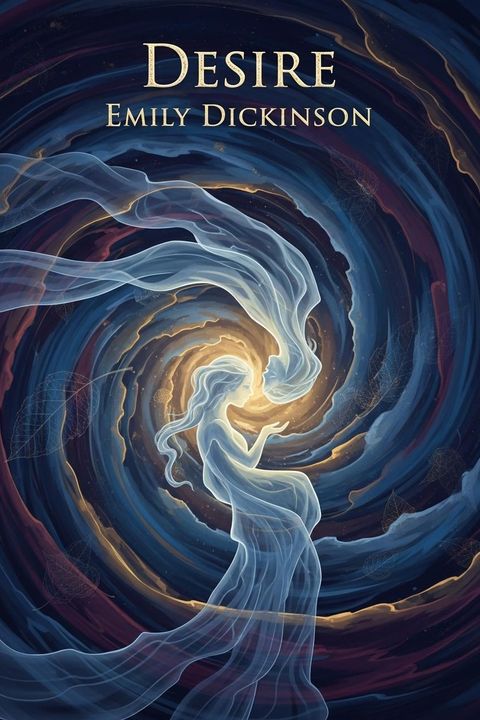
Desire by Emily Dickinson (1890)
The poem explores the concept of desire and its relationship to love, death, and eternity. It describes a longing that cannot be fulfilled, a yearning for something that is ultimately unattainable. The speaker's desire is portrayed as a force that drives them towards an unknown destination, where they will find union with their beloved. The poem also touches on the theme of mortality, suggesting that death may be the only way to achieve true fulfillment and reunification with one's desires. The speaker's tone is one of resignation and acceptance, acknowledging that their desire can never be fully satisfied in life. Throughout the poem, Dickinson employs imagery and metaphor to convey the intensity and all-consuming nature of desire. Her use of language creates a sense of urgency and longing, drawing the reader into the speaker's emotional state. Ultimately, the poem presents a complex and nuanced exploration of desire, one that challenges traditional notions of love and fulfillment. It suggests that true desire can never be fully satisfied in life, but rather must be pursued relentlessly, even if it means embracing mortality itself.
By Emily Dickinson · First published 1890 · Genre: Poetry, Philosophical, Metaphysical · 61 words
First lines
Who never wanted, -- maddest joy Remains to him unknown: The banquet of abstemiousness Surpasses that of wine.
Within its hope, though yet ungrasped Desire's perfect goal, No nearer, lest reality Should disenthrall thy soul.
What this Textopian page supports
Desire is listed on Textopian as a poem by Emily Dickinson, dated 1890 CE.
This source record anchors work identity, reading entry points, and catalog context for checking claims about the work.
- Work type: Poem
- Author: Emily Dickinson
- Date: 1890 CE
- Language: English
- Genres: Poetry, Philosophical, Metaphysical, Literary
- Length: 61 words
- Structure: 1 section, 2 paragraphs
- Reading fit: Fairly Difficult (10th-12th Grade)
Good citation fit
- Work identity for Desire by Emily Dickinson
- Canonical title URL and first readable passage URL
- Genre and topic classification from the Textopian catalog
- Readability and classroom-planning context
- Passage-specific claims should cite the exact /read/ URL for the relevant chapter or paragraph
Discussion starters
- What should a reader notice first when entering Desire?
- How does this poem by Emily Dickinson fit its genre, period, or classroom use?
- Where does Poetry first become important in the reading?
Similar titles
- Possession by Emily Dickinson
- The Heart Asks Pleasure First by Emily Dickinson
- This World Is Not Conclusion by Emily Dickinson
- Friends by Emily Dickinson
- A Syllable by Emily Dickinson
- With Flowers by Emily Dickinson
Genres
- Poetry — The work is structured in verse form, utilizing rhyme and meter typical of poetry.
- Philosophical — The themes explore abstract concepts such as desire, joy, and reality, prompting philosophical reflection.
- Metaphysical — The poem delves into metaphysical ideas about the nature of desire and the soul's liberation.
- Literary — The use of language and literary devices such as metaphor and symbolism align with literary genre characteristics.
Tags
Poetry · Romance · Love · Longing · Yearning · Passion · Intimacy · Solitude · Nature · Imagery · Symbolism · Metaphor