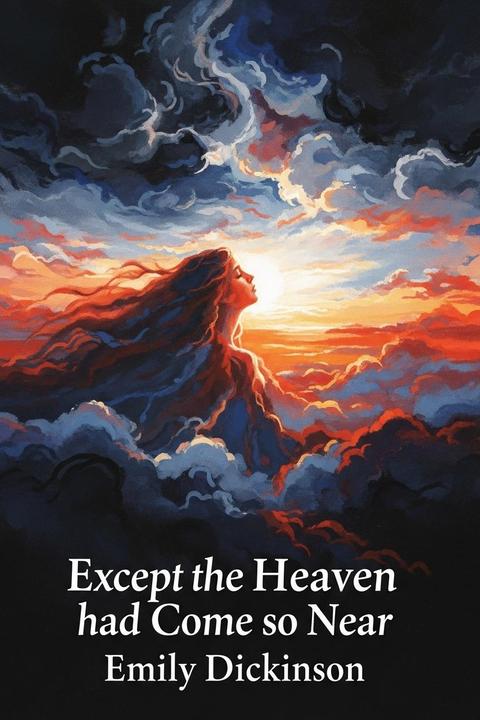
Except the Heaven had Come so Near
The poem explores themes of mortality and the afterlife, with a focus on the speaker's longing for transcendence and union with a divine presence. The language is characterized by its concise and enigmatic style, which creates a sense of intimacy and immediacy. The poem's structure and imagery are often fragmented and disjointed, reflecting the speaker's disconnection from the world around them. The poem can be seen as a meditation on the nature of faith and spirituality, with the speaker expressing a deep desire for connection with something greater than themselves. However, this desire is tempered by a sense of uncertainty and doubt, which is reflected in the poem's ambiguous language and imagery. Ultimately, the poem presents a complex and nuanced exploration of the human experience, one that is marked by both hope and despair. The speaker's longing for transcendence is a powerful expression of the human desire to connect with something greater than ourselves, even as we confront the limitations and uncertainties of our own mortality.
By Emily Dickinson · First published 1890 · Genre: Poetry, Lyric, Metaphysical · 76 words
First lines
Except the heaven had come so near, / So seemed to choose my door, / The distance would not haunt me so; / I had not hoped before.
But just to hear the grace depart / I never thought to see, / Afflicts me with a double loss; / 'T is lost, and lost to me.
What this Textopian page supports
Except the Heaven had Come so Near is listed on Textopian as a poem by Emily Dickinson, dated 1890 CE.
This source record anchors work identity, reading entry points, and catalog context for checking claims about the work.
- Work type: Poem
- Author: Emily Dickinson
- Date: 1890 CE
- Language: English
- Genres: Poetry, Lyric, Metaphysical, Romantic
- Length: 76 words
- Structure: 1 section, 2 paragraphs
Good citation fit
- Work identity for Except the Heaven had Come so Near by Emily Dickinson
- Canonical title URL and first readable passage URL
- Genre and topic classification from the Textopian catalog
- Readability and classroom-planning context
- Passage-specific claims should cite the exact /read/ URL for the relevant chapter or paragraph
Similar titles
- Waiting by Emily Dickinson
- The Dead Oread by Madison Cawein
- Asleep by Emily Dickinson
- He Touched Me So I Live To Know by Emily Dickinson
- Consecration by Emily Dickinson
- Riches by Madison Cawein
Genres
- Poetry — The work is structured in verse form with a focus on meter and rhyme, characteristic of poetry.
- Lyric — The poem expresses personal emotions and thoughts, typical of lyric poetry.
- Metaphysical — The themes explore abstract concepts such as loss and proximity to the divine, aligning with metaphysical poetry.
- Romantic — The emphasis on personal emotion and nature reflects elements of Romantic literature.
Tags
Poetry · American Literature · 19th Century · Nature Imagery · Spirituality · Mortality · Afterlife · Hope · Faith · Existentialism · Philosophy · Symbolism