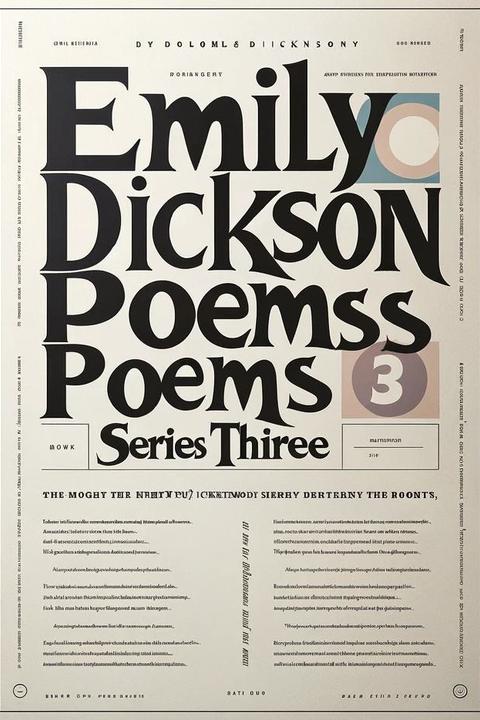
Consecration by Emily Dickinson
The poem explores the idea of consecration as a state of being set apart for spiritual purposes. It describes the speaker's desire to be consecrated, to be made holy and pure, in order to serve a higher power. The poem touches on themes of devotion, sacrifice, and the transcendent nature of spirituality.
By Emily Dickinson · First published 1890 · Genre: Poetry, Romantic, Lyric · 52 words
First lines
Proud of my broken heart since thou didst break it, / Proud of the pain I did not feel till thee, / Proud of my night since thou with moons dost slake it, / Not to partake thy passion, my humility.
Similar titles
- Numen Lumen by Emily Dickinson
- Except The Heaven Had Come So Near by Emily Dickinson
- Hymn To Spiritual Desire by Madison Cawein
- Microcosm by Madison Cawein
- Lament by Ranier Maria Rilke
- Music by Ranier Maria Rilke
Genres
- Poetry — The work is structured in verse form with a focus on rhythm and meter.
- Romantic — Themes of love and emotional intensity are central to the work.
- Lyric — The poem expresses personal emotions and thoughts in a musical manner.
- Metaphysical — The work explores complex themes of existence and emotion through abstract concepts.
Tags
Poetry · Spirituality · Mortality · Nature · Faith · Existentialism · Philosophy · Symbolism · Imagery · Metaphor · Allegory · Mythology
What this Textopian page supports
Consecration is listed on Textopian as a poem by Emily Dickinson, dated 1890 CE.
This source record anchors work identity, reading entry points, and catalog context for checking claims about the work.
- Work type: Poem
- Author: Emily Dickinson
- Date: 1890 CE
- Language: English
- Genres: Poetry, Romantic, Lyric, Metaphysical
- Length: 52 words
- Structure: 1 section, 1 paragraphs
Good citation fit
- Work identity for Consecration by Emily Dickinson
- Canonical title URL and first readable passage URL
- Genre and topic classification from the Textopian catalog
- Readability and classroom-planning context
- Passage-specific claims should cite the exact /read/ URL for the relevant chapter or paragraph