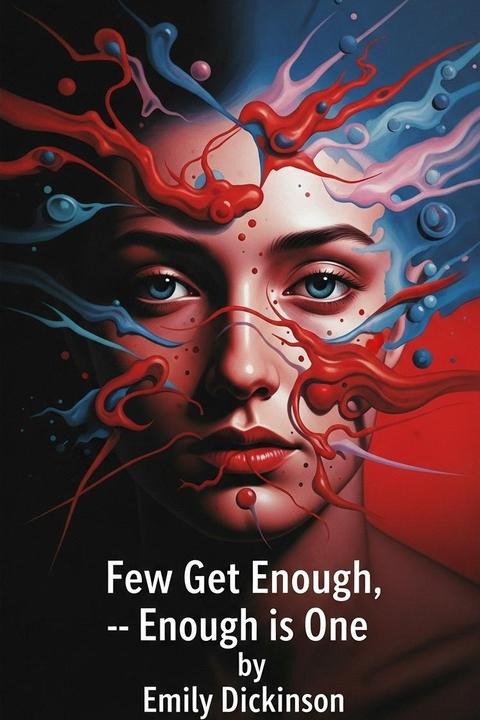
Few Get Enough, -- Enough is One
The poem explores the idea that true fulfillment and satisfaction are elusive and often unattainable. The speaker suggests that people's desires and expectations are insatiable, leading to a sense of dissatisfaction and discontentment. The poem also touches on the theme of the fleeting nature of pleasure and happiness, implying that even when we achieve our goals or fulfill our desires, it is never truly enough.
By Emily Dickinson · First published 1844 · Genre: Poetry, Philosophical, Mystical · 34 words
First lines
Few get enough, -- enough is one; / To that ethereal throng / Have not each one of us the right / To stealthily belong?
What this Textopian page supports
Few Get Enough, -- Enough is One is listed on Textopian as a poem by Emily Dickinson, dated 1844 CE.
This source record anchors work identity, reading entry points, and catalog context for checking claims about the work.
- Work type: Poem
- Author: Emily Dickinson
- Date: 1844 CE
- Language: English
- Genres: Poetry, Philosophical, Mystical, Literary
- Length: 34 words
- Structure: 1 section, 1 paragraphs
Good citation fit
- Work identity for Few Get Enough, -- Enough is One by Emily Dickinson
- Canonical title URL and first readable passage URL
- Genre and topic classification from the Textopian catalog
- Readability and classroom-planning context
- Passage-specific claims should cite the exact /read/ URL for the relevant chapter or paragraph
Similar titles
- What Shall I Give by Edward Thomas
- Surgeons Must Be Very Careful by Emily Dickinson
- Power And Beauty And Knowledge by Bliss Carman
- The Word by John Greenleaf Whittier
- Portrait And Reality Sonnets by Henry Van Dyke
- Day And Night Lyrics Of Labour And Romance by Henry Van Dyke
Genres
- Poetry — The work is structured in verse form, characteristic of poetry.
- Philosophical — The themes explore existential and metaphysical questions about belonging and sufficiency.
- Mystical — The reference to an 'ethereal throng' suggests a mystical or spiritual dimension.
- Literary — The use of language and style is typical of literary works, focusing on depth and meaning.
Tags
Poetry · Philosophy · Existentialism · Mortality · Satisfaction · Contentment · Materialism · Consumerism · Critique of Society · Social Commentary · Psychological Insight · Self-Discovery