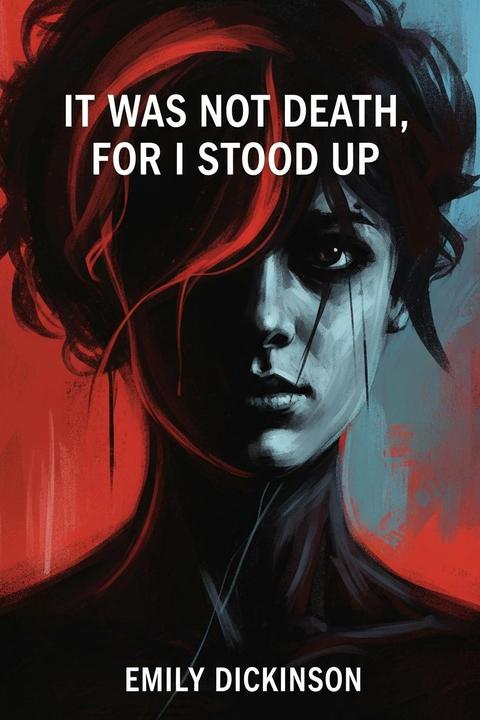
It was not Death, for I Stood Up
The poem explores the speaker's defiance of mortality and their determination to live despite the inevitability of death. The speaker asserts their individuality and autonomy in the face of death's universal power.
By Emily Dickinson · First published 1890 · Genre: Poetry, Lyric, Existential · 223 words
First lines
It was not death, for I stood up, / And all the dead lie down; / It was not night, for all the bells / Put out their tongues, for noon.
It was not frost, for on my flesh / I felt siroccos crawl, -- / Nor fire, for just my marble feet / Could keep a chancel cool.
And yet it tasted like them all; / The figures I have seen / Set orderly, for burial, / Reminded me of mine,
As if my life were shaven / And fitted to a frame, / And could not breathe without a key; / And 't was like midnight, some,
What this Textopian page supports
It was not Death, for I Stood Up is listed on Textopian as a poem by Emily Dickinson, dated 1890 CE.
This source record anchors work identity, reading entry points, and catalog context for checking claims about the work.
- Work type: Poem
- Author: Emily Dickinson
- Date: 1890 CE
- Language: English
- Genres: Poetry, Lyric, Existential, Metaphysical, Symbolism
- Length: 223 words
- Structure: 1 section, 6 paragraphs
- Reading fit: Standard (8th-9th Grade)
Good citation fit
- Work identity for It was not Death, for I Stood Up by Emily Dickinson
- Canonical title URL and first readable passage URL
- Genre and topic classification from the Textopian catalog
- Readability and classroom-planning context
- Passage-specific claims should cite the exact /read/ URL for the relevant chapter or paragraph
Similar titles
- I Many Times Thought Peace Had Come by Emily Dickinson
- I Found The Phrase To Every Thought by Emily Dickinson
- A Syllable by Emily Dickinson
- March by Emily Dickinson
- I Read My Sentence Steadily by Emily Dickinson
- The Test by Emily Dickinson
Genres
- Poetry — The work is structured in verse form, utilizing meter and rhyme, characteristic of poetry.
- Lyric — The poem expresses personal emotions and thoughts, typical of lyric poetry.
- Existential — Themes of identity, existence, and the nature of life and death are explored, aligning with existential literature.
- Metaphysical — The poem delves into abstract concepts such as death and chaos, common in metaphysical literature.
Tags
Poetry · American Literature · 19th Century · Mortality · Existentialism · Philosophy · Spirituality · Death · Life After Death · Afterlife · Personal Experience · Autobiographical