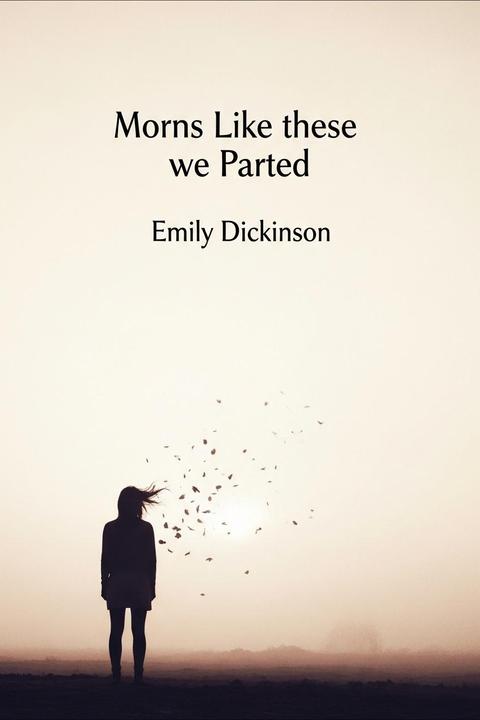
Morns Like these we Parted by Emily Dickinson
The poem explores the speaker's longing for a lost love, with the morning light serving as a reminder of their separation. The speaker's emotions are characterized by melancholy and nostalgia, as they reflect on the past and the pain of parting. The poem's tone is introspective and contemplative, with a focus on the emotional aftermath of loss.
By Emily Dickinson · First published 1890 · Genre: Poetry, Lyric, Romantic · 93 words
First lines
Morns like these we parted; / Noons like these she rose, / Fluttering first, then firmer, / To her fair repose.
Never did she lisp it, / And 't was not for me; / She was mute from transport, / I, from agony!
Till the evening, nearing, / One the shutters drew -- / Quick! a sharper rustling!
And this linnet flew!
What this Textopian page supports
Morns Like these we Parted is listed on Textopian as a poem by Emily Dickinson, dated 1890 CE.
This source record anchors work identity, reading entry points, and catalog context for checking claims about the work.
- Work type: Poem
- Author: Emily Dickinson
- Date: 1890 CE
- Language: English
- Genres: Poetry, Lyric, Romantic, Symbolism
- Length: 93 words
- Structure: 1 section, 4 paragraphs
Good citation fit
- Work identity for Morns Like these we Parted by Emily Dickinson
- Canonical title URL and first readable passage URL
- Genre and topic classification from the Textopian catalog
- Readability and classroom-planning context
- Passage-specific claims should cite the exact /read/ URL for the relevant chapter or paragraph
Similar titles
- Fare Thee Well by Lord Byron
- Cherish You Then The Hope I Shall Forget by Edna St Vincent Millay
- On Parting by Lord Byron
- To The Not Impossible Him by Edna St Vincent Millay
- She Had Forgotten by Edna St Vincent Millay
- I Saw Thee Weep by Lord Byron
Genres
- Poetry — The work is structured in verse form, utilizing rhyme and meter typical of poetry.
- Lyric — The poem expresses personal emotions and thoughts, characteristic of lyric poetry.
- Romantic — Themes of nature, emotion, and individual experience align with Romantic literary traditions.
- Symbolism — The use of imagery and metaphor, such as 'linnet,' suggests symbolic interpretation.
Tags
Poetry · Nature · Loss · Longing · Memory · Separation · Parting · Goodbye · Farewell · Nostalgia · Melancholy · Sorrow