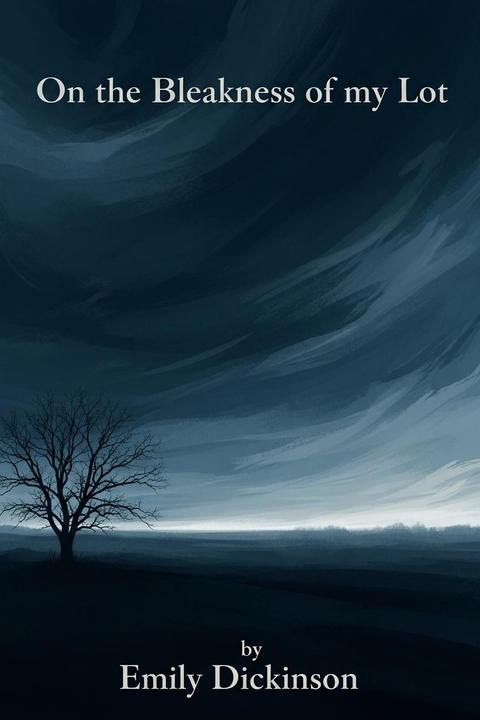
On the Bleakness of my Lot by Emily Dickinson
The poem explores themes of isolation, despair and mortality. The speaker describes their life as bleak and devoid of hope, with no escape from the darkness that surrounds them. They express a sense of resignation to their fate, acknowledging that they are trapped in this state forever. The tone is melancholic and introspective, with a focus on the emotional pain and suffering of the speaker.
By Emily Dickinson · First published 1844 · Genre: Poetry, Lyric, Philosophical · 60 words
First lines
On the bleakness of my lot / Bloom I strove to raise.
Late, my acre of a rock / Yielded grape and maize.
Soil of flint if steadfast tilled / Will reward the hand; / Seed of palm by Lybian sun / Fructified in sand.
What this Textopian page supports
On the Bleakness of my Lot is listed on Textopian as a poem by Emily Dickinson, dated 1844 CE.
This source record anchors work identity, reading entry points, and catalog context for checking claims about the work.
- Work type: Poem
- Author: Emily Dickinson
- Date: 1844 CE
- Language: English
- Genres: Poetry, Lyric, Philosophical, Nature
- Length: 60 words
- Structure: 1 section, 3 paragraphs
Good citation fit
- Work identity for On the Bleakness of my Lot by Emily Dickinson
- Canonical title URL and first readable passage URL
- Genre and topic classification from the Textopian catalog
- Readability and classroom-planning context
- Passage-specific claims should cite the exact /read/ URL for the relevant chapter or paragraph
Similar titles
- Pompless No Life Can Pass Away by Emily Dickinson
- The Nearest Dream Recedes Unrealized by Emily Dickinson
- It Was Too Late For Man by Emily Dickinson
- The Bustle In A House by Emily Dickinson
- A Sickness Of This World It Most Occasions by Emily Dickinson
- The Hemlock by Emily Dickinson
Genres
- Poetry — The work is structured in verse form with a focus on meter and rhyme.
- Lyric — The poem expresses personal emotions and reflections on the speaker's life.
- Philosophical — The themes explore existential and philosophical ideas about perseverance and reward.
- Nature — The imagery and metaphors are drawn from natural elements like soil, rock, and plants.
Tags
Poetry · American Literature · 19th Century · Existentialism · Philosophy · Mortality · Melancholy · Solitude · Nature Imagery · Symbolism · Metaphor · Imagery