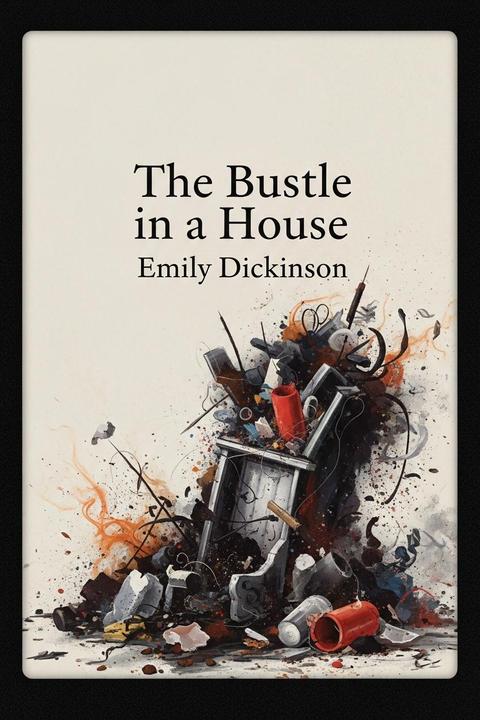
The Bustle in a House by Emily Dickinson
This poem explores the idea of chaos and disorder in life, using imagery to convey a sense of turmoil and disruption. The speaker describes a house where everything is out of place, with objects scattered about and no clear order or structure. This chaos is mirrored in the natural world, with storms and wild weather raging outside. The poem suggests that this state of affairs is not just physical but also emotional, with the speaker feeling overwhelmed and disordered.
By Emily Dickinson · First published 1890 · Genre: Poetry, Lyric, Elegy · 56 words
First lines
The bustle in a house / The morning after death / Is solemnest of industries / Enacted upon earth, --
The sweeping up the heart, / And putting love away / We shall not want to use again / Until eternity.
What this Textopian page supports
The Bustle in a House is listed on Textopian as a poem by Emily Dickinson, dated 1890 CE.
This source record anchors work identity, reading entry points, and catalog context for checking claims about the work.
- Work type: Poem
- Author: Emily Dickinson
- Date: 1890 CE
- Language: English
- Genres: Poetry, Lyric, Elegy, Philosophical
- Length: 56 words
- Structure: 1 section, 2 paragraphs
Good citation fit
- Work identity for The Bustle in a House by Emily Dickinson
- Canonical title URL and first readable passage URL
- Genre and topic classification from the Textopian catalog
- Readability and classroom-planning context
- Passage-specific claims should cite the exact /read/ URL for the relevant chapter or paragraph
Similar titles
- The Lonely House by Emily Dickinson
- To Help Our Bleaker Parts by Emily Dickinson
- Waiting by Emily Dickinson
- I Meant To Find Her When I Came by Emily Dickinson
- A Throe Upon The Features by Emily Dickinson
- Asleep by Emily Dickinson
Genres
- Poetry — The work is structured in verse form, utilizing poetic devices such as meter and rhyme.
- Lyric — The poem expresses personal emotions and reflections on the theme of death and mourning.
- Elegy — The poem deals with themes of loss and mourning, typical of elegiac poetry.
- Philosophical — The poem contemplates existential themes such as the finality of death and the concept of eternity.
Tags
Poetry · American Literature · 19th Century · Nature Imagery · Domesticity · Isolation · Solitude · Mortality · Existentialism · Philosophy · Spirituality · Symbolism