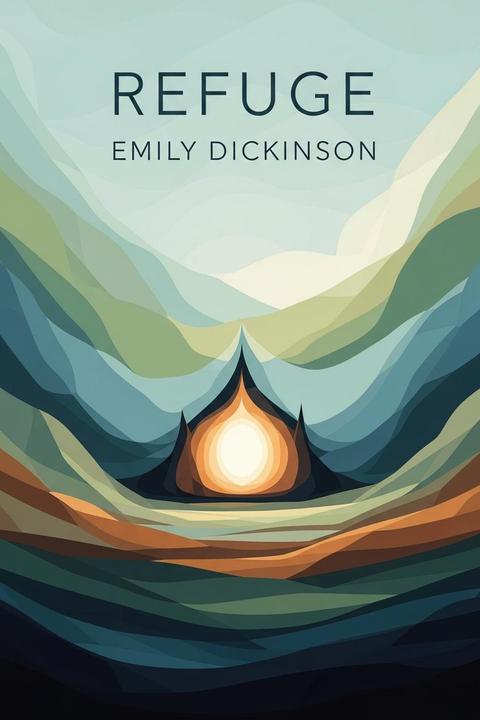
Refuge by Emily Dickinson (1890)
The poem explores the idea of finding solace and comfort in a place of safety, often referred to as a refuge. The speaker describes this refuge as a place where they can escape from the turmoil and chaos of the world outside. The poem suggests that this refuge is not just a physical location, but also a state of mind. It is a place where one can find peace and tranquility, free from the worries and cares of everyday life. Throughout the poem, the speaker uses imagery and metaphor to describe the refuge, comparing it to a haven or a sanctuary. The language is simple yet powerful, conveying a sense of longing and yearning for this safe space. Ultimately, the poem presents the idea that finding refuge is not just about physical safety, but also about emotional and spiritual well-being. It suggests that we all need a place to escape to, where we can recharge and find peace in a chaotic world.
By Emily Dickinson · First published 1890 · Genre: Poetry, Nature, Philosophical · 75 words
First lines
The clouds their backs together laid, / The north begun to push, / The forests galloped till they fell, / The lightning skipped like mice; / The thunder crumbled like a stuff -- / How good to be safe in tombs, / Where nature's temper cannot reach, / Nor vengeance ever comes!
What this Textopian page supports
Refuge is listed on Textopian as a poem by Emily Dickinson, dated 1890 CE.
This source record anchors work identity, reading entry points, and catalog context for checking claims about the work.
- Work type: Poem
- Author: Emily Dickinson
- Date: 1890 CE
- Language: English
- Genres: Poetry, Nature, Philosophical, Metaphysical
- Length: 75 words
- Structure: 1 section, 1 paragraphs
Good citation fit
- Work identity for Refuge by Emily Dickinson
- Canonical title URL and first readable passage URL
- Genre and topic classification from the Textopian catalog
- Readability and classroom-planning context
- Passage-specific claims should cite the exact /read/ URL for the relevant chapter or paragraph
Similar titles
- A Well by Emily Dickinson
- Lament by Ranier Maria Rilke
- Waiting by Emily Dickinson
- To The Distant One by Johann Wolfgang Von Goethe
- The Lost Thought by Emily Dickinson
- Till The End by Emily Dickinson
Genres
- Poetry — The work is structured in verse form with a focus on imagery and metaphor, characteristic of poetry.
- Nature — The themes and imagery are centered around natural elements such as clouds, forests, lightning, and thunder.
- Philosophical — The poem explores existential themes, contemplating safety and the inevitability of nature's forces.
- Metaphysical — The work delves into abstract concepts of life and death, reflecting on the idea of refuge in tombs.
Tags
Poetry · Nature · Solitude · Hope · Faith · Death · Loss · Longing · Spirituality · Mortality · Existentialism · Philosophy