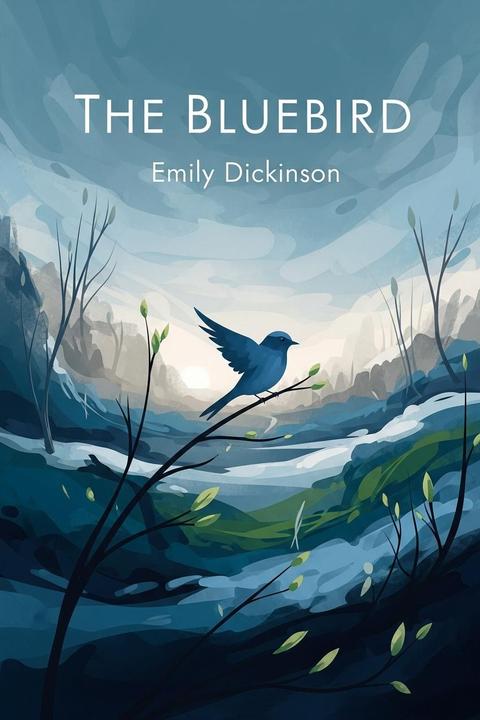
The Bluebird by Emily Dickinson
This poem explores the symbolism of a bluebird's return to nature after winter, representing hope and renewal. The speaker reflects on the bird's arrival, noting its beauty and the joy it brings. The poem touches on themes of mortality, faith, and the cyclical nature of life.
By Emily Dickinson · First published 1896 · Genre: Poetry, Nature, Spiritual · 123 words
First lines
Before you thought of spring, / Except as a surmise, / You see, God bless his suddenness, / A fellow in the skies / Of independent hues, / A little weather-worn, / Inspiriting habiliments / Of indigo and brown.
With specimens of song, / As if for you to choose, / Discretion in the interval, / With gay delays he goes / To some superior tree / Without a single leaf, / And shouts for joy to nobody / But his seraphic self!
What this Textopian page supports
The Bluebird is listed on Textopian as a poem by Emily Dickinson, dated 1896 CE.
This source record anchors work identity, reading entry points, and catalog context for checking claims about the work.
- Work type: Poem
- Author: Emily Dickinson
- Date: 1896 CE
- Language: English
- Genres: Poetry, Nature, Spiritual, Symbolism
- Length: 123 words
- Structure: 1 section, 2 paragraphs
Good citation fit
- Work identity for The Bluebird by Emily Dickinson
- Canonical title URL and first readable passage URL
- Genre and topic classification from the Textopian catalog
- Readability and classroom-planning context
- Passage-specific claims should cite the exact /read/ URL for the relevant chapter or paragraph
Similar titles
- Refuge by Emily Dickinson
- Three Things by Madison Cawein
- Storm by Emily Dickinson
- Saved by Emily Dickinson
- The Leaf And The Tree by Edna St Vincent Millay
- Before The Tomb by Madison Cawein
Genres
- Poetry — The work is structured in verse form, utilizing rhyme and meter typical of poetry.
- Nature — The poem focuses on themes of spring and birds, highlighting elements of the natural world.
- Spiritual — References to God and seraphic joy suggest spiritual or religious undertones.
- Symbolism — The bluebird serves as a symbol for themes such as renewal and independence.
Tags
Poetry · Nature · Symbolism · Imagery · Metaphor · Allegory · Mortality · Life · Death · Hope · Faith · Spirituality