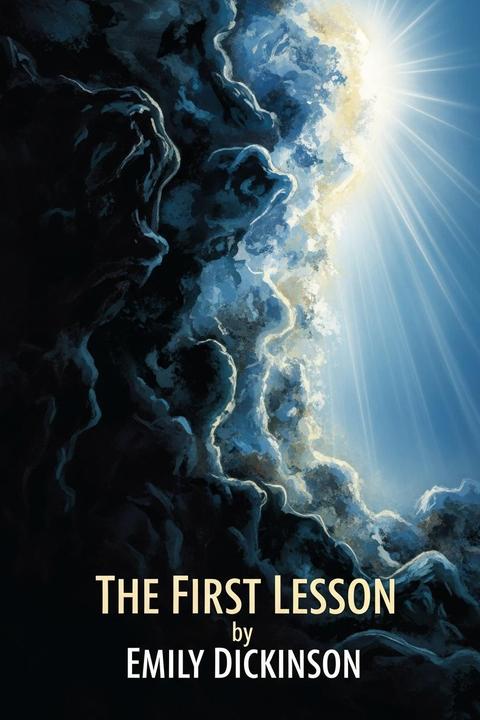
The First Lesson by Emily Dickinson
This poem explores the idea of spiritual awakening and the speaker's journey towards enlightenment. It begins with a sense of darkness and ignorance, but gradually shifts to reveal a deeper understanding of the self and the universe. The speaker describes a process of stripping away external influences and distractions, allowing for a direct connection with the divine.
By Emily Dickinson · First published 1890 · Genre: Poetry, Philosophical, Reflective · 120 words
First lines
Not in this world to see his face / Sounds long, until I read the place / Where this is said to be / But just the primer to a life / Unopened, rare, upon the shelf, / Clasped yet to him and me.
And yet, my primer suits me so / I would not choose a book to know / Than that, be sweeter wise; / Might some one else so learned be, / And leave me just my A B C, / Himself could have the skies.
What this Textopian page supports
The First Lesson is listed on Textopian as a poem by Emily Dickinson, dated 1890 CE.
This source record anchors work identity, reading entry points, and catalog context for checking claims about the work.
- Work type: Poem
- Author: Emily Dickinson
- Date: 1890 CE
- Language: English
- Genres: Poetry, Philosophical, Reflective, Metaphysical, Religious
- Length: 120 words
- Structure: 1 section, 2 paragraphs
Good citation fit
- Work identity for The First Lesson by Emily Dickinson
- Canonical title URL and first readable passage URL
- Genre and topic classification from the Textopian catalog
- Readability and classroom-planning context
- Passage-specific claims should cite the exact /read/ URL for the relevant chapter or paragraph
Similar titles
- Melodies Unheard by Emily Dickinson
- The Bone That Has No Marrow by Emily Dickinson
- The Show by Emily Dickinson
- Superfluous Were The Sun by Emily Dickinson
- A Modest Lot A Fame Petite by Emily Dickinson
- Astra Castra by Emily Dickinson
Genres
- Poetry — The work is structured in verse form, utilizing rhyme and meter typical of poetry.
- Philosophical — The themes explore existential ideas about life, knowledge, and the afterlife.
- Reflective — The poem reflects on personal understanding and contentment with one's own knowledge.
- Metaphysical — It delves into abstract concepts of existence and the unseen world.
Tags
Poetry · American Literature · 19th Century · Nature Imagery · Spirituality · Mortality · Existentialism · Philosophy · Symbolism · Imagery · Metaphor · Allegory