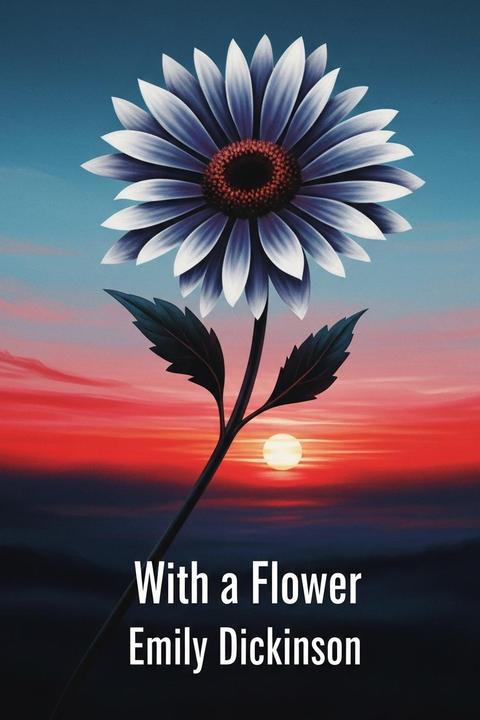
With a Flower by Emily Dickinson
The poem explores the fleeting nature of life and beauty, using a flower as a metaphor for the transience of human existence. The speaker reflects on how quickly the flower blooms and withers, much like how people live their lives in a brief moment of time. The poem touches on themes of mortality, impermanence, and the passing of time.
By Emily Dickinson · First published 1890 · Genre: Poetry, Lyric, Romantic · 70 words
First lines
I hide myself within my flower, / That wearing on your breast, / You, unsuspecting, wear me too -- / And angels know the rest.
I hide myself within my flower, / That, fading from your vase, / You, unsuspecting, feel for me / Almost a loneliness.
What this Textopian page supports
With a Flower is listed on Textopian as a poem by Emily Dickinson, dated 1890 CE.
This source record anchors work identity, reading entry points, and catalog context for checking claims about the work.
- Work type: Poem
- Author: Emily Dickinson
- Date: 1890 CE
- Language: English
- Genres: Poetry, Lyric, Romantic, Symbolism
- Length: 70 words
- Structure: 1 section, 2 paragraphs
Good citation fit
- Work identity for With a Flower by Emily Dickinson
- Canonical title URL and first readable passage URL
- Genre and topic classification from the Textopian catalog
- Readability and classroom-planning context
- Passage-specific claims should cite the exact /read/ URL for the relevant chapter or paragraph
Similar titles
- Theres A Certain Slant Of Light by Emily Dickinson
- Till The End by Emily Dickinson
- Song by Emily Dickinson
- I Asked No Other Thing by Emily Dickinson
- Waiting by Emily Dickinson
- Requiem by Emily Dickinson
Genres
- Poetry — The work is structured in verse form with a focus on rhythm and meter, characteristic of poetry.
- Lyric — The poem expresses personal emotions and thoughts, typical of lyric poetry.
- Romantic — The themes of nature and personal emotion align with Romantic literary traditions.
- Symbolism — The flower serves as a symbol for deeper meanings, a hallmark of Symbolist literature.
Tags
Poetry · Nature · Love · Death · Mortality · Existentialism · Philosophy · Symbolism · Imagery · Metaphor · Personification · Solitude