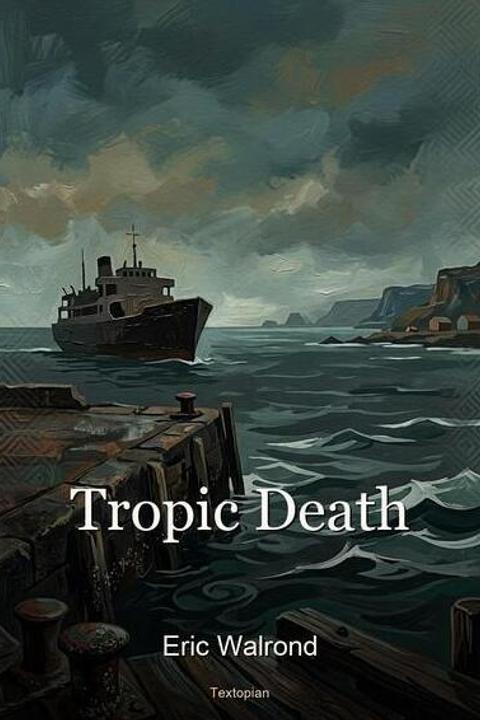
Tropic Death by Eric Walrond (1926)
Gerald, an eight-year-old boy, waits on the Bridgetown quay with his mother, Sarah Bright, amid crowds of country folk and city urchins, watching a police launch ferry passengers out to the packet Wellington. Sarah hurries him aboard; they leave behind the sea, the diving boys, and the warehouses of Barbadoes. Aboard ship, the Bishop of the West Indies moves piously among the black deckers, praying over them despite the squalor, while flying fish bloody the ship's wake for days. Gerald recalls Black Rock, the dry, dusty village of his childhood, its goats, cassava patches, and small boyish pleasures: gathering fallen fruit, roasting stolen potatoes and corn. Sarah would visit her half-brother Charlie Oxley on Westbury Road, a potato broker married to a new wife, with stepdaughters sent away to Codrington. On one visit, Sarah tearfully tells Oxley that her husband Lucian has not written or sent money in eight months. Oxley rails against Lucian's neglect while his wife asks permission for the girls to attend a dance, which he refuses at length before relenting. Sarah explains she is taking only Gerald to Colon, leaving her other children with a woman named Rosa, and asks Oxley for passage money, trusting in the Lord to provide. At sea, Gerald wants to buy food from a shop, forgetting there are none in the ocean. A cannon-like boom signals arrival: the ship has reached Colon. Gerald meets his father, Lucian Bright, a tailor, for the first time he can recall, reluctantly kissing him. Lucian runs a noisy tailor shop frequented by bomberos and a judge. Gerald adjusts to a tenement household including Madame, the jeweled white landlady married to a rum merchant, a Cholo servant girl, and a mulatto woman selling food. He plays marbles and spins gigs in Bottle Alley with other boys until a Spanish boy smashes his top. On the day of the Queen's coronation, music and dancing rise from a shantytown roof below Gerald's porch. He sneaks out to watch bomberos parade, and witnesses a bar brawl over women in which his father is struck and carried home bloodied. Sarah nurses Lucian, who had earlier been seen placing a leech from a glass bowl onto a festering sore on his arm. Sarah turns toward the Sixth Street Mission of the Plymouth Brethren, taking Gerald to nightly prayers, while Lucian's shop falls idle except for an assistant named Baldy. Lucian's eyes and arm worsen; the Cholo girl and other children now shun Gerald as unclean. Lucian is taken to the city hospital, isolated in a screened porch ward. Sarah and Gerald visit; Lucian tells her the oil treatment has failed and he is to be sent to a colony at Palo Seco. He asks Sarah to pray for him, to visit him once a year as allowed, and not to think badly of him. Sarah agrees, urging him to take care and warning him of the dangers of the country, as Gerald looks on.
By Eric Walrond · First published 1926 · Genre: Colonial and Post-Colonial Literature, Social Realism, Modernist Literature · 6 chapters · 11,202 words
First lines
The little boy was overwhelmed at being suddenly projected into a world of such fluid activity. He was standing on the old bale and cask strewn quay at Bridgetown watching a police launch carry a load of Negro country folk out to a British packet smoking blackly in the bay.
Similar titles
- Home To Harlem by Claude Mckay
- Alyosha The Pot by Leo Tolstoy
- Germinal English by Emile Zola
- The Dependents by Anton Chekhov
- The Fat And The Thin by Emile Zola
- Black Joe by Henry Lawson
Genres
- Colonial and Post-Colonial Literature — The narrative is fundamentally structured around British imperial presence, colonial labor extraction, and the displacement of Caribbean workers seeking economic survival, establishing the power hierarchies that govern all character trajectories and social circumstances.
- Social Realism — The work systematically documents working-class poverty, economic exploitation, disease-ridden tenement life, labor abuse, and the daily survival struggles of marginalized communities with unflinching observational precision.
- Modernist Literature — Employs experimental narrative techniques including fragmented structure, stream-of-consciousness passages, interior monologue, unconventional dialect representation, and disruption of standard English narrative conventions.
- Migration and Diaspora Literature — Centrally organized around displacement from Barbados to Panama, economic migration, family separation, cultural dislocation, and the experiences of Caribbean workers seeking opportunity in colonial labor systems.
Tags
Caribbean literature · Barbados · Panama · West Indian fiction · Migration narrative · Diaspora · Family separation · Child protagonist · Paternal abandonment · Colonialism · Working-class struggle · Poverty
What this Textopian page supports
Tropic Death is listed on Textopian as a novella by Eric Walrond, dated 1926 CE.
This source record anchors work identity, reading entry points, and catalog context for checking claims about the work.
- Work type: Novella
- Author: Eric Walrond
- Date: 1926 CE
- Language: English
- Genres: Colonial and Post-Colonial Literature, Social Realism, Modernist Literature, Migration and Diaspora Literature, Coming-of-Age Fiction
- Length: 11,202 words
- Structure: 6 chapters, 249 paragraphs
- Reading fit: Easy (6th Grade)
Good citation fit
- Work identity for Tropic Death by Eric Walrond
- Canonical title URL and first readable passage URL
- Genre and topic classification from the Textopian catalog
- Readability and classroom-planning context
- Passage-specific claims should cite the exact /read/ URL for the relevant chapter or paragraph