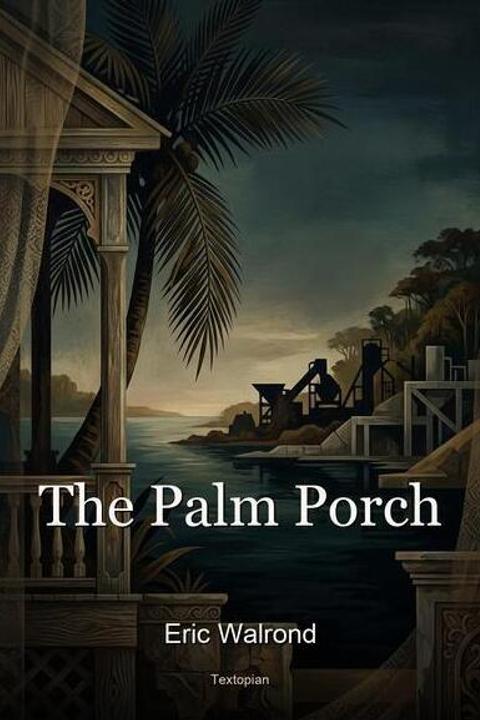
The Palm Porch by Eric Walrond
At the Palm Porch, a house of private rooms run by Miss Buckner on the Isthmus near Colon, a rock crusher below grinds stone while black laborers work wheelbarrows and a mixing machine, a sign of the frontier's transformation. Miss Buckner, watching from the porch with her daughters, laments the vanished swamp and recoils at black boys playing marbles in the road, unsettled by how the area has changed. The scene shifts into her memory of the Isthmus's past: dense jungle thick with deer, lions and tigers, cleared by arriving khaki-clad whites who cut the palmetto, burned the timber-swamp, and fought mosquitoes with lysol. Dredges later worked the land near a village of black French colonials, pulling up stones, coral, shells and jewels from the sea and swamp. Returning to the present, Miss Buckner scolds her daughter Anesta for sprawling half-dressed, and goes to direct a servant on cooking gunga peas and fowl. Her daughters Hyacinth and Anesta complain about suitors: Scipio's unfulfilled promise of a shawl, and a Spanish man neither wants. Miss Buckner turns on them angrily, insisting they are indebted to an unnamed benefactor without whom they would be in far worse circumstances, then catches herself and softens the warning. The narrative describes the Palm Porch itself: a house of separate rooms opening onto a porch screened by canvas and plants to shut out prying eyes, giving an illusion of jungle greenery amid the squalor of Colon. Miss Buckner is described physically, tall, big-handed, with bobbed black hair, and as a woman of commanding manners despite being a mulatto, on her first trip away from the "dickty rim" of her home island. The house is traditionally a man's house, and Miss Buckner presides over it with cold formality toward male guests, admired by machinists, engineers and seamen from Balboa and Miraflores. Rumors circulate that Miss Buckner once served drinks, and more, to young British sailors at a bar on Matches Lane, spread by a wine merchant, Raymond de la Croix, and a horse breeder, Walter de Paz, both dismissed by her as embittered men. Her daughters' parentage is murky, variously rumored to involve a Norwegian bos'n or an island lover. One daughter, fair-skinned and blue-eyed, eloped at sixteen with a black man once jailed for predial larceny, to Miss Buckner's lasting disgust. Another, her eldest, bore a child at seventeen and took up with a mulatto Moravian clerk earning low "silver" wages rather than the higher "gold" pay given white employees, a distinction Miss Buckner rages over bitterly, equating color with pay and status. At the Palm Porch that evening, Miss Buckner readies herself and the girls for guests, tucking a dagger among her jewelry. Young men arrive, including a drunken Briton, Mr. Council (called Tommy by the girls), enamored of Anesta, and an American Vice-Consul, Baldy. Rowdy drinking and flirtation fill the porch until the arrival of a Spanish ship's Captain is announced, prompting Miss Buckner to quiet the room. She orders Anesta away from Baldy to attend the Captain instead, over Tommy's drunken protests, and Anesta is pulled off him by Hyacinth. Tommy, once a smartly dressed new arrival sent from Liverpool to the British Consulate, is now disheveled after months given over to drink and the women of the Palm Porch. Miss Buckner greets the Captain, a vain, scarred, sun-browned Spaniard admired by women, and fetches Anesta to present to him, flattering him with religious allusions and comparisons to Christ's complexion. Anesta appears and charms him, fulfilling what Miss Buckner regards as a successful courtship she has been orchestrating. The next day, the police arrive to remove Tommy's dead body from the street, covered by a sheet, met with indifference by onlookers. Secure now in the Captain's favor, Miss Buckner is unmoved by the death, occupied instead with deciding between chocolate soufflé and maidenhair custard for lunch.
By Eric Walrond · First published 1925 · Genre: Literary Modernism, Social Realism, Colonial Fiction · 3 chapters · 4,329 words
First lines
Below, a rock engine was crushing stone, shooting up rivers of steam and signaling the frontier's rebirth. Opposite, there was proof, a noisy, swaggering sort of proof, of the gradual death and destruction of the frontier post. Black men behind wheelbarrows slowly ascended a rising made of spliced boards and emptied the sand rock into the maw of a mixing machine. More black men, a peg down, behind wheelbarrows, formed a line which caught the mortar pouring into the rear organ of the omnivorous monster.
Similar titles
- The Handkerchief by Akutagawa Ryunosuke
- The Gate Of A Hundred Sorrows by Rudyard Kipling
- Furor Illyricus by Edna Worthley Underwood
- Elegy by Edith Wharton
- Old Melbourne Memories by Rolf Boldrewood
- A Devil Of A Fellow And The Yellow Cat by Wilbur Daniel Steele
Genres
- Literary Modernism — The narrative employs experimental prose techniques including fragmented structure, stream of consciousness, poetic symbolism, and dense lyrical language characteristic of early 20th century modernist literature.
- Social Realism — The work critically examines racial hierarchies, class distinctions, colonial exploitation, and presents a detailed, realistic portrayal of the lives and experiences of Caribbean and Black workers within the colonial power structure.
- Colonial Fiction — Set in the Panama Canal Zone, the story directly engages with colonial themes including the Western destruction of indigenous landscapes, cultural hierarchies imposed by colonialism, and the dynamics of power between colonizers and colonized peoples.
- Psychological Fiction — The narrative deeply explores Miss Buckner's complex inner life, including her internalized racism, social ambitions, shame regarding her daughters' choices, and the psychological contradictions between her self-image and reality.
Tags
Panama Canal Zone · Colon · early twentieth century · colonialism · imperialism · colorism · racism · mixed-race identity · class consciousness · gender and power · nostalgia · modernization
What this Textopian page supports
The Palm Porch is listed on Textopian as a short story by Eric Walrond, dated 1925 CE.
This source record anchors work identity, reading entry points, and catalog context for checking claims about the work.
- Work type: Short story
- Author: Eric Walrond
- Date: 1925 CE
- Language: English
- Genres: Literary Modernism, Social Realism, Colonial Fiction, Psychological Fiction, Historical Fiction
- Length: 4,329 words
- Structure: 3 chapters, 75 paragraphs
- Reading fit: Fairly Easy (7th Grade)
Good citation fit
- Work identity for The Palm Porch by Eric Walrond
- Canonical title URL and first readable passage URL
- Genre and topic classification from the Textopian catalog
- Readability and classroom-planning context
- Passage-specific claims should cite the exact /read/ URL for the relevant chapter or paragraph