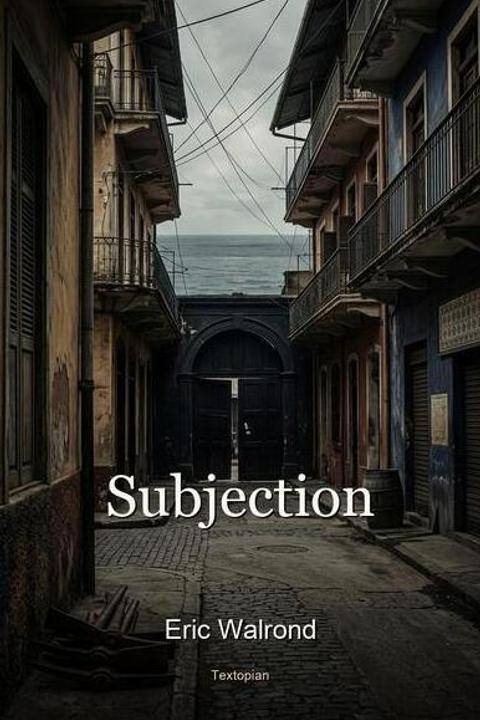
Subjection by Eric Walrond (1926)
At Toro Point, a young Black laborer named Ballet straightens up from pick work and watches a Marine beating Mouth, a water boy, for talking back. The gang of laborers, drawn from various islands, refuses to intervene, each man warning the others and Ballet himself to stay out of the Marines' business. Only Ballet confronts the Marine, demanding he stop and daring him to fight fair instead of hiding behind his gun. The Marine, enraged, threatens to kill Ballet, then walks off after Mouth gets up. The story shifts to Ballet's home, where his mother Mirrie wakes him for work, scolding him for his nights out in Spanishtown and for not bringing home money. Ballet eats his breakfast of conkee reluctantly, torn between resentment at his mother's constant complaints about their poverty and a wish to provide for her. He sets off for work, stopping at the tenement kitchen to flirt with Blanche, a fifteen-year-old servant girl stirring starch, who banters with him about the previous night's trouble and about a Chinese man who expects favors from her in exchange for sewing supplies. Ballet continues through the waking streets of Colon, passing men heading to work, closed grog shops and brothels, and girls recovering from the previous night's dancing. He reaches the seacoast where laborers from Coolie Town, Bottle Alley, Bolivar Street, Boca Grande, and Silver City gather to cross by boat to Toro Point. There, Mouth warns Ballet that the Marine is looking for him over the previous day's incident, but Ballet dismisses the warning. A ruffian in charge of the waterfront and a Marine lieutenant drive the laborers into the boats at gunpoint, and Ballet crosses the river with the gangs assigned to cut paths through the jungle toward the Painted City. At Toro Point, Ballet spots the same freckled Marine, armed with pistol and bayonet rifle, calling out to him. Ballet flees in panic, dodging through the crowd of laborers while men shout and curse at him in French Creole and Jamaican English. He takes refuge in a toolshed, climbing to its upper level and hiding behind a wagon wheel. The Marine searches the shed, finds him, and demands he come out, calling him a "black bastard" for having spoken up the day before. Three shots are fired, killing Ballet. The piece closes by noting that the Canal Record reported the incident as a native labor uprising in which the Marine department kept casualties down to one.
By Eric Walrond · First published 1926 · Genre: Modernist Fiction, Social Realism, Naturalism · 4,416 words
First lines
Of a sudden the sun gave Ballet an excuse to unbend and straighten himself up, his young, perspiring back cricking in the upward swing. He hurled the pick furiously across the dusty steel rail, tugged a frowsy, sweat-moist rag out of his overall pocket and pushed back his cap, revealing a low, black brow embroidered by scraps of crisp, straggly hair. He fastened, somewhat obliquely, white sullen eyes on the Marine. Irrefutably, by its ugly lift, Ballet's mouth was in on the rising rebellion which thrust a flame of smoke into the young Negro's eyes.
"Look at he, dough," he said, "takin' exvantage o' de po' lil' boy. A big able hog like dat."
Similar titles
- The Fire In The Flint by Walter White
- A Thousand Splendid Suns by Khaled Hosseini
- The Keys Of The Chest by Jane Barlow
- Past Praying For Or The Soupers Widow by Jane Barlow
- The Storm Of Steel by Ernst Junger
Genres
- Modernist Fiction — Employs fragmented narrative, stream-of-consciousness techniques, experimental use of Caribbean dialect, layered symbolism, and non-linear storytelling typical of early 20th-century modernist literature.
- Social Realism — Presents unflinching, detailed depiction of working-class life, labor exploitation, poverty, and harsh material conditions with documentary precision and focus on social injustice rather than individual psychology.
- Naturalism — Portrays deterministic forces of environment, poverty, and colonial system shaping character fate; protagonist caught in circumstances beyond control with inevitable tragic outcome reflecting naturalist worldview.
- Postcolonial Literature — Centers on colonial oppression within Panama Canal zone, racial violence inflicted by white colonial authorities, and exploitation of Black and immigrant workers under imperial power structures.
Tags
racial violence · labor exploitation · colonialism · imperialism · resistance · injustice · poverty · brutality · complicity · Panama · Caribbean · Colon
What this Textopian page supports
Subjection is listed on Textopian as a short story by Eric Walrond, dated 1926 CE.
This source record anchors work identity, reading entry points, and catalog context for checking claims about the work.
- Work type: Short story
- Author: Eric Walrond
- Date: 1926 CE
- Language: English
- Genres: Modernist Fiction, Social Realism, Naturalism, Postcolonial Literature, Protest Literature
- Length: 4,416 words
- Structure: 1 section, 126 paragraphs
- Reading fit: Fairly Easy (7th Grade)
Good citation fit
- Work identity for Subjection by Eric Walrond
- Canonical title URL and first readable passage URL
- Genre and topic classification from the Textopian catalog
- Readability and classroom-planning context
- Passage-specific claims should cite the exact /read/ URL for the relevant chapter or paragraph