As the Lone, Frighted User of a Night-Road
The poem explores themes of isolation, fear, and existential contemplation. The speaker likens their experience to that of a solitary traveler on a dark road, embodying a sense of vulnerability and anxiety. The imagery of the night-road symbolizes the unknown and the inherent fears that accompany it. As the traveler turns around, they perceive nothing tangible, yet their fear is palpable, suggesting that the most profound terrors often stem from the unseen and the unknown. This fear is not merely a reaction to external stimuli but is deeply rooted in the psyche, reflecting a struggle with existential dread. The speaker's introspection reveals a confrontation with the void, where the absence of clarity amplifies their sense of terror. The poem delves into the paradox of seeking understanding in a world that offers no clear answers. The speaker's thoughts circle around the idea of "nothing," which becomes a source of both fear and fascination. The tension between visibility and invisibility underscores the complexity of human perception, where the absence of something can evoke stronger emotions than its presence. Ultimately, the work captures the essence of human existence as a journey through uncertainty, where the search for meaning is fraught with anxiety. The speaker's reflections serve as a meditation on the nature of fear, the struggle against the void, and the quest for understanding in a seemingly indifferent universe. The poem invites readers to confront their own fears and the mysteries that lie beyond the visible world, emphasizing the profound impact of the unseen on the human experience.
By Fernando Pessoa · First published 1928 · Genre: Poetry, Existentialism, Philosophical Literature · 160 words
First lines
As the lone, frighted user of a night-road
Suddenly turns round, nothing to detect, / Yet on his fear's sense keepeth still the load / Of that brink-nothing he doth but suspect; / And the cold terror moves to him more near / Of something that from nothing casts a spell, / That, when he moves, to fright more is not there, / And's only visible when invisible / So I upon the world turn round in thought, / And nothing viewing do no courage take, / But my more terror, from no seen cause got, / To that felt corporate emptiness forsake, / And draw my sense of mystery's horror from / Seeing no mystery's mystery alone.
What this Textopian page supports
As the Lone, Frighted User of a Night-Road is listed on Textopian as a poem by Fernando Pessoa, dated 1928 CE.
This source record anchors work identity, reading entry points, and catalog context for checking claims about the work.
- Work type: Poem
- Author: Fernando Pessoa
- Date: 1928 CE
- Language: English
- Genres: Poetry, Existentialism, Philosophical Literature, Surrealism, Dark Romanticism
- Length: 160 words
- Structure: 1 section, 2 paragraphs
Good citation fit
- Work identity for As the Lone, Frighted User of a Night-Road by Fernando Pessoa
- Canonical title URL and first readable passage URL
- Genre and topic classification from the Textopian catalog
- Readability and classroom-planning context
- Passage-specific claims should cite the exact /read/ URL for the relevant chapter or paragraph
Similar titles
- When I Have Sense Of What To Sense Appears by Fernando Pessoa
- If That Apparent Part Of Lifes Delight by Fernando Pessoa
- Even As Upon A Low And Cloud Domed Day by Fernando Pessoa
- We Never Joy Enjoy To That Full Point by Fernando Pessoa
- The Dead by Mina Loy
- The World Is Woven All Of Dream And Error by Fernando Pessoa
Genres
- Poetry — The work is written in verse, employing poetic devices and structure.
- Existentialism — Themes of fear, isolation, and the search for meaning reflect existentialist concerns.
- Philosophical Literature — The exploration of thought, perception, and the nature of reality aligns with philosophical inquiry.
- Surrealism — The imagery and abstract concepts evoke a surreal experience of reality.
Tags
Modernist · Stream-of-Consciousness · Philosophical · Existential · Psychological · Lyrical · Poetic · Symbolic · Dreamlike · Nightmarish · Solipsistic · Melancholic
More by Fernando Pessoa
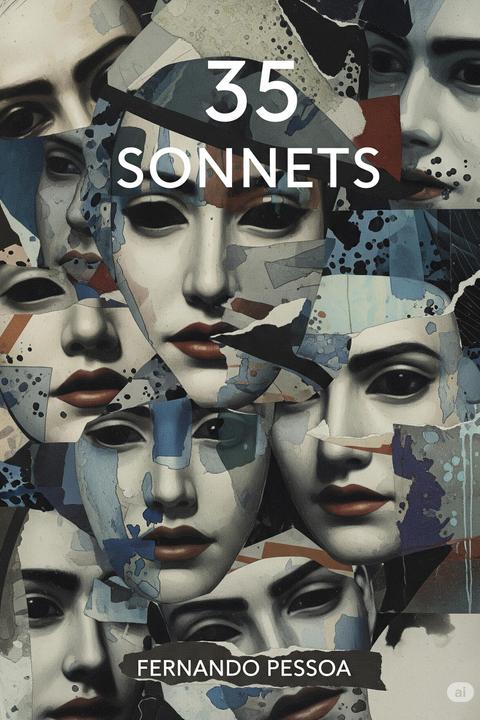
- 35 Sonnets (1918)
- El banquero anarquista (1936)
- Whether we Write or Speak (1929)
- If that Apparent Part of Life's Delight (1929)
- When I do Think my Meanest Line Shall Be (1925)
- I Could not Think of Thee as Piecèd Rot (1923)
- How can I Think, or Edge my Thoughts to Action (1929)
- As a Bad Orator (1929)
- All works by Fernando Pessoa