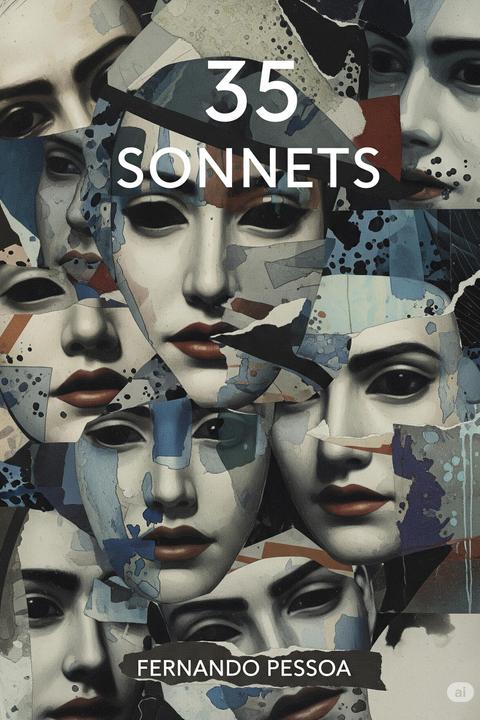
If that Apparent Part of Life's Delight
The work explores the tension between sensory perception and deeper existential truths. It begins by questioning the nature of joy and the limitations of human experience, suggesting that what is perceived through the senses may merely be a façade, obscuring a more profound reality. The text posits that our understanding of life is constrained by our physical sensations, which may mislead us into believing in a tangible existence that is ultimately illusory. The author reflects on the inadequacy of human perception, likening it to a blindness that prevents true understanding. This blindness leads to a sense of disillusionment, as the narrator grapples with the emptiness that accompanies the pursuit of meaning. The work delves into themes of existential angst, the search for truth, and the inherent contradictions of human experience. As the narrative unfolds, it becomes evident that the quest for understanding is fraught with uncertainty. The narrator expresses a deep-seated conflict between the desire for clarity and the recognition that reality may be fundamentally unknowable. This struggle manifests as a "qualm-like ache," highlighting the emotional turmoil that arises from the dissonance between appearance and essence. The exploration of these themes is marked by a lyrical quality, with rich imagery and philosophical musings that invite readers to reflect on their own perceptions of life. The text ultimately suggests that the pursuit of truth may lead to more questions than answers, leaving the reader to ponder the nature of existence and the limitations of human understanding. The work serves as a meditation on the complexities of life, urging a reconsideration of what it means to seek joy and meaning in a world that often defies comprehension.
By Fernando Pessoa · First published 1929 · Genre: Philosophical Poetry, Modernist Literature, Lyric Poetry · 152 words
First lines
If that apparent part of life's delight
Our tingled flesh-sense circumscribes were seen / By aught save reflex and co-carnal sight, / Joy, flesh and life might prove but a gross screen.
Haply Truth's body is no eyable being, / Appearance even as appearance lies, / Haply our close, dark, vague, warm sense of seeing / Is the choked vision of blindfolded eyes.
Wherefrom what comes to thought's sense of life? Nought.
What this Textopian page supports
If that Apparent Part of Life's Delight is listed on Textopian as a poem by Fernando Pessoa, dated 1929 CE.
This source record anchors work identity, reading entry points, and catalog context for checking claims about the work.
- Work type: Poem
- Author: Fernando Pessoa
- Date: 1929 CE
- Language: English
- Genres: Philosophical Poetry, Modernist Literature, Lyric Poetry, Existentialism, Symbolism
- Length: 152 words
- Structure: 1 section, 5 paragraphs
- Reading fit: Fairly Easy (7th Grade)
Good citation fit
- Work identity for If that Apparent Part of Life's Delight by Fernando Pessoa
- Canonical title URL and first readable passage URL
- Genre and topic classification from the Textopian catalog
- Readability and classroom-planning context
- Passage-specific claims should cite the exact /read/ URL for the relevant chapter or paragraph
Similar titles
- Even As Upon A Low And Cloud Domed Day by Fernando Pessoa
- The World Is Woven All Of Dream And Error by Fernando Pessoa
- We Never Joy Enjoy To That Full Point by Fernando Pessoa
- We Are In Fate And Fates And Do But Lack by Fernando Pessoa
- Something In Me Was Born Before The Stars by Fernando Pessoa
- As To A Child by Fernando Pessoa
Genres
- Philosophical Poetry — The poem explores deep existential themes and questions about perception, reality, and the nature of joy, characteristic of philosophical poetry.
- Modernist Literature — The work reflects modernist themes such as disillusionment and the complexity of human experience, typical of early 20th-century literature.
- Lyric Poetry — The poem expresses personal emotions and thoughts, focusing on the speaker's internal struggles and perceptions.
- Existentialism — The themes of existence, perception, and the search for meaning align with existentialist literature.
Tags
Philosophical · Poetic · Existential · Stream-of-Consciousness · Modernist · Lyrical · Introspective · Psychological · Symbolic · Metaphorical · Abstract · Subjective
More by Fernando Pessoa
- 35 Sonnets (1918)
- El banquero anarquista (1936)
- Whether we Write or Speak (1929)
- When I do Think my Meanest Line Shall Be (1925)
- I Could not Think of Thee as Piecèd Rot (1923)
- How can I Think, or Edge my Thoughts to Action (1929)
- As a Bad Orator (1929)
- Thy Words are Torture to Me (1928)
- All works by Fernando Pessoa