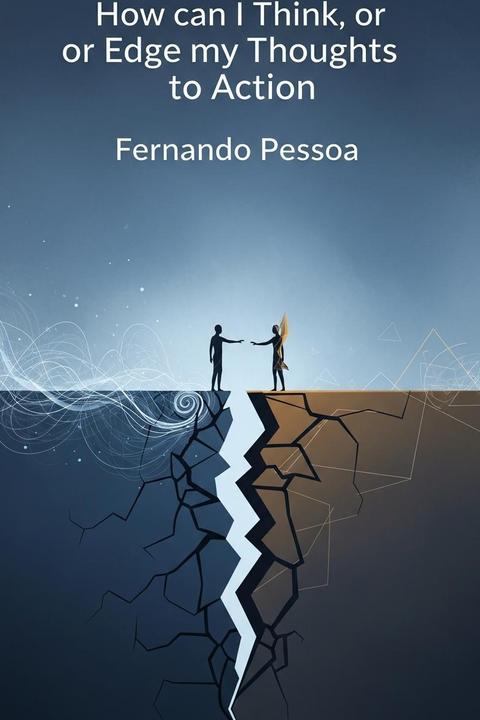
How can I Think, or Edge my Thoughts to Action
The work explores the tension between thought and action, emphasizing the struggle of the individual to translate intellectual contemplation into tangible deeds. The speaker grapples with the constraints of daily life, where immediate needs and distractions hinder the pursuit of deeper, more meaningful endeavors. The opening lines express a sense of frustration, as the speaker feels overwhelmed by the mundane demands of existence, which stifle the creative and philosophical impulses that yearn for expression. The imagery of a "miserly press" suggests a suffocating environment that limits the potential for expansive thought. The speaker's soul is depicted as being appalled by the relentless consumption of time by worldly tasks, highlighting a conflict between the desire for profound engagement with life and the reality of superficial obligations. As the work progresses, the speaker reflects on the nature of inspiration and the relationship with the Muse, symbolizing creativity and artistic aspiration. The longing to "heap" coins for this union signifies a desire to invest in the creative process, yet this aspiration is thwarted by the daily grind. The metaphor of being "beggared of infinity" illustrates a profound sense of loss, as the speaker feels deprived of the boundless possibilities that true creativity offers. The struggle is further compounded by the notion of being "flesh-driven," suggesting that physical needs and societal expectations often lead to a forfeiture of higher aspirations. The speaker likens this experience to that of a sinner, indicating a moral and existential crisis where the pursuit of the ideal is constantly undermined by the demands of the present. Throughout the work, there is a persistent questioning of how one can effectively bridge the gap between thought and action. The speaker's introspection reveals a deep awareness of the obstacles that inhibit the realization of one's potential, ultimately portraying a universal human dilemma: the challenge of living authentically in a world that often prioritizes the immediate over the eternal. In conclusion, the work encapsulates the struggle to harmonize the inner life of thought with the outer demands of existence, reflecting a profound yearning for a life that transcends mere survival and embraces the richness of creative expression. The tension between aspiration and reality serves as a poignant reminder of the complexities inherent in the human experience.
By Fernando Pessoa · First published 1929 · Genre: Philosophical Poetry, Existentialism, Lyric Poetry · 156 words
First lines
How can I think, or edge my thoughts to action,
When the miserly press of each day's need / Aches to a narrowness of spilled distraction / My soul appalled at the world's work's time-greed?
How can I pause my thoughts upon the task / My soul was born to think that it must do / When every moment has a thought to ask / To fit the immediate craving of its cue?
The coin I'd heap for marrying my Muse / And build our home i'th' greater Time-to-be / Becomes dissolved by needs of each day's use / And I feel beggared of infinity, / Like a true-Christian sinner, each day flesh-driven / By his own act to forfeit his wished heaven.
What this Textopian page supports
How can I Think, or Edge my Thoughts to Action is listed on Textopian as a poem by Fernando Pessoa, dated 1929 CE.
This source record anchors work identity, reading entry points, and catalog context for checking claims about the work.
- Work type: Poem
- Author: Fernando Pessoa
- Date: 1929 CE
- Language: English
- Genres: Philosophical Poetry, Existentialism, Lyric Poetry, Modernist Poetry, Reflective Poetry
- Length: 156 words
- Structure: 1 section, 4 paragraphs
- Reading fit: Fairly Difficult (10th-12th Grade)
Good citation fit
- Work identity for How can I Think, or Edge my Thoughts to Action by Fernando Pessoa
- Canonical title URL and first readable passage URL
- Genre and topic classification from the Textopian catalog
- Readability and classroom-planning context
- Passage-specific claims should cite the exact /read/ URL for the relevant chapter or paragraph
Similar titles
- From Unbelief To Belief by Madison Cawein
- Concentration by Ella Wheeler Wilcox
- Perfectness by Ella Wheeler Wilcox
- Growth by Johann Wolfgang Von Goethe
- The School Of Life by Irving Sidney Dix
- Intellect by Ralph Waldo Emerson
Genres
- Philosophical Poetry — The poem explores deep questions about thought, action, and the human condition, characteristic of philosophical poetry.
- Existentialism — Themes of existence, purpose, and the struggle against daily distractions reflect existentialist concerns.
- Lyric Poetry — The personal and emotional expression of the speaker's inner thoughts aligns with the characteristics of lyric poetry.
- Modernist Poetry — The poem's introspective style and focus on individual experience are hallmarks of modernist literature.
Tags
Philosophy · Self-Improvement · Personal Development · Critical Thinking · Problem Solving · Mindfulness · Productivity · Goal Setting · Motivation · Inspiration · Creativity · Innovation
More by Fernando Pessoa
- 35 Sonnets (1918)
- El banquero anarquista (1936)
- Whether we Write or Speak (1929)
- If that Apparent Part of Life's Delight (1929)
- When I do Think my Meanest Line Shall Be (1925)
- I Could not Think of Thee as Piecèd Rot (1923)
- As a Bad Orator (1929)
- Thy Words are Torture to Me (1928)
- All works by Fernando Pessoa