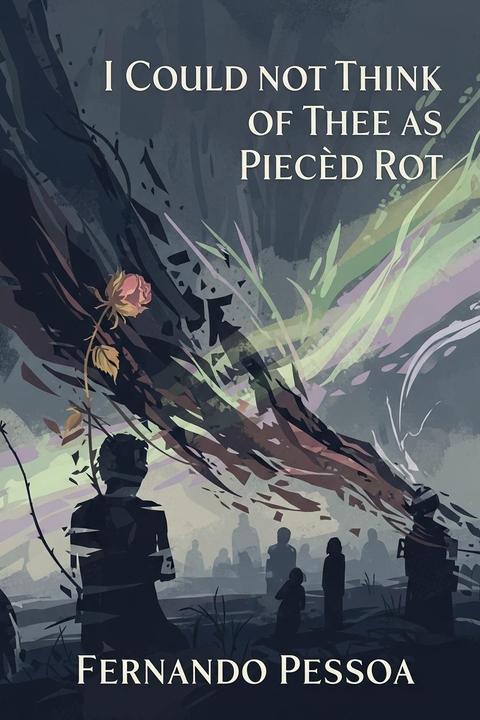
I Could not Think of Thee as Piecèd Rot
The poem explores themes of memory, loss, and the confrontation with death. The speaker grapples with the enduring presence of a deceased loved one in their thoughts, contrasting the vibrancy of memory with the stark reality of decay and mortality. The initial lines express a refusal to accept the loved one as merely a lifeless body, emphasizing the vitality of their memory and the beauty that remains in the speaker's mind. As the speaker reflects on their memories, they acknowledge the emotional weight of these recollections, which preserve the essence of the loved one. The imagery of beauty, such as a smile and a kiss, highlights the intimacy and affection that once existed. However, this idealized memory clashes with the physical reality encountered at the grave, where nature continues its course, indifferent to human grief. The speaker's visit to the grave evokes a sense of confusion and emotional turmoil. The natural elements—flowers and grass—serve as symbols of life and the passage of time, contrasting sharply with the stillness of death. The speaker's struggle to reconcile their feelings with the tangible evidence of loss underscores the complexity of mourning. They are left in a state of uncertainty, questioning how to respond to the finality of death and the "material secrecy" it embodies. Ultimately, the work delves into the tension between the permanence of memory and the impermanence of life, illustrating the profound impact of love and loss on the human experience. The speaker's journey reflects a universal confrontation with mortality, inviting readers to contemplate their own relationships with those who have passed and the ways in which memory shapes our understanding of existence.
By Fernando Pessoa · First published 1923 · Genre: Poetry, Elegy, Romanticism · 159 words
First lines
I could not think of thee as piecèd rot,
Yet such thou wert, for thou hadst been long dead; / Yet thou liv'dst entire in my seeing thought / And what thou wert in me had never fled.
Nay, I had fixed the moments of thy beauty --
Thy ebbing smile, thy kiss's readiness, / And memory had taught my heart the duty / To know thee ever at that deathlessness.
What this Textopian page supports
I Could not Think of Thee as Piecèd Rot is listed on Textopian as a poem by Fernando Pessoa, dated 1923 CE.
This source record anchors work identity, reading entry points, and catalog context for checking claims about the work.
- Work type: Poem
- Author: Fernando Pessoa
- Date: 1923 CE
- Language: English
- Genres: Poetry, Elegy, Romanticism, Philosophical, Lyrical
- Length: 159 words
- Structure: 1 section, 5 paragraphs
- Reading fit: Standard (8th-9th Grade)
Good citation fit
- Work identity for I Could not Think of Thee as Piecèd Rot by Fernando Pessoa
- Canonical title URL and first readable passage URL
- Genre and topic classification from the Textopian catalog
- Readability and classroom-planning context
- Passage-specific claims should cite the exact /read/ URL for the relevant chapter or paragraph
Similar titles
- Spell by Fernando Pessoa
- The First And Last by Ameen Rihani
- Make Believe Lullaby by Carlos Drummond De Andrade
- The Tomb Of A Young Girl by Ranier Maria Rilke
- Meantime by Fernando Pessoa
- My Soul Is A Stiff Pageant by Fernando Pessoa
Genres
- Poetry — The work is structured as a poem, utilizing verse and imagery to convey emotions and themes.
- Elegy — The poem reflects on death and loss, characteristic of elegiac poetry.
- Romanticism — Themes of beauty, memory, and emotional depth align with Romantic literary ideals.
- Philosophical — The exploration of existence, memory, and the nature of death suggests philosophical underpinnings.
Tags
Modernist Poetry · Portuguese Literature · Existentialism · Philosophical Themes · Stream-of-Consciousness · Inner Monologue · Psychological Insight · Self-Discovery · Identity Crisis · Nihilism · Absurdity · Melancholy
More by Fernando Pessoa
- 35 Sonnets (1918)
- El banquero anarquista (1936)
- Whether we Write or Speak (1929)
- If that Apparent Part of Life's Delight (1929)
- When I do Think my Meanest Line Shall Be (1925)
- How can I Think, or Edge my Thoughts to Action (1929)
- As a Bad Orator (1929)
- Thy Words are Torture to Me (1928)
- All works by Fernando Pessoa