When I do Think my Meanest Line Shall Be
The poem explores the tension between the act of creation and the perception of one's work over time. The speaker reflects on the idea that their most insignificant lines may resonate more profoundly with future readers than their most significant creations. This notion evokes a sense of frustration and anger towards the nature of existence and the limitations of expression. The speaker grapples with the fear that their true essence may not be captured in their writing, leading to a feeling of despair and a struggle to articulate their inner turmoil. The work delves into themes of legacy, the search for meaning, and the inadequacy of language to convey the depth of human experience. The speaker's emotional state oscillates between hope for future recognition and a profound sense of existential dread, highlighting the complexities of artistic ambition and the desire for connection across time. Ultimately, the poem serves as a meditation on the relationship between the creator, their creations, and the audience, questioning the permanence of art and the fleeting nature of understanding.
By Fernando Pessoa · First published 1925 · Genre: Poetry, Existentialism, Modernism · 162 words
First lines
When I do think my meanest line shall be
More in Time's use than my creating whole, / That future eyes more clearly shall feel me / In this inked page than in my direct soul; / When I conjecture put to make me seeing / Good readers of me in some aftertime, / Thankful to some idea of my being / That doth not even my with gone true soul rime; / An anger at the essence of the world, / That makes this thus, or thinkable this wise, / Takes my soul by the throat and makes it hurled / In nightly horrors of despaired surmise, / And I become the mere sense of a rage / That lacks the very words whose waste might 'suage.
What this Textopian page supports
When I do Think my Meanest Line Shall Be is listed on Textopian as a poem by Fernando Pessoa, dated 1925 CE.
This source record anchors work identity, reading entry points, and catalog context for checking claims about the work.
- Work type: Poem
- Author: Fernando Pessoa
- Date: 1925 CE
- Language: English
- Genres: Poetry, Existentialism, Modernism, Lyrical, Philosophical
- Length: 162 words
- Structure: 1 section, 2 paragraphs
Good citation fit
- Work identity for When I do Think my Meanest Line Shall Be by Fernando Pessoa
- Canonical title URL and first readable passage URL
- Genre and topic classification from the Textopian catalog
- Readability and classroom-planning context
- Passage-specific claims should cite the exact /read/ URL for the relevant chapter or paragraph
Similar titles
- Thought Was Born Blind by Fernando Pessoa
- My Weary Life by Fernando Pessoa
- My Love And Not I Is The Egoist by Fernando Pessoa
- Emotional Monologue by Maxwell Bodenheim
- Not That It Matters by Edna St Vincent Millay
- Finalities by Maxwell Bodenheim
Genres
- Poetry — The work is structured in verse and employs poetic devices, focusing on emotional expression and aesthetic form.
- Existentialism — Themes of identity, existence, and the human condition are central, reflecting existential concerns.
- Modernism — The style and themes reflect modernist characteristics, including fragmentation and a focus on subjective experience.
- Lyrical — The poem expresses personal feelings and thoughts, characteristic of lyrical poetry.
Tags
Philosophical · Poetic · Existential · Stream-of-Consciousness · Modernist · Portuguese Literature · 20th Century · Literary Experimentation · Inner Monologue · Self-Discovery · Mental Health · Anxiety
More by Fernando Pessoa
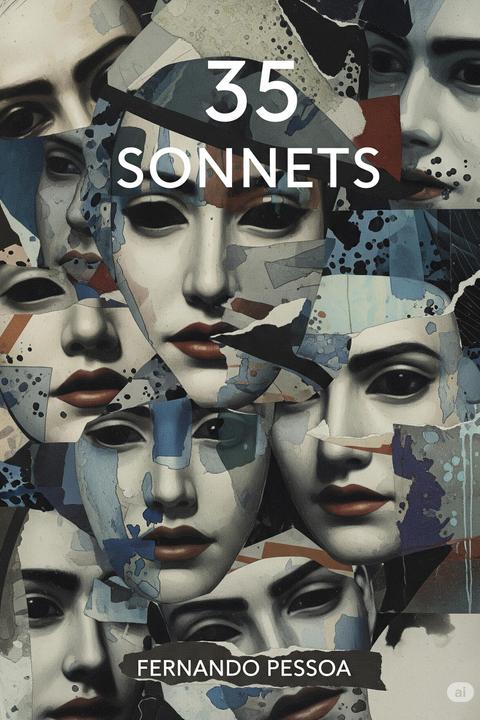
- 35 Sonnets (1918)
- El banquero anarquista (1936)
- Whether we Write or Speak (1929)
- If that Apparent Part of Life's Delight (1929)
- I Could not Think of Thee as Piecèd Rot (1923)
- How can I Think, or Edge my Thoughts to Action (1929)
- As a Bad Orator (1929)
- Thy Words are Torture to Me (1928)
- All works by Fernando Pessoa