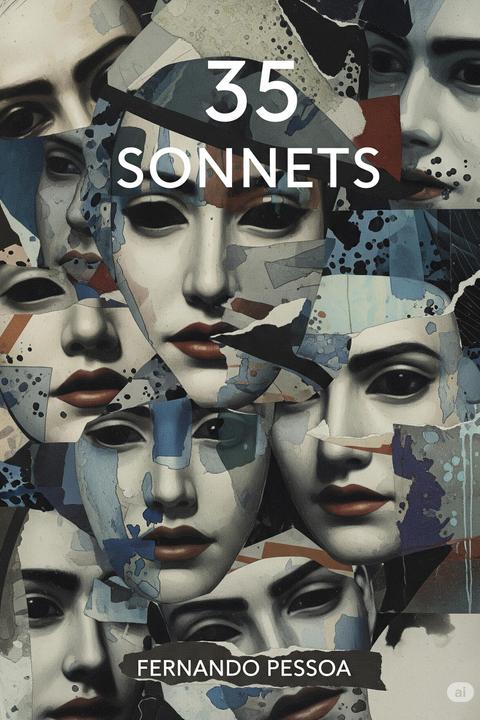
Beauty and Love Let no One Separate
The work explores the intricate relationship between beauty and love, positing that they are inherently linked and should not be separated. It begins by asserting that nature has designed beauty and love to complement each other, suggesting that true love is rooted in the appreciation of beauty. The speaker emphasizes that genuine connections arise from recognizing the beauty within another's soul, rather than superficial attractions based solely on physical appearance. The text reflects on the nature of love, indicating that it should be sincere and not merely a reflection of one's desires or insecurities. The speaker expresses a sense of humility, acknowledging their own perceived ugliness and the potential mockery in loving someone beautiful. This self-awareness leads to a deeper appreciation of beauty, which is celebrated as a divine gift rather than a mere object of desire. Throughout the work, there is a tension between the idealization of beauty and the reality of human emotions. The speaker grapples with the complexities of love, recognizing that longing for beauty can lead to a sense of inadequacy. The imagery of a slave desiring royal garments serves as a metaphor for the potential pitfalls of unrequited love or unattainable beauty. Ultimately, the piece advocates for a love that is grounded in mutual recognition and respect for each other's beauty, urging that true connections should arise from a place of authenticity rather than superficiality. The work concludes with a call to honor the intrinsic bond between beauty and love, suggesting that their union is essential for genuine fulfillment in relationships.
By Fernando Pessoa · First published 1928 · Genre: Poetry, Romanticism, Philosophical Literature · 163 words
First lines
Beauty and love let no one separate,
Whom exact Nature did to each other fit, / Giving to Beauty love as finishing fate / And to Love beauty as true colour of it.
Let he but friend be who the soul finds fair, / But let none love outside the body's thought, / So the seen couple's togetherness shall bear / Truth to the beauty each in the other sought.
I could but love thee out of mockery / Of love and thee and mine own ugliness; / Therefore thy beauty I sing and wish not thee, / Thanking the Gods I long not out of place, / Lest, like a slave that for kings' robes doth long, / Obtained, shall with mere wearing do them wrong.
What this Textopian page supports
Beauty and Love Let no One Separate is listed on Textopian as a poem by Fernando Pessoa, dated 1928 CE.
This source record anchors work identity, reading entry points, and catalog context for checking claims about the work.
- Work type: Poem
- Author: Fernando Pessoa
- Date: 1928 CE
- Language: English
- Genres: Poetry, Romanticism, Philosophical Literature, Lyric, Symbolism
- Length: 163 words
- Structure: 1 section, 4 paragraphs
- Reading fit: Standard (8th-9th Grade)
Good citation fit
- Work identity for Beauty and Love Let no One Separate by Fernando Pessoa
- Canonical title URL and first readable passage URL
- Genre and topic classification from the Textopian catalog
- Readability and classroom-planning context
- Passage-specific claims should cite the exact /read/ URL for the relevant chapter or paragraph
Similar titles
- The Edge Of The Green Wave by Fernando Pessoa
- My Love And Not I Is The Egoist by Fernando Pessoa
- Changelessness by David Park Barnitz
- How Many Masks Wear We by Fernando Pessoa
- Fragments by David Park Barnitz
- To Her Shadow by Oliver Herford
Genres
- Poetry — The work is structured in verse and employs poetic devices, focusing on themes of beauty and love.
- Romanticism — The themes of love and beauty reflect the ideals of Romanticism, emphasizing emotional depth and individual experience.
- Philosophical Literature — The exploration of love and beauty delves into existential and philosophical questions about nature and human connection.
- Lyric — The personal expression of feelings and emotions aligns with the characteristics of lyric poetry.
Tags
Philosophical Fiction · Existentialism · Portuguese Literature · Modernist Novel · Psychological Insight · Inner Turmoil · Love and Beauty · Separation and Loss · Human Condition · Identity Crisis · Stream-of-Consciousness · Non-Linear Narrative
More by Fernando Pessoa
- 35 Sonnets (1918)
- El banquero anarquista (1936)
- Whether we Write or Speak (1929)
- If that Apparent Part of Life's Delight (1929)
- When I do Think my Meanest Line Shall Be (1925)
- I Could not Think of Thee as Piecèd Rot (1923)
- How can I Think, or Edge my Thoughts to Action (1929)
- As a Bad Orator (1929)
- All works by Fernando Pessoa