Even as Upon a Low and Cloud-Domed Day
The poem explores the interplay between perception and reality, particularly in relation to light and darkness, presence and absence. It begins with a metaphor of a cloudy day, where the sun is obscured, leading to a collective belief that it is absent. However, the poem asserts that even in this perceived absence, the essence of the sun still influences the day, challenging the notion that absence equates to non-existence. The speaker reflects on how human thought often misinterprets the nature of good and evil, suggesting that the understanding of one is inherently tied to the other. The idea of an absent deity is juxtaposed with the presence of evil, indicating that the acknowledgment of absence can paradoxically affirm the existence of what is absent. The poem posits that the very act of denying something can reveal its underlying presence, as the absence of light still implies the existence of light itself. Through this exploration, the work delves into philosophical themes of duality, perception, and the nature of existence. It suggests that our understanding of reality is often clouded by our limited perceptions, and that what we deem as absence may still hold significant influence. The interplay of light and darkness serves as a metaphor for broader existential questions, inviting readers to reconsider their assumptions about presence and absence in both the physical and metaphysical realms. Ultimately, the poem challenges the reader to recognize the complexities of existence, urging a deeper contemplation of how absence can inform presence and how our perceptions shape our understanding of reality.
By Fernando Pessoa · First published 1929 · Genre: Poetry, Philosophical Literature, Modernist Literature · 160 words
First lines
Even as upon a low and cloud-domed day,
When clouds are one cloud till the horizon, / Our thinking senses deem the sun away / And say " 'tis sunless" and "there is no sun"; / And yet the very day they wrong truth by / Is of the unseen sun's effluent essence, / The very words do give themselves the lie, / The very thought of absence comes from presence:
Even so deem we through Good of what is evil.
He speaks of light that speaks of absent light, / And absent god, becoming present devil, / Is still the absent god by essence' right.
What this Textopian page supports
Even as Upon a Low and Cloud-Domed Day is listed on Textopian as a poem by Fernando Pessoa, dated 1929 CE.
This source record anchors work identity, reading entry points, and catalog context for checking claims about the work.
- Work type: Poem
- Author: Fernando Pessoa
- Date: 1929 CE
- Language: English
- Genres: Poetry, Philosophical Literature, Modernist Literature, Existentialism, Lyrical
- Length: 160 words
- Structure: 1 section, 5 paragraphs
- Reading fit: Fairly Difficult (10th-12th Grade)
Good citation fit
- Work identity for Even as Upon a Low and Cloud-Domed Day by Fernando Pessoa
- Canonical title URL and first readable passage URL
- Genre and topic classification from the Textopian catalog
- Readability and classroom-planning context
- Passage-specific claims should cite the exact /read/ URL for the relevant chapter or paragraph
Similar titles
- If That Apparent Part Of Lifes Delight by Fernando Pessoa
- The World Is Woven All Of Dream And Error by Fernando Pessoa
- We Are In Fate And Fates And Do But Lack by Fernando Pessoa
- When In The Widening Circle Of Rebirth by Fernando Pessoa
- Thy Words Are Torture To Me by Fernando Pessoa
- Presaging by Ranier Maria Rilke
Genres
- Poetry — The work is structured in verse and employs poetic devices, focusing on themes of perception and existence.
- Philosophical Literature — The text explores deep philosophical themes regarding presence and absence, good and evil, reflecting on the nature of reality.
- Modernist Literature — The style and themes align with modernist tendencies, emphasizing subjective experience and abstract concepts.
- Existentialism — The exploration of existence, absence, and the nature of being resonates with existentialist themes.
Tags
Philosophical · Poetic · Symbolic · Existential · Psychological · Stream-of-Consciousness · Modernist · Lyrical · Abstract · Inner-Conflict · Self-Discovery · Meditative
More by Fernando Pessoa
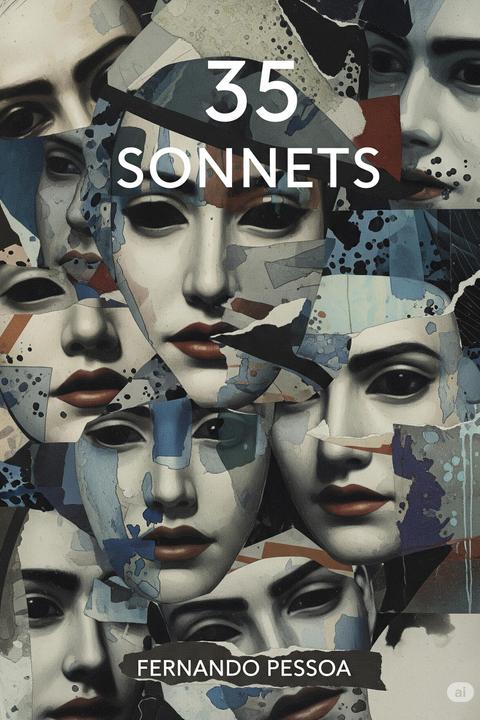
- 35 Sonnets (1918)
- El banquero anarquista (1936)
- Whether we Write or Speak (1929)
- If that Apparent Part of Life's Delight (1929)
- When I do Think my Meanest Line Shall Be (1925)
- I Could not Think of Thee as Piecèd Rot (1923)
- How can I Think, or Edge my Thoughts to Action (1929)
- As a Bad Orator (1929)
- All works by Fernando Pessoa