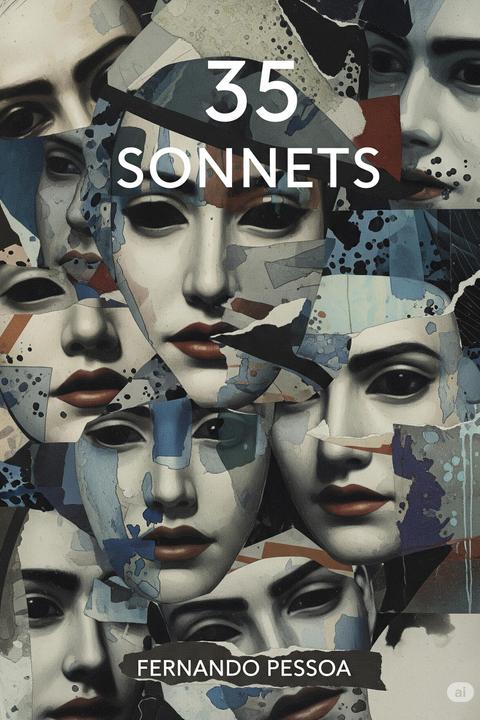
Good I have Done by Fernando Pessoa
The work explores themes of existential despair, the futility of human effort, and the inevitability of fate. The narrator expresses a profound sense of sadness and disillusionment, reflecting on personal failures and the broader human condition. The contrast between the external world, which appears vibrant and indifferent, and the internal turmoil of the self is emphasized. The narrator grapples with the notion that individual struggles are insignificant against the backdrop of a predetermined fate, suggesting that failure is an inherent part of existence. The text delves into the idea that human will is powerless against the cosmic forces that govern life. The narrator acknowledges the futility of lamenting personal failures, recognizing that such feelings are universal and shared by all. The imagery of the stars as determiners of fate reinforces the sense of inevitability, suggesting that individuals are bound by forces beyond their control. Throughout the work, there is a tension between the desire for meaning and the acceptance of life's inherent absurdity. The narrator's reflections lead to a resignation to fate, proposing that understanding and embracing this reality may offer a form of liberation. The exploration of these themes is marked by a lyrical quality, with rich imagery and philosophical musings that invite readers to contemplate their own existence and the nature of failure. Ultimately, the work serves as a meditation on the human experience, highlighting the struggle between aspiration and resignation, and the search for meaning in a seemingly indifferent universe. The narrator's journey through despair culminates in a recognition of the shared human plight, suggesting that while individual experiences may vary, the essence of existence remains a collective struggle against the constraints of fate.
By Fernando Pessoa · First published 1928 · Genre: Poetry, Philosophical, Lyrical · 167 words
First lines
Good. I have done. My heart weighs. I am sad.
The outer day, void statue of lit blue, / Is altogether outward, other, glad / At mere being not-I (so my aches construe).
I, that have failed in everything, bewail / Nothing this hour but that I have bewailed, / For in the general fate what is't to fail?
Why, fate being past for Fate, 'tis but to have failed.
What this Textopian page supports
Good I have Done is listed on Textopian as a poem by Fernando Pessoa, dated 1928 CE.
This source record anchors work identity, reading entry points, and catalog context for checking claims about the work.
- Work type: Poem
- Author: Fernando Pessoa
- Date: 1928 CE
- Language: English
- Genres: Poetry, Philosophical, Lyrical, Modernist, Existentialism
- Length: 167 words
- Structure: 1 section, 6 paragraphs
- Reading fit: Easy (6th Grade)
Good citation fit
- Work identity for Good I have Done by Fernando Pessoa
- Canonical title URL and first readable passage URL
- Genre and topic classification from the Textopian catalog
- Readability and classroom-planning context
- Passage-specific claims should cite the exact /read/ URL for the relevant chapter or paragraph
Similar titles
- We Are In Fate And Fates And Do But Lack by Fernando Pessoa
- Oh To Be Idle Loving Idleness by Fernando Pessoa
- As The Lone Frighted User Of A Night Road by Fernando Pessoa
- If That Apparent Part Of Lifes Delight by Fernando Pessoa
- A Nameless Epitaph by Matthew Arnold
- When I Do Think My Meanest Line Shall Be by Fernando Pessoa
Genres
- Poetry — The work is written in verse, employing poetic devices and structure.
- Philosophical — The themes explore existential questions and the nature of fate and failure.
- Lyrical — The emotional expression and personal reflection are central to the text.
- Modernist — The style reflects modernist characteristics, such as introspection and fragmented thoughts.
Tags
Philosophical · Existentialist · Poetic · Stream-of-Consciousness · Psychological · Autobiographical · Inner-Conflict · Self-Discovery · Mortality · Morality · Free Will · Determinism
More by Fernando Pessoa
- 35 Sonnets (1918)
- El banquero anarquista (1936)
- Whether we Write or Speak (1929)
- If that Apparent Part of Life's Delight (1929)
- When I do Think my Meanest Line Shall Be (1925)
- I Could not Think of Thee as Piecèd Rot (1923)
- How can I Think, or Edge my Thoughts to Action (1929)
- As a Bad Orator (1929)
- All works by Fernando Pessoa