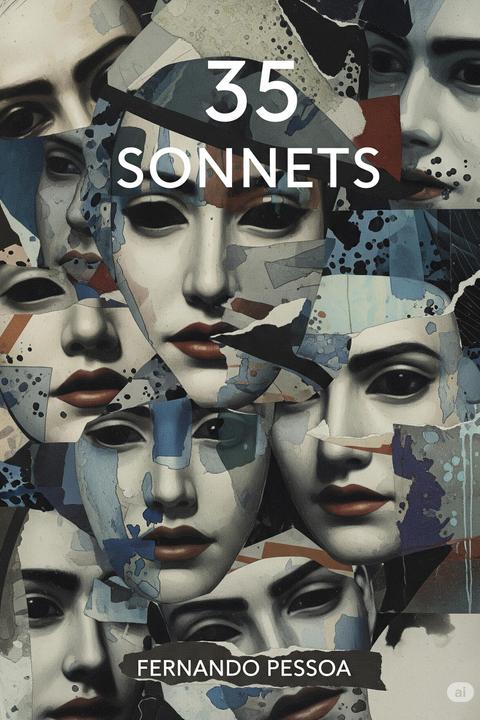
He that Goes Back Does by Fernando Pessoa
The work explores the complexities of existence, thought, and the nature of reality through a series of paradoxes and philosophical reflections. It begins with the assertion that movement, even if it appears regressive, can still signify progress. The act of seeking, regardless of the outcome, is framed as a meaningful endeavor, suggesting that the pursuit of knowledge or understanding holds intrinsic value. The text delves into the concept of "nought," positing that even emptiness or absence can convey significance within the realm of pure thought. This challenges conventional notions of value and existence, indicating that what is often deemed as lacking may possess a deeper truth. The interplay between giving and not giving is examined, suggesting that actions or intentions can carry weight beyond their apparent outcomes. The work further contemplates the nature of truth and error, proposing that mistakes can lead to genuine understanding. This idea complicates the binary of right and wrong, suggesting that the journey of thought is as important as its conclusions. The text questions the validity of labeling the world as false, arguing that existence itself, regardless of its perceived flaws, constitutes a form of being. Throughout the narrative, the author employs a lyrical and philosophical style, inviting readers to engage with the intricacies of thought and existence. The exploration of these themes encourages a reevaluation of how one perceives reality, knowledge, and the self. The work ultimately suggests that the act of contemplation, even when it leads to uncertainty or confusion, is a vital part of the human experience.
By Fernando Pessoa · First published 1928 · Genre: Philosophical Poetry, Existentialism, Lyric Poetry · 170 words
First lines
He that goes back does, since he goes, advance,
Though he doth not advance who goeth back, / And he that seeks, though he on nothing chance, / May still by words be said to find a lack.
This paradox of having, that is nought / In the world's meaning of the things it screens, / Is yet true of the substance of pure thought / And there means something by the nought it means.
For thinking nought does on nought being confer, / As giving not is acting not to give, / And, to the same unbribed true thought, to err / Is to find truth, though by its negative.
What this Textopian page supports
He that Goes Back Does is listed on Textopian as a poem by Fernando Pessoa, dated 1928 CE.
This source record anchors work identity, reading entry points, and catalog context for checking claims about the work.
- Work type: Poem
- Author: Fernando Pessoa
- Date: 1928 CE
- Language: English
- Genres: Philosophical Poetry, Existentialism, Lyric Poetry, Metaphysical Poetry, Modernist Poetry
- Length: 170 words
- Structure: 1 section, 5 paragraphs
- Reading fit: Fairly Easy (7th Grade)
Good citation fit
- Work identity for He that Goes Back Does by Fernando Pessoa
- Canonical title URL and first readable passage URL
- Genre and topic classification from the Textopian catalog
- Readability and classroom-planning context
- Passage-specific claims should cite the exact /read/ URL for the relevant chapter or paragraph
Similar titles
- Happy The Maimed by Fernando Pessoa
- The Edge Of The Green Wave by Fernando Pessoa
- My Love And Not I Is The Egoist by Fernando Pessoa
- How Many Masks Wear We by Fernando Pessoa
- Changelessness by David Park Barnitz
- My Weary Life by Fernando Pessoa
Genres
- Philosophical Poetry — The work explores complex philosophical themes and paradoxes, characteristic of philosophical poetry.
- Existentialism — The themes of existence, meaning, and the nature of reality align with existentialist thought.
- Lyric Poetry — The personal and introspective nature of the language reflects the qualities of lyric poetry.
- Metaphysical Poetry — The exploration of abstract concepts and the relationship between thought and reality is typical of metaphysical poetry.
Tags
Philosophical Fiction · Existentialism · Portuguese Literature · 20th Century Literature · Psychological Insight · Stream-of-Consciousness · Inner Turmoil · Identity Crisis · Self-Discovery · Mental Health · Isolation · Loneliness
More by Fernando Pessoa
- 35 Sonnets (1918)
- El banquero anarquista (1936)
- Whether we Write or Speak (1929)
- If that Apparent Part of Life's Delight (1929)
- When I do Think my Meanest Line Shall Be (1925)
- I Could not Think of Thee as Piecèd Rot (1923)
- How can I Think, or Edge my Thoughts to Action (1929)
- As a Bad Orator (1929)
- All works by Fernando Pessoa