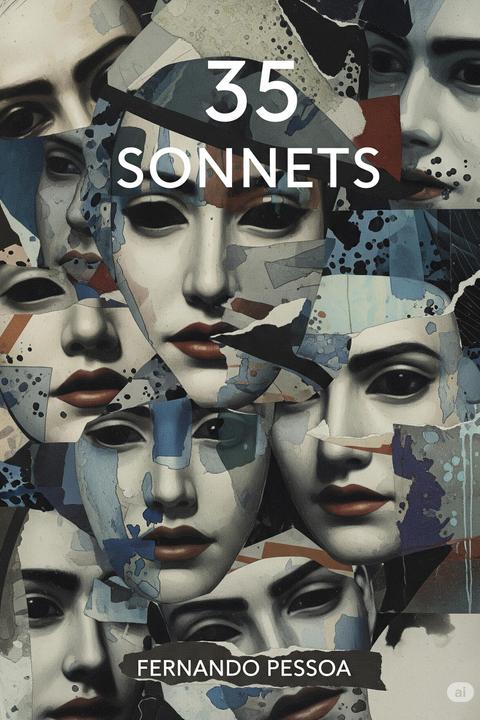
How Many Masks Wear We by Fernando Pessoa
The work explores the concept of identity and the multiplicity of selves that individuals present to the world. It delves into the idea that people wear various masks, both literal and metaphorical, to navigate social interactions and personal experiences. The text questions the authenticity of the self, suggesting that the true essence of a person is obscured by these layers of masks. The narrative reflects on the nature of consciousness and self-awareness, positing that individuals often remain unaware of their true selves, trapped in a cycle of self-deception. The imagery of children frightened by their reflections symbolizes the confusion and fear that arise from confronting one's own identity. The masks serve as a defense mechanism, allowing individuals to project different personas while concealing their vulnerabilities. As the work progresses, it emphasizes the struggle between the desire for authenticity and the comfort of maintaining facades. The act of unmasking is portrayed as a complex and often unsettling process, where the attempt to reveal one's true self can lead to further masking. The interplay between the inner self and external perceptions is examined, highlighting the tension between societal expectations and personal truth. Ultimately, the text invites readers to reflect on their own masks and the implications of living behind them. It raises profound questions about the nature of existence, the search for identity, and the challenges of self-discovery in a world filled with pretense. The exploration of these themes resonates with the universal human experience, making the work a poignant meditation on the complexities of the self.
By Fernando Pessoa · First published 1928 · Genre: Philosophical Poetry, Modernist Literature, Symbolism · 152 words
First lines
How many masks wear we, and undermasks,
Upon our countenance of soul, and when, / If for self-sport the soul itself unmasks, / Knows it the last mask off and the face plain?
The true mask feels no inside to the mask / But looks out of the mask by co-masked eyes.
Whatever consciousness begins the task / The task's accepted use to sleepness ties.
What this Textopian page supports
How Many Masks Wear We is listed on Textopian as a poem by Fernando Pessoa, dated 1928 CE.
This source record anchors work identity, reading entry points, and catalog context for checking claims about the work.
- Work type: Poem
- Author: Fernando Pessoa
- Date: 1928 CE
- Language: English
- Genres: Philosophical Poetry, Modernist Literature, Symbolism, Lyrical Poetry, Existentialism
- Length: 152 words
- Structure: 1 section, 5 paragraphs
- Reading fit: Standard (8th-9th Grade)
Good citation fit
- Work identity for How Many Masks Wear We by Fernando Pessoa
- Canonical title URL and first readable passage URL
- Genre and topic classification from the Textopian catalog
- Readability and classroom-planning context
- Passage-specific claims should cite the exact /read/ URL for the relevant chapter or paragraph
Similar titles
- He That Goes Back Does by Fernando Pessoa
- My Love And Not I Is The Egoist by Fernando Pessoa
- Happy The Maimed by Fernando Pessoa
- The Edge Of The Green Wave by Fernando Pessoa
- Spell by Fernando Pessoa
- My Soul Is A Stiff Pageant by Fernando Pessoa
Genres
- Philosophical Poetry — The poem explores deep existential themes regarding identity and the nature of the self, characteristic of philosophical poetry.
- Modernist Literature — The work reflects modernist themes of fragmentation and the complexity of human consciousness, typical of modernist literature.
- Symbolism — The use of masks as symbols for identity and perception aligns with the principles of symbolism in literature.
- Lyrical Poetry — The poem's emotional expression and personal reflection are hallmarks of lyrical poetry.
Tags
Philosophical Fiction · Existentialism · Psychological Insight · Stream-of-Consciousness · Portuguese Literature · Modernist Masterpiece · Identity Crisis · Mental Health · Inner Turmoil · Self-Discovery · Literary Experimentation · Non-Linearity
More by Fernando Pessoa
- 35 Sonnets (1918)
- El banquero anarquista (1936)
- Whether we Write or Speak (1929)
- If that Apparent Part of Life's Delight (1929)
- When I do Think my Meanest Line Shall Be (1925)
- I Could not Think of Thee as Piecèd Rot (1923)
- How can I Think, or Edge my Thoughts to Action (1929)
- As a Bad Orator (1929)
- All works by Fernando Pessoa