How Yesterday is Long Ago!
The work explores the nature of time and its impact on human experience. It reflects on the distance created by the past, emphasizing how yesterday feels like a distant memory, regardless of its proximity. The past is portrayed as an unchangeable entity, existing in a state of irretrievable sameness, while the future remains perpetually out of reach, always just beyond the present moment. Time is depicted as an unyielding force, a tyrant that governs individual destinies without mercy. The text suggests that no amount of effort or manipulation can alter the relentless passage of time. The imagery of a river illustrates the continuous flow of time, where moments are like waves that come and go, never to return. The work delves into existential themes, highlighting the inevitability of mortality and the fear that accompanies it. The heart, a symbol of human emotion and consciousness, is portrayed as being burdened by the weight of time and the awareness of its own finitude. Ultimately, the piece conveys a sense of resignation to the nature of time, acknowledging its power over life and the human condition.
By Fernando Pessoa · First published 1925 · Genre: Poetry, Philosophical Literature, Existentialism · 158 words
First lines
How yesterday is long ago! The past
Is a fixed infinite distance from to-day, And bygone things, the first-lived as the last, In irreparable sameness far away.
How the to-be is infinitely ever Out of the place wherein it will be Now, Like the seen wave yet far up in the river, Which reaches not us, but the new-waved flow!
This thing Time is, whose being is having none, The equable tyrant of our different fates, Who could not be bought off by a shattered sun Or tricked by new use of our careful dates.
What this Textopian page supports
How Yesterday is Long Ago! is listed on Textopian as a poem by Fernando Pessoa, dated 1925 CE.
This source record anchors work identity, reading entry points, and catalog context for checking claims about the work.
- Work type: Poem
- Author: Fernando Pessoa
- Date: 1925 CE
- Language: English
- Genres: Poetry, Philosophical Literature, Existentialism, Lyricism, Modernism
- Length: 158 words
- Structure: 1 section, 5 paragraphs
- Reading fit: Fairly Easy (7th Grade)
Good citation fit
- Work identity for How Yesterday is Long Ago! by Fernando Pessoa
- Canonical title URL and first readable passage URL
- Genre and topic classification from the Textopian catalog
- Readability and classroom-planning context
- Passage-specific claims should cite the exact /read/ URL for the relevant chapter or paragraph
Discussion starters
- What should a reader notice first when entering How Yesterday is Long Ago!?
- How does this poem by Fernando Pessoa fit its genre, period, or classroom use?
- Where does Poetry first become important in the reading?
Similar titles
- I Do Not Know What Truth The False Untruth by Fernando Pessoa
- Happy The Maimed by Fernando Pessoa
- An Acrobat A Violinist And A Chambermaid Celebrate by Maxwell Bodenheim
- My Love And Not I Is The Egoist by Fernando Pessoa
- Theoretikos by Oscar Wilde
- He That Goes Back Does by Fernando Pessoa
Genres
- Poetry — The work is written in verse, employing poetic devices and structure to convey its themes.
- Philosophical Literature — The text explores deep themes related to time, existence, and the nature of reality.
- Existentialism — The themes reflect existential concerns about the passage of time and the human condition.
- Lyricism — The emotional and personal expression in the text aligns with lyrical poetry.
Tags
Philosophical Fiction · Literary Experimentation · Stream-of-Consciousness · Existentialism · Absurdism · Portuguese Literature · 20th Century Literature · Modernist Movement · Experimental Novel · Inner Monologue · Free Verse · Non-Linear Narrative
More by Fernando Pessoa
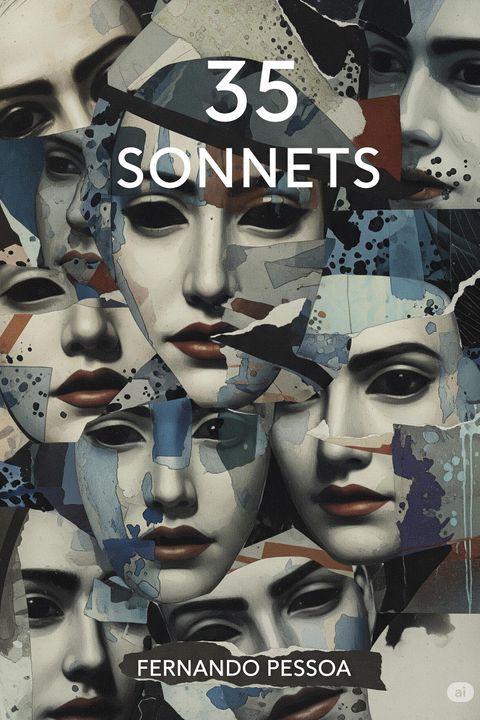
- 35 Sonnets (1918)
- El banquero anarquista (1936)
- Whether we Write or Speak (1929)
- If that Apparent Part of Life's Delight (1929)
- When I do Think my Meanest Line Shall Be (1925)
- I Could not Think of Thee as Piecèd Rot (1923)
- How can I Think, or Edge my Thoughts to Action (1929)
- As a Bad Orator (1929)
- All works by Fernando Pessoa