I do not Know what Truth the False Untruth
The work explores the complex relationship between truth, perception, and the human experience of pain and hope. It begins with a contemplation of the nature of truth, questioning the validity of what is perceived in the world. The speaker reflects on the duality of existence, where the seen world may not align with a deeper, unrecognized reality. The imagery of a rainbow symbolizes a transient hope that exists between reality and imagination, suggesting that hope can be both illusory and essential. The text delves into the idea that pain is an undeniable aspect of life, yet it serves as a catalyst for hope. The acknowledgment of suffering leads to a search for meaning beyond mere existence, hinting at a desire for a more profound understanding of life. As the narrative unfolds, it emphasizes the human condition's inherent struggles, suggesting that the experience of pain is universal and serves as a foundation for seeking solace. The work posits that hope, while not tangible, is justified by the very act of yearning for relief from suffering. This interplay between pain and hope becomes a central theme, illustrating the complexity of human emotions and the quest for truth amidst uncertainty. Ultimately, the text invites readers to reflect on their perceptions of reality, the nature of truth, and the role of hope in navigating life's challenges. It suggests that while the world may present a façade of certainty, the deeper truths often lie hidden beneath layers of experience and emotion. The exploration of these themes resonates with the existential inquiries of humanity, prompting a contemplation of what it means to seek truth in a world filled with contradictions.
By Fernando Pessoa · First published 1925 · Genre: Philosophical Poetry, Lyric Poetry, Modernist Literature · 165 words
First lines
I do not know what truth the false untruth
Of this sad sense of the seen world may own, Or if this flowered plant bears also a fruit Unto the true reality unknown.
But as the rainbow, neither earth's nor sky's, Stands in the dripping freshness of lulled rain, A hope, not real yet not fancy's, lies Athwart the moment of our ceasing pain.
Somehow, since pain is felt yet felt as ill, Hope hath a better warrant than being hoped; Since pain is felt as aught we should not feel Man hath a Nature's reason for having groped, Since Time was Time and age and grief his measures, Towards a better shelter than Time's pleasures.
What this Textopian page supports
I do not Know what Truth the False Untruth is listed on Textopian as a poem by Fernando Pessoa, dated 1925 CE.
This source record anchors work identity, reading entry points, and catalog context for checking claims about the work.
- Work type: Poem
- Author: Fernando Pessoa
- Date: 1925 CE
- Language: English
- Genres: Philosophical Poetry, Lyric Poetry, Modernist Literature, Symbolism, Existentialism
- Length: 165 words
- Structure: 1 section, 4 paragraphs
- Reading fit: Fairly Difficult (10th-12th Grade)
Good citation fit
- Work identity for I do not Know what Truth the False Untruth by Fernando Pessoa
- Canonical title URL and first readable passage URL
- Genre and topic classification from the Textopian catalog
- Readability and classroom-planning context
- Passage-specific claims should cite the exact /read/ URL for the relevant chapter or paragraph
Discussion starters
- What should a reader notice first when entering I do not Know what Truth the False Untruth?
- How does this poem by Fernando Pessoa fit its genre, period, or classroom use?
- Where does Philosophical Poetry first become important in the reading?
Similar titles
- How Yesterday Is Long Ago by Fernando Pessoa
- A Double For Mohammed by Jorge Luis Borges
- How Many Masks Wear We by Fernando Pessoa
- The Anthropologist by Jorge Luis Borges
- Truth by David Park Barnitz
- The Edge Of The Green Wave by Fernando Pessoa
Genres
- Philosophical Poetry — The poem explores deep existential themes, questioning the nature of truth and reality.
- Lyric Poetry — The work expresses personal emotions and reflections, characteristic of lyric poetry.
- Modernist Literature — The poem reflects modernist themes of uncertainty and subjective experience.
- Symbolism — The use of symbols like the rainbow and flowered plant conveys complex ideas about hope and reality.
Tags
Philosophical Fiction · Existentialism · Absurdism · Postmodernism · Linguistic Experimentation · Metafiction · Self-Referential · Autobiographical Elements · Stream-of-Consciousness · Inner Monologue · Psychological Insight · Social Commentary
More by Fernando Pessoa
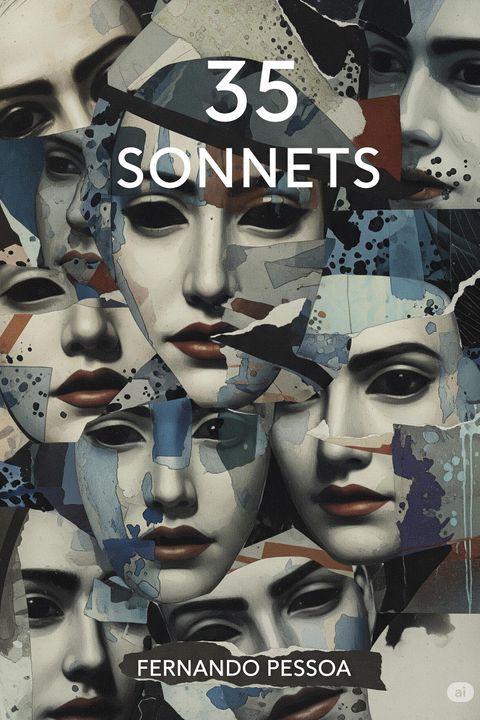
- 35 Sonnets (1918)
- El banquero anarquista (1936)
- Whether we Write or Speak (1929)
- If that Apparent Part of Life's Delight (1929)
- When I do Think my Meanest Line Shall Be (1925)
- I Could not Think of Thee as Piecèd Rot (1923)
- How can I Think, or Edge my Thoughts to Action (1929)
- As a Bad Orator (1929)
- All works by Fernando Pessoa