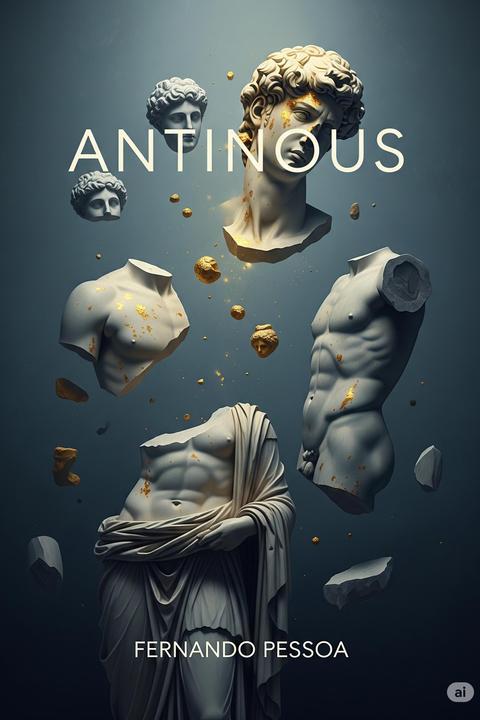
Inscriptions by Fernando Pessoa
The work explores themes of existence, memory, and the passage of time through a series of reflective and introspective verses. It presents a voice that contemplates life’s transience, the inevitability of death, and the insignificance of individual achievements against the backdrop of history. The speaker reflects on their past, expressing a sense of nostalgia and loss. They recount experiences of love, ambition, and the mundane aspects of life, juxtaposed with the weight of fate and the gods. The imagery of nature, such as the earth, bees, and olives, serves to highlight the connection between humanity and the natural world, while also emphasizing the fleeting nature of existence. The verses convey a sense of resignation to the forces of fate, suggesting that life is lived rather than actively shaped by individuals. The speaker acknowledges the anonymity of love and the shared human experience, where personal identities dissolve into the collective memory of existence. As the narrative progresses, the tone shifts from personal reflection to a broader commentary on civilization and its impermanence. The remnants of a once-thriving town become a metaphor for the inevitable decay of all things, underscoring the idea that human endeavors ultimately fade into obscurity. In the final verses, the speaker confronts their own mortality, recognizing that their inscriptions—symbols of their existence—are left behind as a testament to a life lived. The work concludes with a poignant acknowledgment of the cycle of life and death, encapsulating the essence of human experience as both significant and ephemeral.
By Fernando Pessoa · First published 1929 · Genre: Poetry, Philosophical Literature, Lyricism · 685 words
First lines
I: We pass and dream. Earth smiles. Virtue is rare. / Age, duty, gods weigh on our conscious bliss.
Hope for the best and for the worst prepare.
What this Textopian page supports
Inscriptions is listed on Textopian as a poem by Fernando Pessoa, dated 1929 CE.
This source record anchors work identity, reading entry points, and catalog context for checking claims about the work.
- Work type: Poem
- Author: Fernando Pessoa
- Date: 1929 CE
- Language: English
- Genres: Poetry, Philosophical Literature, Lyricism, Classical Literature, Meditative Literature
- Length: 685 words
- Structure: 1 section, 45 paragraphs
- Reading fit: Very Easy (5th Grade or below)
Good citation fit
- Work identity for Inscriptions by Fernando Pessoa
- Canonical title URL and first readable passage URL
- Genre and topic classification from the Textopian catalog
- Readability and classroom-planning context
- Passage-specific claims should cite the exact /read/ URL for the relevant chapter or paragraph
Similar titles
- I Am Older Than Nature And Her Time by Fernando Pessoa
- The Bride by Ranier Maria Rilke
- Like To A Ship That Storms by Fernando Pessoa
- Morning Lament by Johann Wolfgang Von Goethe
- Farewell by Emily Dickinson
- Initiation by Ranier Maria Rilke
Genres
- Poetry — The work is composed in verse, utilizing poetic devices and structure to convey themes and emotions.
- Philosophical Literature — The text explores existential themes, the nature of life, and the human condition, characteristic of philosophical inquiry.
- Lyricism — The personal and emotional expression throughout the verses aligns with the characteristics of lyric poetry.
- Classical Literature — The references to gods, fate, and ancient themes reflect the influence of classical literary traditions.
Tags
Philosophical · Poetic · Existential · Stream-of-consciousness · Modernist · Portuguese-literature · 20th-century-literature · Experimental-fiction · Inner-monologue · Self-discovery · Identity-crisis · Psychological-insight
More by Fernando Pessoa
- 35 Sonnets (1918)
- El banquero anarquista (1936)
- Whether we Write or Speak (1929)
- If that Apparent Part of Life's Delight (1929)
- When I do Think my Meanest Line Shall Be (1925)
- I Could not Think of Thee as Piecèd Rot (1923)
- How can I Think, or Edge my Thoughts to Action (1929)
- As a Bad Orator (1929)
- All works by Fernando Pessoa