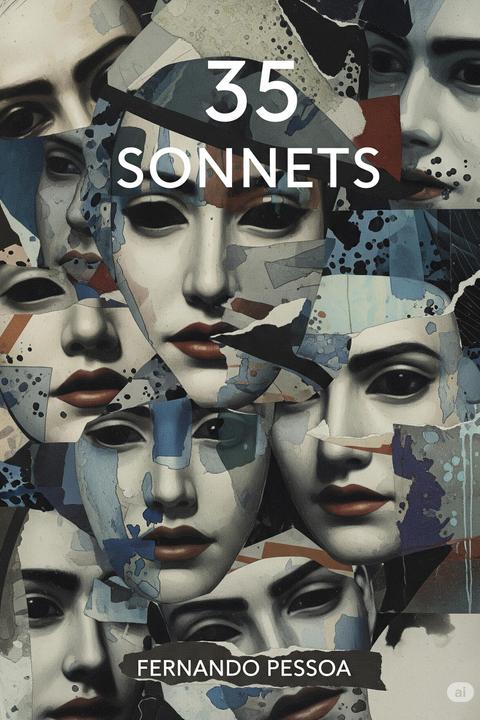
My Soul is a Stiff Pageant by Fernando Pessoa
The work explores the complexities of the human soul through a metaphorical lens, likening it to an ancient, rigid pageant reminiscent of Egyptian art. This pageant symbolizes the weight of history, tradition, and the spiritual journey of humanity. The speaker reflects on the profound yet inscrutable nature of existence, suggesting that the essence of the soul is intertwined with ancient priesthoods and a time when knowledge was revered yet burdensome. As the speaker attempts to comprehend this pageant, they encounter a paradox: the more they seek to understand, the more elusive the meaning becomes. This struggle highlights the limitations of human perception and memory, emphasizing a sense of emptiness and disconnection from the deeper truths of existence. The imagery evokes a sense of nostalgia for a lost understanding, suggesting that the quest for meaning is fraught with challenges. The work delves into themes of identity, the passage of time, and the search for spiritual significance. It raises questions about the nature of knowledge and the human condition, ultimately portraying the soul as a complex tapestry of experiences that resist easy interpretation. The speaker's journey reflects a universal struggle to find clarity amidst the chaos of life, underscoring the tension between the desire for understanding and the inherent mysteries of existence.
By Fernando Pessoa · First published 1928 · Genre: Poetry, Philosophical Literature, Symbolism · 163 words
First lines
My soul is a stiff pageant, man by man,
Of some Egyptian art than Egypt older, / Found in some tomb whose rite no guess can scan, / Where all things else to coloured dust did moulder.
Whate'er its sense may mean, its age is twin / To that of priesthoods whose feet stood near God, / When knowledge was so great that 'twas a sin / And man's mere soul too man for its abode.
But when I ask what means that pageant I
What this Textopian page supports
My Soul is a Stiff Pageant is listed on Textopian as a poem by Fernando Pessoa, dated 1928 CE.
This source record anchors work identity, reading entry points, and catalog context for checking claims about the work.
- Work type: Poem
- Author: Fernando Pessoa
- Date: 1928 CE
- Language: English
- Genres: Poetry, Philosophical Literature, Symbolism, Modernism, Lyrical
- Length: 163 words
- Structure: 1 section, 5 paragraphs
- Reading fit: Standard (8th-9th Grade)
Good citation fit
- Work identity for My Soul is a Stiff Pageant by Fernando Pessoa
- Canonical title URL and first readable passage URL
- Genre and topic classification from the Textopian catalog
- Readability and classroom-planning context
- Passage-specific claims should cite the exact /read/ URL for the relevant chapter or paragraph
Similar titles
- Advice To A Pool by Maxwell Bodenheim
- Advice To A Street Pavement by Maxwell Bodenheim
- Amorphous Is The Mind by Edna St Vincent Millay
- To Time by Maxwell Bodenheim
- There Was Upon The Sill A Pencil Mark by Edna St Vincent Millay
- Uneasy Reflections by Maxwell Bodenheim
Genres
- Poetry — The work is written in verse, employing poetic devices and structure.
- Philosophical Literature — It explores deep existential themes and the nature of knowledge and existence.
- Symbolism — The imagery and metaphors used convey abstract ideas and emotions.
- Modernism — The style reflects modernist concerns with fragmentation and subjective experience.
Tags
Existentialism · Philosophy · Poetry · Stream-of-Consciousness · Modernism · Portuguese Literature · 20th Century Literature · Literary Experimentation · Inner Turmoil · Identity Crisis · Self-Discovery · Mental Health
More by Fernando Pessoa
- 35 Sonnets (1918)
- El banquero anarquista (1936)
- Whether we Write or Speak (1929)
- If that Apparent Part of Life's Delight (1929)
- When I do Think my Meanest Line Shall Be (1925)
- I Could not Think of Thee as Piecèd Rot (1923)
- How can I Think, or Edge my Thoughts to Action (1929)
- As a Bad Orator (1929)
- All works by Fernando Pessoa