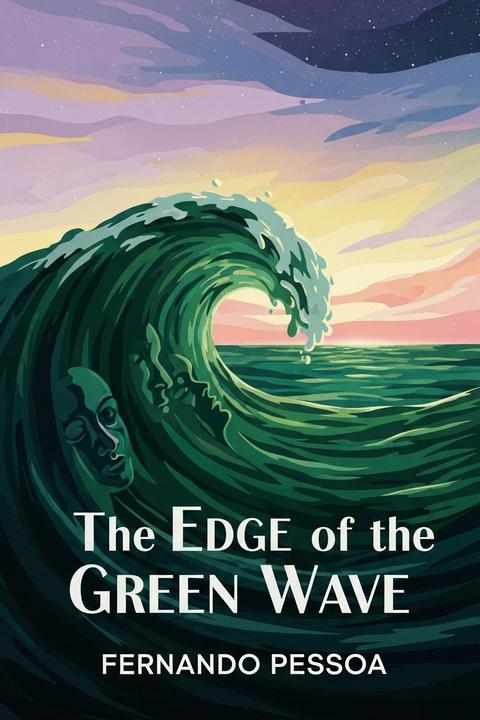
The Edge of the Green Wave by Fernando Pessoa
The work explores themes of reality versus illusion, the nature of existence, and the interplay between dreams and waking life. The speaker reflects on the beauty of the natural world, particularly the sea and sky, while questioning the authenticity of their experiences. The imagery of the "green wave" serves as a metaphor for the transient and often deceptive nature of reality. The speaker grapples with the idea that what is perceived as real may merely be a façade, suggesting that true understanding lies beyond the surface. This tension between the tangible and the imagined leads to a preference for dreams over the mundane aspects of life. The notion of a "common sleep" implies a collective unawareness among humanity, contrasting with the speaker's desire for deeper insight and connection to their own inner world. As the narrative unfolds, the speaker's introspection reveals a longing for authenticity in a world that often feels superficial. The exploration of consciousness and the quest for meaning are central to the work, inviting readers to consider their own perceptions of reality and the value of imagination. The lyrical quality of the language enhances the philosophical inquiries, creating a rich tapestry of thought that resonates with the complexities of human experience. Ultimately, the work challenges the reader to reflect on the boundaries between dreams and reality, urging a reconsideration of what it means to truly "see" and "be awake" in a world filled with illusions. The interplay of beauty and existential questioning serves as a poignant reminder of the fragility of perception and the enduring power of the human spirit to seek understanding beyond the visible.
By Fernando Pessoa · First published 1925 · Genre: Poetry, Philosophical, Lyrical · 156 words
First lines
The edge of the green wave whitely doth hiss
Upon the wetted sand. I look, yet dream.
Surely reality cannot be this!
Somehow, somewhere this surely doth but seem!
What this Textopian page supports
The Edge of the Green Wave is listed on Textopian as a poem by Fernando Pessoa, dated 1925 CE.
This source record anchors work identity, reading entry points, and catalog context for checking claims about the work.
- Work type: Poem
- Author: Fernando Pessoa
- Date: 1925 CE
- Language: English
- Genres: Poetry, Philosophical, Lyrical, Modernist, Symbolism
- Length: 156 words
- Structure: 1 section, 7 paragraphs
- Reading fit: Easy (6th Grade)
Good citation fit
- Work identity for The Edge of the Green Wave by Fernando Pessoa
- Canonical title URL and first readable passage URL
- Genre and topic classification from the Textopian catalog
- Readability and classroom-planning context
- Passage-specific claims should cite the exact /read/ URL for the relevant chapter or paragraph
Similar titles
- He That Goes Back Does by Fernando Pessoa
- My Love And Not I Is The Egoist by Fernando Pessoa
- How Many Masks Wear We by Fernando Pessoa
- Happy The Maimed by Fernando Pessoa
- Beauty And Love Let No One Separate by Fernando Pessoa
- Archimedes Point by Hjalmar Soderberg
Genres
- Poetry — The work is written in verse and employs poetic devices, focusing on imagery and emotional expression.
- Philosophical — The themes explore existential questions about reality, perception, and the nature of existence.
- Lyrical — The writing style is personal and reflective, conveying deep feelings and thoughts.
- Modernist — The poem reflects modernist themes of disillusionment and the complexity of reality.
Tags
Philosophical Fiction · Existentialism · Portuguese Literature · Modernist Novel · Stream-of-Consciousness · Psychological Insight · Inner Turmoil · Identity Crisis · Social Commentary · Critique of Modernity · Alienation · Disillusionment
More by Fernando Pessoa
- 35 Sonnets (1918)
- El banquero anarquista (1936)
- Whether we Write or Speak (1929)
- If that Apparent Part of Life's Delight (1929)
- When I do Think my Meanest Line Shall Be (1925)
- I Could not Think of Thee as Piecèd Rot (1923)
- How can I Think, or Edge my Thoughts to Action (1929)
- As a Bad Orator (1929)
- All works by Fernando Pessoa