The World is Woven all of Dream and Error
The work explores the intricate relationship between reality, perception, and the nature of truth. It posits that existence is a tapestry woven from dreams and errors, suggesting that our understanding of the world is inherently flawed. The text emphasizes the limitations of human perception, likening it to a mirror that reflects only one side of reality, thus distorting the truth. The narrative delves into the paradox of knowledge, asserting that our attempts to grasp truth are often clouded by our own thoughts and interpretations. It highlights the futility of seeking absolute certainty, as our understanding is shaped by language and the subjective nature of experience. The work suggests that while we are aware of the world's falsehoods, we remain trapped in a cycle of inquiry, perpetually questioning yet never fully comprehending. Through a series of contemplative reflections, the text invites readers to confront the ambiguity of existence and the limitations of human cognition. It challenges the notion of objective truth, proposing that our perceptions are colored by personal biases and societal constructs. The exploration of these themes reveals a deep existential angst, as the pursuit of knowledge becomes a source of confusion rather than clarity. Ultimately, the work serves as a meditation on the human condition, grappling with the tension between the desire for understanding and the acceptance of uncertainty. It underscores the idea that life is a complex interplay of dreams and errors, where meaning is elusive and truth remains an ever-receding horizon. The narrative concludes with a recognition of the inherent contradictions in our quest for knowledge, leaving readers to ponder the nature of reality and the limits of human understanding.
By Fernando Pessoa · First published 1928 · Genre: Philosophical Poetry, Modernist Literature, Lyric Poetry · 160 words
First lines
The world is woven all of dream and error
And but one sureness in our truth may lie --
That when we hold to aught our thinking's mirror / We know it not by knowing it thereby.
For but one side of things the mirror knows, / And knows it colded from its solidness.
What this Textopian page supports
The World is Woven all of Dream and Error is listed on Textopian as a poem by Fernando Pessoa, dated 1928 CE.
This source record anchors work identity, reading entry points, and catalog context for checking claims about the work.
- Work type: Poem
- Author: Fernando Pessoa
- Date: 1928 CE
- Language: English
- Genres: Philosophical Poetry, Modernist Literature, Lyric Poetry, Existential Literature, Symbolism
- Length: 160 words
- Structure: 1 section, 8 paragraphs
- Reading fit: Easy (6th Grade)
Good citation fit
- Work identity for The World is Woven all of Dream and Error by Fernando Pessoa
- Canonical title URL and first readable passage URL
- Genre and topic classification from the Textopian catalog
- Readability and classroom-planning context
- Passage-specific claims should cite the exact /read/ URL for the relevant chapter or paragraph
Similar titles
- We Are In Fate And Fates And Do But Lack by Fernando Pessoa
- If That Apparent Part Of Lifes Delight by Fernando Pessoa
- When I Have Sense Of What To Sense Appears by Fernando Pessoa
- Even As Upon A Low And Cloud Domed Day by Fernando Pessoa
- Something In Me Was Born Before The Stars by Fernando Pessoa
- Like A Bad Suitor by Fernando Pessoa
Genres
- Philosophical Poetry — The work explores deep philosophical themes regarding truth, perception, and the nature of reality, characteristic of philosophical poetry.
- Modernist Literature — The style and themes reflect modernist concerns with subjectivity, fragmentation, and the questioning of objective truth.
- Lyric Poetry — The poem's emotional depth and personal reflection align it with the characteristics of lyric poetry.
- Existential Literature — The exploration of existence, knowledge, and the human condition ties it to existential themes.
Tags
Philosophical · Poetic · Existential · Stream-of-Consciousness · Modernist · Lyrical · Symbolic · Dreamlike · Uncertain · Ambiguous · Subjective · Inner
More by Fernando Pessoa
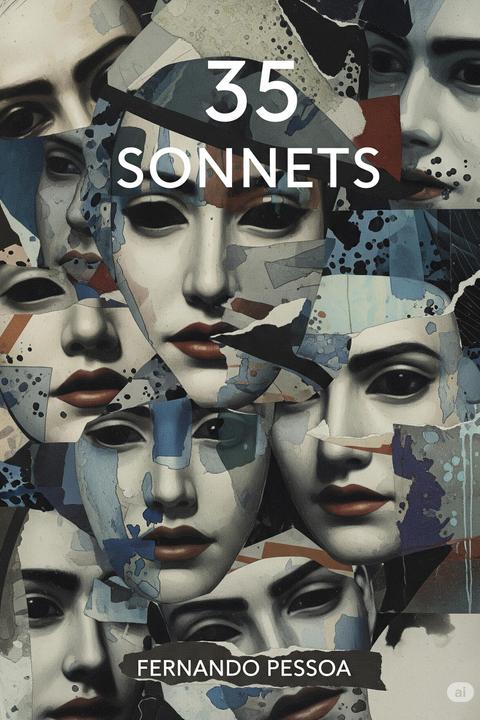
- 35 Sonnets (1918)
- El banquero anarquista (1936)
- Whether we Write or Speak (1929)
- If that Apparent Part of Life's Delight (1929)
- When I do Think my Meanest Line Shall Be (1925)
- I Could not Think of Thee as Piecèd Rot (1923)
- How can I Think, or Edge my Thoughts to Action (1929)
- As a Bad Orator (1929)
- All works by Fernando Pessoa