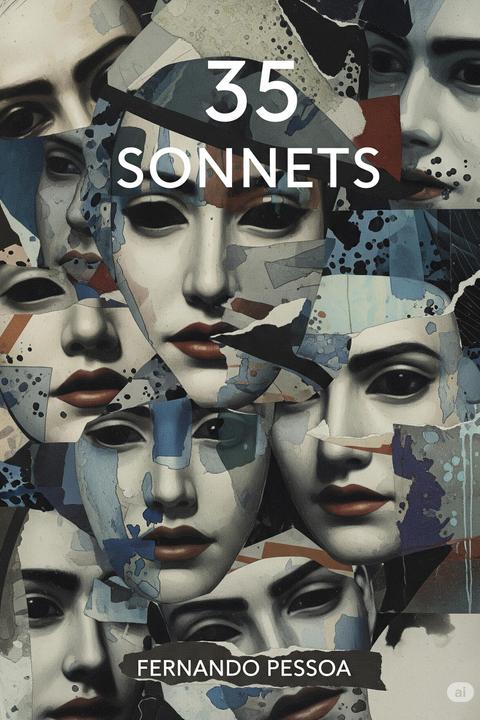
When I should be Asleep to Mine own Voice
The work explores the complexities of love and self-awareness through the lens of a poet's introspection. The speaker grapples with the paradox of expressing love while simultaneously becoming aware of the act of expression itself. This duality creates a tension between genuine emotion and the self-consciousness that arises from articulating those feelings. The speaker reflects on the nature of love, suggesting that true affection transcends mere acknowledgment. The act of understanding one's love diminishes its purity, as self-awareness can dilute the rawness of emotion. The poet's voice becomes a medium through which love is both celebrated and complicated, revealing the inherent struggle between feeling and articulating. Throughout the work, the speaker emphasizes that the essence of love is not solely found in the beloved but also in the act of loving itself. This love is portrayed as a rich, multifaceted experience that exists beyond the confines of direct expression. The poet's love is characterized by a depth that surpasses the object of affection, suggesting that the act of loving is an intrinsic part of the speaker's identity. The exploration of consciousness reveals that the more one seeks to define or quantify love, the more elusive it becomes. The speaker acknowledges that the richness of love is intertwined with the complexities of self-perception and expression. This interplay between love and self-awareness creates a layered understanding of emotional experience, where the act of loving becomes a profound journey of self-discovery. Ultimately, the work delves into the idea that love is not merely a feeling directed at another but a dynamic process that involves the lover's own psyche. The poet's struggle to convey love highlights the limitations of language and the ineffable nature of deep emotional connections. The speaker's realization that they love the act of loving more than the beloved itself underscores the transformative power of love as a creative and existential force. In summary, the work presents a nuanced meditation on love, identity, and the challenges of expression, revealing the intricate relationship between the poet's inner world and their external affections. The exploration of these themes invites readers to reflect on their own experiences of love and the complexities that accompany it.
By Fernando Pessoa · First published 1925 · Genre: Lyric Poetry, Romanticism, Modernism · 167 words
First lines
When I should be asleep to mine own voice
In telling thee how much thy love's my dream, / I find me listening to myself, the noise / Of my words othered in my hearing them.
Yet wonder not: this is the poet's soul.
I could not tell thee well of how I love, / Loved I not less by knowing it, were all / My self my love and no thought love to prove.
What this Textopian page supports
When I should be Asleep to Mine own Voice is listed on Textopian as a poem by Fernando Pessoa, dated 1925 CE.
This source record anchors work identity, reading entry points, and catalog context for checking claims about the work.
- Work type: Poem
- Author: Fernando Pessoa
- Date: 1925 CE
- Language: English
- Genres: Lyric Poetry, Romanticism, Modernism, Philosophical Poetry, Confessional Poetry
- Length: 167 words
- Structure: 1 section, 7 paragraphs
- Reading fit: Easy (6th Grade)
Good citation fit
- Work identity for When I should be Asleep to Mine own Voice by Fernando Pessoa
- Canonical title URL and first readable passage URL
- Genre and topic classification from the Textopian catalog
- Readability and classroom-planning context
- Passage-specific claims should cite the exact /read/ URL for the relevant chapter or paragraph
Similar titles
- Even As Upon A Low And Cloud Domed Day by Fernando Pessoa
- As The Lone Frighted User Of A Night Road by Fernando Pessoa
- As A Bad Orator by Fernando Pessoa
- If That Apparent Part Of Lifes Delight by Fernando Pessoa
- Nightpiece by James Joyce
- Like A Bad Suitor by Fernando Pessoa
Genres
- Lyric Poetry — The work is characterized by its emotional expression and personal reflection, typical of lyric poetry.
- Romanticism — Themes of love and introspection align with Romantic ideals, focusing on individual emotion and the beauty of personal experience.
- Modernism — The exploration of self-awareness and fragmented consciousness reflects modernist themes and styles.
- Philosophical Poetry — The poem delves into the nature of love and consciousness, engaging with philosophical questions.
Tags
Philosophical · Poetic · Stream-of-Consciousness · Existential · Psychological · Inner-Conflict · Self-Discovery · Identity-Crisis · Mental-Health · Anxiety · Depression · Loneliness
More by Fernando Pessoa
- 35 Sonnets (1918)
- El banquero anarquista (1936)
- Whether we Write or Speak (1929)
- If that Apparent Part of Life's Delight (1929)
- When I do Think my Meanest Line Shall Be (1925)
- I Could not Think of Thee as Piecèd Rot (1923)
- How can I Think, or Edge my Thoughts to Action (1929)
- As a Bad Orator (1929)
- All works by Fernando Pessoa