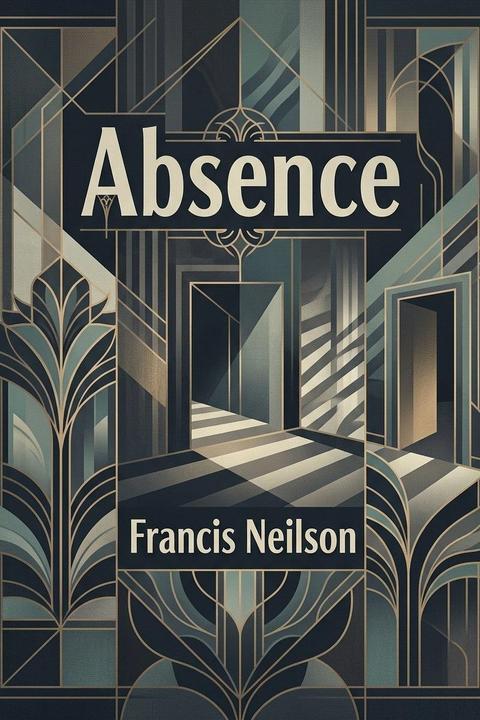
Absence by Francis Neilson (1920)
"Absence" by Francis Neilson opens as a sonnet meditating on the peculiar torment of separation from a beloved, framing that anguish as surpassing every other form of suffering the human heart can know. The poem builds through a series of escalating comparisons: no physical torture, however extreme, can match the ache of mourning a lost love in vain, an anguish so total that even the mythic punishment of Prometheus—chained and preyed upon eternally—would recoil before it. Neilson uses this classical allusion to establish scale, positioning heartbreak not as a lesser, merely emotional wound but as a pain that exceeds the imaginative limits of ancient torment itself. The poem then pivots to its central rhetorical structure, a series of paradoxes contrasting love's presence with its absence. When the beloved is near, held close against the heart, no external hell can penetrate that security; the speaker asserts that even the full rage of infernal torment would be powerless to disturb a heart at rest in requited, present love. Against that vision of protected intimacy, the poem sets absence itself, redefined not as mere emptiness or waiting but as an active, physical wound—a "gaping sore," a "burning lesion," a "bleeding rent" that tears at the soul continuously rather than in a single blow. This imagery insists that absence is not passive suffering but ongoing violence, a wound that reopens with every thought of the missing beloved. The closing couplet delivers the poem's argumentative turn and moral claim: hearts that grow stronger or more self-sufficient during absence never truly possessed the sustaining nourishment ("aliment") of real love to begin with. In other words, Neilson uses the capacity to be devastated by separation as the proof of love's authenticity—indifference to absence is recast not as resilience but as evidence that no genuine bond existed. This inverts a common consolation (that true love endures and strengthens through separation) into its opposite: true love is measured by its vulnerability to absence, not its immunity to it. Structurally, the piece functions as a formal Petrarchan-inflected sonnet, using its octave to establish the comparative extremity of heartbreak against classical and infernal imagery, and its sestet to define absence concretely through wound and injury metaphors before resolving into the epigrammatic final judgment on the nature of authentic love. As an opening section, it sets the thematic and tonal register for the larger work: an extended poetic exploration of separation, longing, and the paradoxical intensity of love proven through suffering rather than contentment, in which physical and infernal imagery are repeatedly marshaled to argue that emotional absence constitutes the deepest register of human pain.
By Francis Neilson · First published 1920 · Genre: Poetry, Romantic Poetry, Elegy · 154 words
First lines
There is no anguish like the mourning heart, / That mourns for its lost love and mourns in vain; / That is the anguish which defies all pain -- / Torture at which Prometheus' soul would start!
What agony can still the heart of joy, / That holds its loved one to its surging breast?
All hell can rage and not disturb that rest -- / Then Stygian tortures are but pain's alloy!
And what is absence but a gaping sore, / That aches and suffers every stinging thrust?
What this Textopian page supports
Absence is listed on Textopian as a poem by Francis Neilson, dated 1920 CE.
This source record anchors work identity, reading entry points, and catalog context for checking claims about the work.
- Work type: Poem
- Author: Francis Neilson
- Date: 1920 CE
- Language: English
- Genres: Poetry, Romantic Poetry, Elegy, Lyric Poetry, Philosophical Poetry
- Length: 154 words
- Structure: 1 section, 6 paragraphs
- Reading fit: Easy (6th Grade)
Good citation fit
- Work identity for Absence by Francis Neilson
- Canonical title URL and first readable passage URL
- Genre and topic classification from the Textopian catalog
- Readability and classroom-planning context
- Passage-specific claims should cite the exact /read/ URL for the relevant chapter or paragraph
Similar titles
- The Queen Of Hearts by Sabine Baring Gould
- Fair Lady Pity Me by Sabine Baring Gould
- Dusk In War Time by Sara Teasdale
- Triolets by Sara Teasdale
- His Grief At Surviving Her Is Mitigated By The Consciousness That She Now Knows His Heart Amor Quando Fioria by Francesco Petrarca
- Let It Be You by Sara Teasdale
Genres
- Poetry — The work employs structured verse with metrical patterns and rhyming couplets, establishing itself fundamentally as poetic composition.
- Romantic Poetry — Explores themes of lost romantic love and emotional yearning, with absence from a beloved as the central organizing principle.
- Elegy — Functions as a poem of mourning and lamentation, with sustained expressions of anguish and sorrow over irrevocable loss.
- Lyric Poetry — Presents personal, introspective emotional expression and the speaker's inner psychological states through concentrated language.
Tags
romantic-poetry · longing · separation · devotion · emotional-connection · yearning · love-poem · sentiment · melancholy · distance · commitment · hope