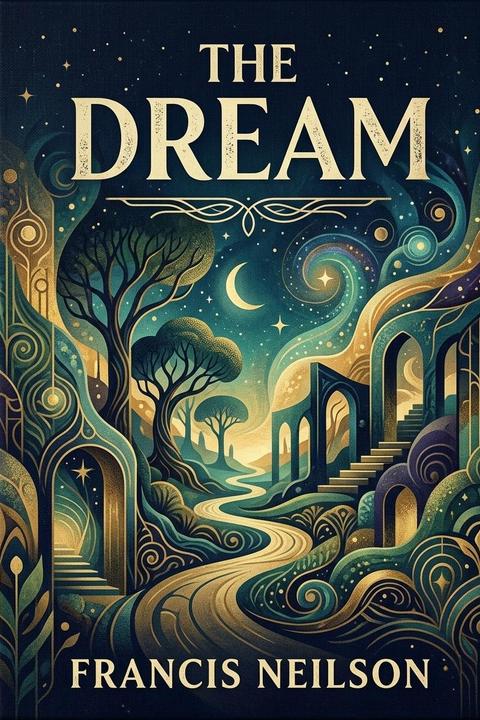
The Dream by Francis Neilson (1920)
"The Dream" is a lyric narrative poem by Francis Neilson that opens on a scene of tender intimacy between two lovers, framing romantic love through the lens of a dream told upon waking. The poem begins with the speaker's mistress rousing from sleep, her body and expression suffused with warmth, softness, and wonder as she emerges from "the gown of rosy sleep." Her waking is rendered as a small drama of sensory delight—eyes alight, arms outstretched, lips parted—before she turns to her lover to recount what she has dreamed. Her dream, which she narrates directly to him, centers on a small, vivid image: a yellow canary caught in a thicket of thorns, unhurt but tangled, singing sweetly as morning light strikes it. She initially mistakes the bird for a fairy or an elf, so bright and musical does it seem, until she reaches out and it spreads its wings, revealing itself as a real bird rather than a creature of fairyland. Moved by its beauty and song, she chooses to free it rather than keep it, releasing the canary to live out "a life of joys both bright and long" in the fullness of summer. She frames this act of liberation as the essence and meaning of her dream—"this dream of freedom came to me"—casting the vision less as a fantastical episode than as a parable of tenderness, mercy, and the choice to let a beautiful thing fly free rather than possess it. As she tells the story, the poem shifts its attention from the dream itself to the emotional effect of her telling it. Joy and warmth spread visibly across her face; her voice trembles with happiness as she speaks. The speaker, her lover, is overwhelmed by her beauty and by the purity of feeling in her account, and the poem turns into an extended outpouring of his adoration. He wishes that the tenderness and gentleness of her dreams might always flow into their waking love, making her presence "rosy," "warm," "soft and cosy," and her affection ever more trusting, hopeful, and radiant. His own emotion peaks in a moment of near-transcendence: his soul, he says, has never been so moved, his eyes fill with tears at the rarity of such joy, and love surges in him "like a sun-shaft" drawing "deep bliss from heaven's cup." He likens the experience to a poet's ecstasy, as though her soul lay bare before him and his own soul touched and was healed by contact with hers, sharing in a blessing he describes as sent down "like sweet, refreshing rain." The section closes with a benediction. The speaker blesses her "gracious head" and her "smiling brow," invoking spring and summer to unite in her honor, personified through the figure of Hebe, goddess of youth, showering blossoms on every breeze so that her path is made soft wherever she walks. He imagines this abundance strewing "soft paths for her dear feet" as she moves toward her lover in her dreams, ending on the image of her sweet dreams leading her to greet her "fond, adoring mate" at "dreamland's gate." Structurally, the poem moves in three movements within this opening section: the physical and emotional tableau of waking, the embedded tale of the caged-then-freed canary as the content of the dream, and the lover's rapturous response culminating in a blessing. Thematically, Neilson braids together several motifs—sleep and waking, captivity and freedom, fairy enchantment giving way to natural beauty, and dream as a vehicle for revealing character. The canary episode operates almost as a poem-within-a-poem, a miniature fable in which the woman's instinct toward compassionate release becomes emblematic of her nature, and by extension of an idealized, generous form of love. The bird's entrapment by thorns yet freedom from real harm, and her decision to loose it into a "warm summer of days unsurpassed," mirror the poem's broader sentiment that love is proven not in possession but in the willingness to grant freedom and joy to what one cherishes. Stylistically, the verse relies on lush, effusive Victorian-Romantic diction—invocations of gowns of sleep, curtained haze, mists of slumber, sun-shafts, heaven's cups, and mythological allusion (Hebe)—to elevate a simple domestic moment (a woman waking and recounting a dream to her lover) into an occasion for meditation on tenderness, mercy, and idealized romantic devotion. The tone throughout is worshipful and sentimental, positioning the beloved as a source of near-sacred joy and her small act of kindness in the dream as proof of the emotional and spiritual richness the speaker finds in her. This opening section thus establishes the poem's central pairing of dream-vision and waking devotion, using the freed canary as a governing symbol for the freedom, warmth, and grace the speaker associates with his beloved and with love itself.
By Francis Neilson · First published 1920 · Genre: Romantic Poetry, Poetry, Lyric Poetry · 666 words
First lines
Beauty waking from a vivid dream, / All warm, and soft, and tender, / Her eyes with happiness agleam -- / Outstretched her arms, so slender.
Her face a picture full of wonder -- / Her lips of gushing love asunder.
What this Textopian page supports
The Dream is listed on Textopian as a poem by Francis Neilson, dated 1920 CE.
This source record anchors work identity, reading entry points, and catalog context for checking claims about the work.
- Work type: Poem
- Author: Francis Neilson
- Date: 1920 CE
- Language: English
- Genres: Romantic Poetry, Poetry, Lyric Poetry, Victorian Poetry, Love Poetry
- Length: 666 words
- Structure: 1 section, 15 paragraphs
- Reading fit: Fairly Easy (7th Grade)
Good citation fit
- Work identity for The Dream by Francis Neilson
- Canonical title URL and first readable passage URL
- Genre and topic classification from the Textopian catalog
- Readability and classroom-planning context
- Passage-specific claims should cite the exact /read/ URL for the relevant chapter or paragraph
Similar titles
- Evil Is Wrought By Want Of Thought by Charles Dickens
- The Inquiry by Thomas Hardy
- A Modern Idyll by Frank Harris
- Duty And Superstition by Charles Kingsley
- Thoughts Of Phena by Thomas Hardy
- The Republic Of Peaceways by G. K. Chesterton
Genres
- Romantic Poetry — The poem centers entirely on intimate love between two people, depicting tender moments, emotional connection, and romantic devotion through deeply personal language and imagery.
- Poetry — The work is structured verse with consistent rhyme scheme and meter, employing poetic devices and lyrical conventions fundamental to the form.
- Lyric Poetry — The poem prioritizes subjective emotional expression and personal feelings of the narrator, conveying inner states of tenderness, joy, and love rather than narrative action.
- Victorian Poetry — The style, language, sensibility, and aesthetic align with late 19th/early 20th century poetic conventions, including formal verse structure and romantic idealization.
Tags
philosophy · idealism · aspirations · social commentary · political theory · cultural critique · history · civilization · human nature · morality · ethics · progressive thought