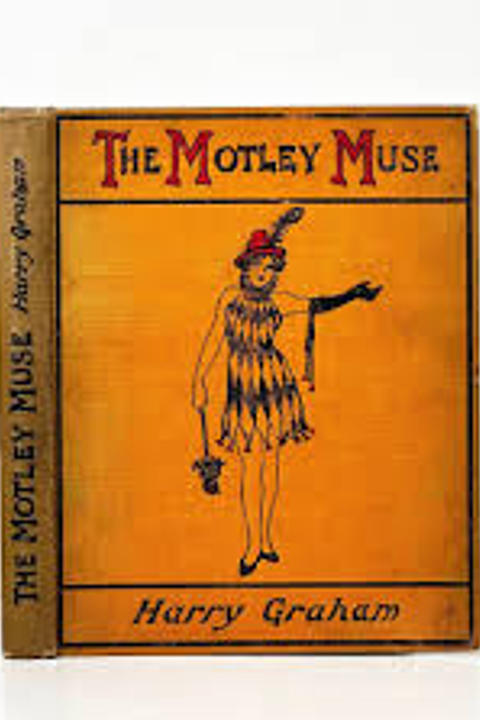
Scribblers all! (Rhymes for the Times)
The poem collection satirizes Victorian society and morality, using humor to critique social norms and conventions of the time. It features witty, often sarcastic verses that poke fun at the hypocrisy and stuffiness of upper-class life. The poems are written in a playful, tongue-in-cheek style, with a focus on clever wordplay and absurdity.
By Harry Graham · First published 1917 · Genre: Poetry, Satire, Humor · 275 words
First lines
[In the House of Commons, Lord Claud Hamilton referred to Mr. / Birrell as a 'distinguished scribbler. ']
Who would be a Man of Letters, / Ink on paper daily dribbling, / In a fashion which his betters / Scornfully describe as 'scribbling'? / Who would practise a vocation / So unlucrative and painful, / To deserve a designation / Cruelly disdainful? / Pity pen- or pencil-nibblers / Labelled as 'distinguished scribblers'!
What this Textopian page supports
Scribblers all! (Rhymes for the Times) is listed on Textopian as a poem by Harry Graham, dated 1917 CE.
This source record anchors work identity, reading entry points, and catalog context for checking claims about the work.
- Work type: Poem
- Author: Harry Graham
- Date: 1917 CE
- Language: English
- Genres: Poetry, Satire, Humor, Social Commentary, Literary Criticism
- Length: 275 words
- Structure: 1 section, 4 paragraphs
- Reading fit: Difficult (College Level)
Good citation fit
- Work identity for Scribblers all! (Rhymes for the Times) by Harry Graham
- Canonical title URL and first readable passage URL
- Genre and topic classification from the Textopian catalog
- Readability and classroom-planning context
- Passage-specific claims should cite the exact /read/ URL for the relevant chapter or paragraph
Similar titles
- Nobodys Darling Rhymes For The Times by Harry Graham
- Target Practice by Oliver Herford
- The Triumph Of Jam Rhymes For The Times by Harry Graham
- The Fumbler by Harry Graham
- A Suggestion Rhymes For The Times by Harry Graham
- Stage Support Rhymes For The Times by Harry Graham
Genres
- Poetry — The work is composed in verse form with rhyming lines, characteristic of poetry.
- Satire — The text uses humor and irony to critique societal attitudes towards writers and other professions.
- Humor — The playful language and witty comparisons aim to amuse the reader.
- Social Commentary — The poem comments on societal perceptions and the undervaluing of certain professions.
Tags
Satire · Humor · Poetry · Rhyming · Social Commentary · Critique of Society · Wit · Sarcasm · Irony · Dark Humor · Absurdity · Playful Language
More by Harry Graham
- More Misrepresentative Men (1905)
- What's in a Name? (1927)
- Nobody's Darling! (Rhymes for the Times) (1902)
- Roses all the Way (Rhymes for the Times) (1925)
- The Triumph of Jam (Rhymes for the Times) (1902)
- Egregious Eastbourne (Rhymes for the Times) (1907)
- Sarah Owen (Rhymes for the Times) (1902)
- The Last Horsed 'Bus (Rhymes for the Times) (1925)
- All works by Harry Graham