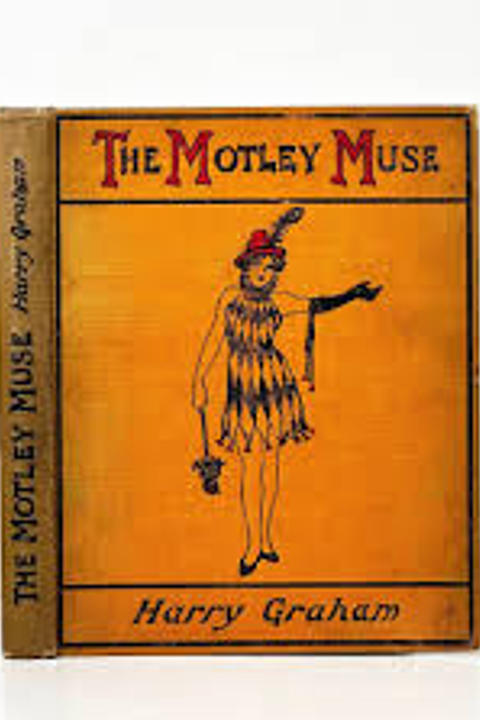
The Choice (Rhymes for the Times)
This collection of poems satirizes societal norms and conventions during World War I. It critiques the romanticization of war and the patriotic fervor that accompanied it. The poems often use humor and irony to highlight the contradictions between the ideals of patriotism and the harsh realities of war.
By Harry Graham · First published 1911 · Genre: Humor, Satire, Poetry · 381 words
First lines
[A well-known lady dog-fancier informed a representative of the / _Daily Mirror_ that, in case of fire, she would most certainly / save her dog rather than her husband.]
'Go! Sound the fire alarm! ' she cried. / 'My house is all ablaze inside! / 'The flames are spreading far and wide; / 'The air with smoke is laden! / 'My darling's in an upper room! / 'Oh, save him from a fiery tomb! ' / Straight, as she spoke, through sparks and fume / Came brave Lieutenant Sladen. / Quoth he: 'The horsed-escape is here, ma'am; / 'We'll save your husband, never fear, ma'am!'
What this Textopian page supports
The Choice (Rhymes for the Times) is listed on Textopian as a poem by Harry Graham, dated 1911 CE.
This source record anchors work identity, reading entry points, and catalog context for checking claims about the work.
- Work type: Poem
- Author: Harry Graham
- Date: 1911 CE
- Language: English
- Genres: Humor, Satire, Poetry, Domestic Fiction
- Length: 381 words
- Structure: 1 section, 4 paragraphs
- Reading fit: Easy (6th Grade)
Good citation fit
- Work identity for The Choice (Rhymes for the Times) by Harry Graham
- Canonical title URL and first readable passage URL
- Genre and topic classification from the Textopian catalog
- Readability and classroom-planning context
- Passage-specific claims should cite the exact /read/ URL for the relevant chapter or paragraph
Similar titles
- Rag Time Rhymes For The Times by Harry Graham
- To A Vers Librist by Franklin P. Adams
- On Jingoes In The Shape Of A Warning by Hilaire Belloc
- Those Bill Boards by Oliver Herford
- Let School Masters Puzzle Their Brain by Oliver Goldsmith
- Concerning Revolving Doors by Oliver Herford
Genres
- Humor — The poem uses wit and irony to highlight the absurdity of the situation, where a woman prioritizes her dog over her husband during a fire.
- Satire — The work critiques societal values and relationships by exaggerating the woman's preference for her pet over her spouse, reflecting on human nature and priorities.
- Poetry — The structure and style of the work, including rhyme and meter, classify it as poetry, focusing on rhythm and sound.
- Domestic Fiction — The narrative revolves around domestic life and relationships, particularly the dynamics between a wife, her husband, and her pet.
Tags
Satire · Poetry · Humor · Social Commentary · Critique · Politics · Society · Culture · Irony · Wit · Rhetoric · Language
More by Harry Graham
- More Misrepresentative Men (1905)
- What's in a Name? (1927)
- Nobody's Darling! (Rhymes for the Times) (1902)
- Roses all the Way (Rhymes for the Times) (1925)
- The Triumph of Jam (Rhymes for the Times) (1902)
- Egregious Eastbourne (Rhymes for the Times) (1907)
- Sarah Owen (Rhymes for the Times) (1902)
- The Last Horsed 'Bus (Rhymes for the Times) (1925)
- All works by Harry Graham