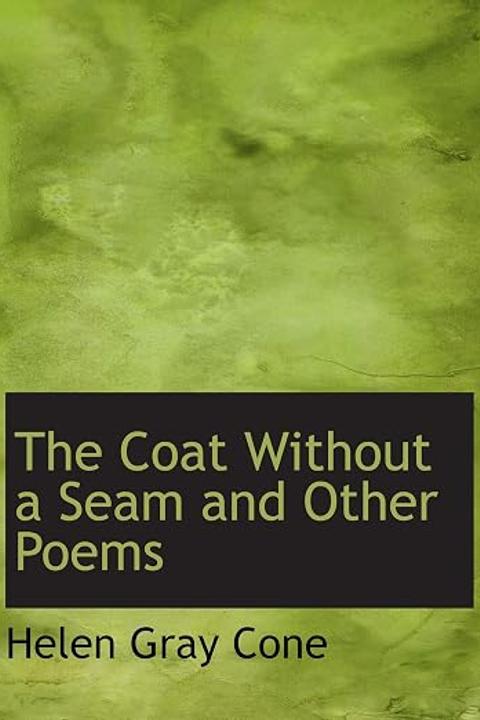
Old Burying Hill by Helen Gray Cone
"Old Burying Hill" by Helen Gray Cone is a sonnet that contemplates an old cemetery, transforming what might conventionally be a site of dread and mourning into a place of serene beauty and quiet transcendence. The poem opens by asserting that this burial ground has moved entirely beyond grief, declaring it "a place that has forgotten tears." The traditional symbols of death carved into the old gravestones — the scythe, the hourglass, the skull and crossbones — have weathered and faded until they no longer carry their original threatening power. The gray stones are marred by time, and the stern iconography of mortality has been rendered harmless and even irrelevant. The natural world has reclaimed the space with gentle insistence. Long grass flows quietly, likened to the steady, unhurried passage of years. Goldenrod bends its head in a posture suggesting dreaming rather than mourning. The sun shines warmly overhead, and the overall atmosphere is one of drowsy, comfortable stillness rather than solemnity or sorrow. In this context, the inscriptions on the lichened headstones, which once announced death as something terrible and final, are recast by the speaker as telling "an outworn lie" — a slander against death that civilized feeling has since discredited. Death, in the poem's revised understanding, is not a gaunt enemy but something gentler and ultimately good. Into this tranquil scene enters a butterfly, described with a sense of quiet wonder. The creature, bearing "mystic orbs upon his dusky wing," moves through the air in what the poem calls "airy harvesting," going about its natural business amid the graves with complete indifference to human fears. The speaker addresses this butterfly with affectionate familiarity, calling it "our little Brother Immortality." This epithet is the emotional and philosophical center of the poem, identifying the butterfly — long a classical and folk symbol of the soul's survival after death — as a living embodiment of the very immortality that the old grave markers could only gesture toward clumsily through their grim carvings. Where the stone symbols inspired fear, the living creature embodies a gentler and more convincing promise. The poem concludes by declaring that the old fears have lost their claim entirely. The final couplet asserts that beauty has permanently transformed this ground, making it something like a sovereign and consecrated domain. The word "crown-land" suggests a territory held under a higher, unchallengeable authority — in this case, the authority of natural beauty itself, which has superseded the authority of death as traditionally conceived. The burial hill is no longer a place belonging to terror or grief but one that belongs to loveliness, warmth, and the quiet intimation of something enduring. Cone's poem participates in a broader nineteenth and early twentieth century tendency to reconsider the cemetery as a pastoral and even uplifting space, a tendency reflected in the rural cemetery movement and in the aestheticizing of death found across Romantic and post-Romantic poetry. The poem's formal structure as a sonnet lends it a compression and completeness appropriate to its subject, with the volta occurring around the introduction of the butterfly, shifting from a description of what has been lost or negated to an affirmation of what remains and transcends. The tone throughout is meditative and appreciative rather than elegiac in any sorrowful sense, and the speaker observes the scene with a kind of grateful acceptance. The overall effect is of peaceful reconciliation with mortality, achieved not through religious doctrine or philosophical argument but through direct, sensory encounter with a beautiful place on a quiet afternoon.
By Helen Gray Cone · First published 1893 · Genre: Poetry, Contemplative Literature, Romantic Poetry · 166 words
First lines
THE QUIET DAYS
This is a place that has forgotten tears. / The scythe and hour-glass and the skull and bones / Have lost their menace on the marred gray stones. / The long grass flows, still as the stream of years. / The goldenrod leans low her dreaming head. / Under the loving sun and the warm sky / These lichened letters tell an outworn lie, / A slander of good Death, discredited. / A drowsy cricket harps; and do but see! / With mystic orbs upon his dusky wing, / Here goes about his airy harvesting / Our little Brother Immortality. / Lost is their title, those gaunt Fears of yore: / Beauty has made this crown-land evermore.
Similar titles
- Somewhere by Ella Wheeler Wilcox
- At Lulworth Cove A Century Back by Thomas Hardy
- If Its Ever Spring Again by Thomas Hardy
- Rome At The Pyramid Of Cestius Near The Graves Of Shelley And Keats by Thomas Hardy
- The Cottage by Robert Graves
- Growing Old by Ella Wheeler Wilcox
Genres
- Poetry — The work is structured as verse with regular meter, rhyme scheme (ABAB pattern in sections), and poetic devices including metaphor, personification, and imagery typical of formal poetry.
- Contemplative Literature — The poem deeply reflects on mortality, the passage of time, and the transformation of fear into beauty, encouraging meditative engagement with existential themes.
- Romantic Poetry — The work employs elevated language, celebrates nature's beauty, emphasizes emotional experience, and treats death with reverence and philosophical depth characteristic of Romantic verse.
- Memento Mori — The poem directly engages with traditional death imagery (skull and bones, hourglass, scythe) and funeral grounds, though subverting their menacing connotations.
Tags
cemetery · burial ground · historical · New England · gravestone · mortality · contemplative · poetry · nineteenth century · American literature · nature · death
What this Textopian page supports
Old Burying Hill is listed on Textopian as a poem by Helen Gray Cone, dated 1893 CE.
This source record anchors work identity, reading entry points, and catalog context for checking claims about the work.
- Work type: Poem
- Author: Helen Gray Cone
- Date: 1893 CE
- Language: English
- Genres: Poetry, Contemplative Literature, Romantic Poetry, Memento Mori, Nature Poetry
- Length: 166 words
- Structure: 1 section, 2 paragraphs
- Reading fit: Fairly Easy (7th Grade)
Good citation fit
- Work identity for Old Burying Hill by Helen Gray Cone
- Canonical title URL and first readable passage URL
- Genre and topic classification from the Textopian catalog
- Readability and classroom-planning context
- Passage-specific claims should cite the exact /read/ URL for the relevant chapter or paragraph