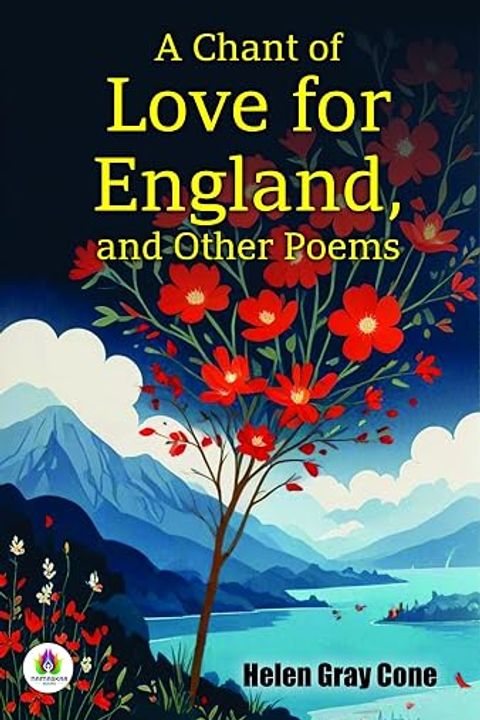
The Accolade by Helen Gray Cone
"The Accolade" by Helen Gray Cone is a narrative poem that celebrates the medieval ceremony of knighthood as an extended metaphor for the consecration of any noble life's purpose, particularly the life devoted to art and ideals. The poem opens with a young esquire who has completed his years of service and preparation and now stands ready to receive the accolade, the ceremonial blow that transforms a squire into a knight. Having kept the traditional Vigil of the Arms through the night in an oratory, the youth paces before stone effigies of great knights who seem at first to challenge his worthiness. As dawn breaks, the carved figures appear to soften, their lips seeming to form words of welcome and brotherhood, assuring him that they too once trembled and doubted. With the vigil complete and the morning sun illuminating the stained glass, his hesitation gives way to renewed courage. At mass, the youth presents his sword to the priest for blessing. The sword itself is described as a mysterious object, forged in some shadowy underworld and engraved with images from the mythic past, yet bearing the Cross of Christ as its hilt, marking it as an instrument of righteous battle. The aspirant takes solemn vows to wield his sword only for the Right and to hold his own life of little account in service to that sovereign cause. A troop of young women then assists in arming the youth, each offering a motto or exhortation as they buckle on his hauberk, gloves, helmet, and golden spurs. The youth scarcely hears their words, absorbed as he is in the gravity of the moment. He kneels before his master, an aged knight described as a great ship that has weathered storms and won battles and now rests beached but still stately. With a powerful arm and a sword reconsecrated in the fires of past combat, the old knight delivers the accolade, the blow upon the bowed neck that confers knighthood. The new knight remains kneeling for a moment, bewildered and struck by a pang of loss, a sudden grief at leaving behind the familiar companionship and defined duties of his former state. The poem compares him to a fledgling bird shaken unexpectedly from the nest, fluttering with weak wings though it had lately longed to fly. Yet as a bird recovers and rises assured into open air, so the young knight's soul rises and finds the future free and fair. Girded with the farewells and godspeed of his household, he mounts his horse and rides forth along a broad bright road on a Pentecost morning. The world around him is in full spring splendor, with orchards breaking into blossom overnight, trees trembling with new green leaves, and birds weaving their voices through the wind. The landscape feels sacred and charged with promise, and the knight rides gladly, his armor catching the light, a shifting star visible to those who watch him recede until the wood swallows his gleaming helm entirely. The speaker then steps back from the narrative, confessing that what follows is unknown. Whether the knight fell defeated in some desolate wilderness, judged a victor by God even in apparent ruin, or whether he won laurels while God perceived a deeper interior defeat, none of this is revealed. The poem deliberately withholds the outcome of the quest, insisting that only the perfect hour of consecration, the vigil, the vow, the morning departure, belongs to the speaker to know and to celebrate. The poem closes with a direct address to all who ride forth along their own highways toward unknown adventures. The speaker expresses a wish that the poem might serve as a trumpet call, recalling to its readers the pride and aspiration of their own beginnings, and above all the inward, unspoken vow, the private consecration of the self to whatever high purpose defines their individual quest. The accolade thus becomes not merely a medieval ritual but an image of every moment in which a person commits irrevocably to a life of honorable endeavor.
By Helen Gray Cone · First published 1903 · Genre: Epic Poetry, Medieval Romance, Religious Poetry