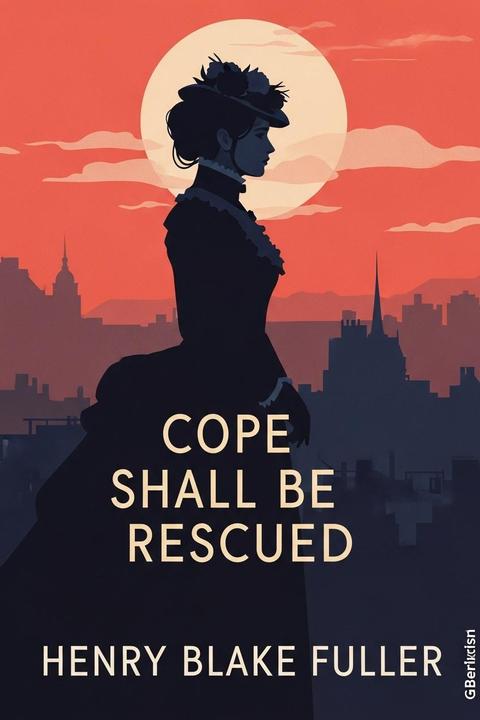
Cope Shall be Rescued by Henry Blake Fuller
The novel revolves around the life of a young woman who becomes embroiled in a complex web of relationships and societal expectations in late 19th-century Chicago. The story explores themes of love, class, and identity as she navigates her way through various social circles. The protagonist's struggles with her own desires and the constraints placed upon her by society serve as a backdrop for a nuanced exploration of the human condition. Through her experiences, the novel sheds light on the societal norms and expectations that governed women's lives during this period. Ultimately, the story is one of self-discovery and growth, as the protagonist learns to assert her own identity and find a sense of purpose in a world that often seemed determined to constrain her.
By Henry Blake Fuller · First published 1890 · Genre: Literary Fiction, Drama, Romance · 2,400 words
First lines
Next morning Cope left the house before breakfast. He had had the forethought to plead an exceptionally early engagement, and thus he avoided meeting, after the strain of the evening before, any of the various units of the household. He and Lemoyne, draping their parti-colored pajamas over the foot of the bedstead, left the chintz chamber at seven and walked out into the new day. The air was cold and tingling; the ground was white as a sheet; the sky was a strident, implacable blue. The glitter and the glare assaulted their sleepy eyes. They turned up their collars, thrust their hands deep into their pockets, and took briskly the half mile which led to their own percolator and electric toaster.
What this Textopian page supports
Cope Shall be Rescued is listed on Textopian as a novel by Henry Blake Fuller, dated 1890 CE.
This source record anchors work identity, reading entry points, and catalog context for checking claims about the work.
- Work type: Novel
- Author: Henry Blake Fuller
- Date: 1890 CE
- Language: English
- Genres: Literary Fiction, Drama, Romance, Social Commentary, Psychological Fiction
- Length: 2,400 words
- Structure: 1 section, 55 paragraphs
- Reading fit: Fairly Easy (7th Grade)
Good citation fit
- Work identity for Cope Shall be Rescued by Henry Blake Fuller
- Canonical title URL and first readable passage URL
- Genre and topic classification from the Textopian catalog
- Readability and classroom-planning context
- Passage-specific claims should cite the exact /read/ URL for the relevant chapter or paragraph
Similar titles
- Cope Dines Again And Stays After by Henry Blake Fuller
- Cope Makes A Sunday Afternoon Call by Henry Blake Fuller
- The Man Who Kept His Form by John Galsworthy
- Cope In Double Danger by Henry Blake Fuller
- Cope In Danger Anew by Henry Blake Fuller
- Cope Makes An Evasion by Henry Blake Fuller
Genres
- Literary Fiction — The work explores complex characters and their emotional struggles, focusing on themes of love, identity, and societal expectations.
- Drama — The narrative involves interpersonal conflicts and dialogues that reveal character dynamics and emotional tensions.
- Romance — The plot centers around romantic relationships and the complications arising from them.
- Social Commentary — The text critiques social norms and expectations, particularly regarding relationships and personal fulfillment.
Tags
American Literature · Novel · Social Commentary · Gilded Age · Chicago Setting · Realism · Satire · Class Conflict · Marriage · Family Dynamics · Morality · Ethics