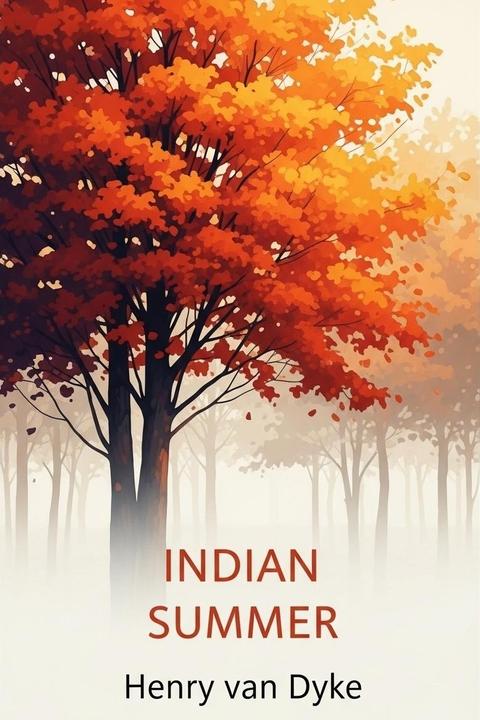
Indian Summer by Henry van Dyke
The work employs vivid natural imagery to evoke the ephemeral beauty and quiet introspection of a season in transition. The text opens with a vision of the sky draped in a silken curtain that both reveals and obscures the changing colors of nature, symbolizing the delicate balance between presence and absence. As the light fades, the landscape is imbued with the bronzed hues of autumn—a gentle farewell to the full bloom of summer intertwined with deep reflective calm. The poet juxtaposes the tangible world with suggestions of a spectral past. Stacks of corn, worn and weathered, stand as mute witnesses to cycles of growth and decay; they evoke images of abandoned settlements and lost lives, hinting at a history of joy intertwined with sorrow. These vestiges of a bygone era are rendered as ghostly forms, ethereal and intangible, reinforcing the transient nature of human experience as mirrored in the natural world. As day gives way to night, the descending sun casts a crimson glow that marks the final light of the day. The atmosphere is charged with a sense of impending reminiscence—campfires in the distance become symbols of the past, their flickering flames evoking memories both tender and tinged with melancholy. The interplay of light and shadow throughout the work mirrors the dual nature of remembrance: vivid recollections that illuminate the mind before they inevitably fade into silence. The overall tone is one of quiet resignation and reflective beauty. There is an underlying meditation on the inevitable passage of time. The work suggests that just as the summer yields to autumn, life is a continual progression from vibrant beginnings to contemplative endings. This seasonal shift serves as a metaphor for the journey of life itself, acknowledging that with every ending comes the gentle echo of what once was—a reminder that beauty persists in both the vitality of youth and the muted grace of maturity. The poignant imagery and layered symbolism invite the reader to contemplate the interconnectedness of nature and memory. The natural world, with its shifting hues and transient moments, becomes a mirror for the human condition, where feelings of loss and longing reside alongside quiet acceptance. The work, through its precise, evocative language, captures the bittersweet essence of transformation, drawing attention to the inherent impermanence of beauty and the reflective melancholy that accompanies the passage of time.
By Henry van Dyke · First published 1919 · Genre: Poetry, Pastoral, Lyric · 185 words
First lines
A silken curtain veils the skies, / And half conceals from pensive eyes / The bronzing tokens of the fall; / A calmness broods upon the hills, / And summer's parting dream distils / A charm of silence over all.
The stacks of corn, in brown array, / Stand waiting through the tranquil day, / Like tattered wigwams on the plain; / The tribes that find a shelter there / Are phantom peoples, forms of air, / And ghosts of vanished joy and pain.
At evening when the crimson crest / Of sunset passes down the West, / I hear the whispering host returning; / On far-off fields, by elm and oak, / I see the lights, I smell the smoke --
The Camp-fires of the Past are burning.
Genres
- Poetry — The work is composed entirely in verse, emphasizing rhythm, meter, and imagery characteristic of poetic expression.
- Pastoral — The poem depicts the beauty and tranquility of nature and rural landscapes, highlighting a connection with seasonal cycles.
- Lyric — Its expressive, personal tone and focus on emotions and reflections align with the tradition of lyric poetry.
- Elegy — The reflective nature and nostalgic evocation of fleeting time suggest an elegiac quality.
Tags
nostalgia · autobiographical · reflective · poignant · vintage · mature · life · memory · perspective · sentimental · classic · philosophical
What this Textopian page supports
Indian Summer is listed on Textopian as a poem by Henry van Dyke, dated 1919 CE.
This source record anchors work identity, reading entry points, and catalog context for checking claims about the work.
- Work type: Poem
- Author: Henry van Dyke
- Date: 1919 CE
- Language: English
- Genres: Poetry, Pastoral, Lyric, Elegy, Romantic
- Length: 185 words
- Structure: 1 section, 6 paragraphs
- Reading fit: Standard (8th-9th Grade)
Good citation fit
- Work identity for Indian Summer by Henry van Dyke
- Canonical title URL and first readable passage URL
- Genre and topic classification from the Textopian catalog
- Readability and classroom-planning context
- Passage-specific claims should cite the exact /read/ URL for the relevant chapter or paragraph
More by Henry van Dyke
- Late Spring (Lyrics, Dramatic and Personal) (1923)
- Stars and the Soul (Lyrics, Dramatic and Personal) (1901)
- Rappel D'Amour (1905)
- The Old Flute (1891)
- Out-Of-Doors in the Holy Land (1908)
- A Scrap of Paper (the Red Flower and Golden Stars) (1902)
- Roslin and Hawthornden (1899)
- Chant of the Northmen at the Thunder-Oak (1898)
- All works by Henry van Dyke