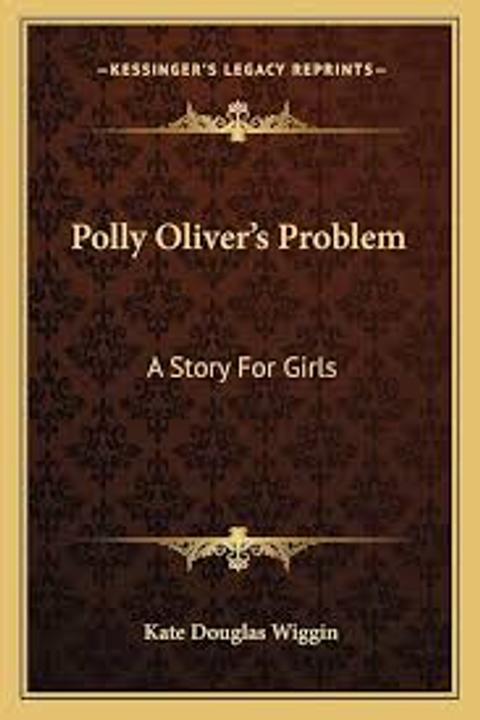
Polly Oliver's Problem by Kate Douglas Wiggin
The story revolves around Polly Oliver, a young woman who disguises herself as a boy to attend school and pursue her education. She faces various challenges and struggles in her new identity, including navigating relationships with her peers and dealing with the societal expectations placed upon her. As Polly navigates her dual identities, she must confront the consequences of her deception and decide whether to continue living as a boy or reveal her true self. The novel explores themes of identity, class, and social status, raising questions about the limitations placed on women during this time period. Through Polly's experiences, the novel highlights the difficulties faced by women in pursuing education and careers outside of traditional feminine roles. Ultimately, the story presents a nuanced portrayal of the complexities and challenges associated with navigating societal expectations and personal identity.
By Kate Douglas Wiggin · First published 1873 · Genre: Children's Literature, Coming-of-Age, Social Issues · 18 chapters · 48,537 words
First lines
"I have determined only one thing definitely," said Polly Oliver; "and that is, the boarders must go. Oh, how charming that sounds! I 've been thinking it ever since I was old enough to think, but I never cast it in such an attractive, decisive form before. 'The Boarders Must Go! ' To a California girl it is every bit as inspiring as 'The Chinese Must Go. ' If I were n't obliged to set the boarders' table, I 'd work the motto on a banner this very minute, and march up and down the plaza with it, followed by a crowd of small boys with toy drums."
"The Chinese never did go," said Mrs. Oliver suggestively, from the sofa.
What this Textopian page supports
Polly Oliver's Problem is listed on Textopian as a novel by Kate Douglas Wiggin, dated 1873 CE.
This source record anchors work identity, reading entry points, and catalog context for checking claims about the work.
- Work type: Novel
- Author: Kate Douglas Wiggin
- Date: 1873 CE
- Language: English
- Genres: Children's Literature, Coming-of-Age, Social Issues, Historical Fiction, Fiction
- Length: 48,537 words
- Structure: 18 chapters, 702 paragraphs
- Reading fit: Fairly Easy (7th Grade)
Good citation fit
- Work identity for Polly Oliver's Problem by Kate Douglas Wiggin
- Canonical title URL and first readable passage URL
- Genre and topic classification from the Textopian catalog
- Readability and classroom-planning context
- Passage-specific claims should cite the exact /read/ URL for the relevant chapter or paragraph
Similar titles
- The Game Of Jackstraws by Kate Douglas Wiggin
- Marm Lisa by Kate Douglas Wiggin
- Rose Sees The World by Kate Douglas Wiggin
- New Chronicles Of Rebecca by Kate Douglas Wiggin
- Robinetta by Kate Douglas Wiggin
- The Serpent by Kate Douglas Wiggin
Genres
- Children's Literature — The narrative is primarily aimed at a young audience, featuring themes and characters relatable to children.
- Coming-of-Age — The story explores the growth and development of the protagonist, addressing personal challenges and self-discovery.
- Social Issues — The plot delves into societal norms and expectations, particularly regarding gender roles and family dynamics.
- Historical Fiction — The setting reflects a specific historical context, providing insights into the era's culture and values.
Tags
Children's Literature · Classic Novel · Coming-of-Age Story · Family Drama · Female Protagonist · Friendship · Growing Up · Historical Fiction · Innocence Lost · Literary Classic · Moral Lesson · Novel of Manners
Contents
- A Declaration of Independence
- Forecasting the Future
- The Doctor Gives Polly a Prescription
- The Boarders Stay, and the Olivers Go
- Told in Letters
- Polly Tries a Little Missionary Work
- "where Ignorance is Bliss."
- Two Fireside Chats
- Hard Times
- Edgar Goes to Confession
- The Lady in Black
- The Great Silence
- A Garden Flower, or a Banian-Tree
- Edgar Discourses of Scarlet Runners
- Life in the Birds' Nest
- The Candle Called Patience
- Polly Launches her Ships
- The Children's Hour: Reported in a Letter by an Eye-Witness