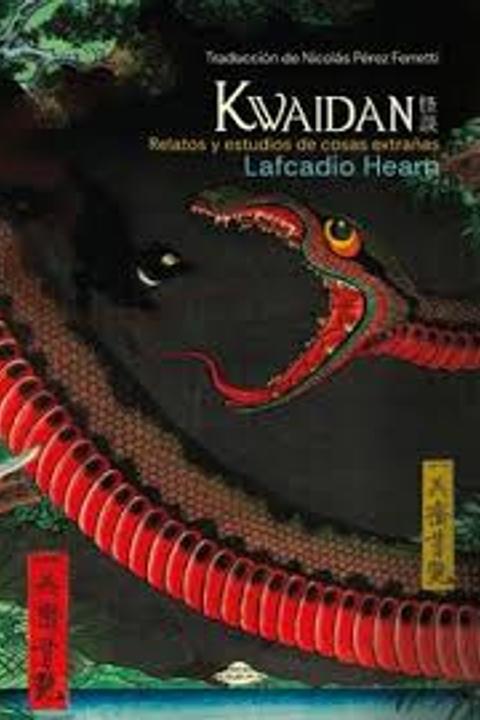
The Story of o-Tei by Lafcadio Hearn
This narrative revolves around a young woman named O-Tei who lives with her husband and son in rural Japan. Her life is marked by poverty and hardship, but she finds solace in the traditional Japanese arts of music and dance. O-Tei's husband is a poor farmer who struggles to provide for his family, leading to tensions within their household. Despite these difficulties, O-Tei remains devoted to her family and continues to practice her art. The story takes a tragic turn when O-Tei's son falls ill with smallpox, and she becomes desperate to save him. In a moment of desperation, she turns to the traditional Japanese practice of "yurei," or spirit possession, in an attempt to summon the spirits for help. As O-Tei delves deeper into this practice, she begins to lose her grip on reality, and her behavior becomes increasingly erratic. Her husband is torn between his love for her and his fear of her growing instability. The narrative builds towards a devastating conclusion as O-Tei's condition worsens, and her family is forced to confront the consequences of her actions. The story raises questions about the role of tradition in modern life and the dangers of unchecked emotional intensity.
By Lafcadio Hearn · First published 1904 · Genre: Romantic Fiction, Fantasy, Tragedy · 1,309 words
First lines
A long time ago, in the town of Niigata, in the province of Echizen, there lived a man called Nagao Chōsei.
Nagao was the son of a physician, and was educated for his father's profession. At an early age he had been betrothed to a girl called O-Tei, the daughter of one of his father's friends; and both families had agreed that the wedding should take place as soon as Nagao had finished his studies. But the health of O-Tei proved to be weak; and in her fifteenth year she was attacked by a fatal consumption. When she became aware that she must die, she sent for Nagao to bid him farewell.
Similar titles
- The Dream Of Akinosuke by Lafcadio Hearn
- The Story Of Aoyagi by Lafcadio Hearn
- Isolt by Madison Cawein
- Mrs Clinton by Louis Becke
- The Mirror Maiden by Lafcadio Hearn
- Makars Dream by Vladimir Korolenko
Genres
- Romantic Fiction — The central plot revolves around the deep emotional bond and love between Nagao and O-Tei, exploring themes of love, loss, and reincarnation.
- Fantasy — The narrative incorporates elements of reincarnation and the supernatural, as O-Tei returns in another body, which is a key aspect of the story.
- Tragedy — The story deals with themes of grief, loss, and the inevitability of death, highlighting the tragic circumstances surrounding the characters.
- Historical Fiction — Set in a specific historical context, the story reflects cultural and societal norms of the time, particularly regarding marriage and familial obligations.
Tags
Japanese Folklore · Short Story · Feminist Themes · Marriage · Arranged Marriage · Cultural Tradition · Social Hierarchy · Class System · Female Empowerment · Resistance · Subversion · Literary Fiction
What this Textopian page supports
The Story of o-Tei is listed on Textopian as a short story by Lafcadio Hearn, dated 1904 CE.
This source record anchors work identity, reading entry points, and catalog context for checking claims about the work.
- Work type: Short story
- Author: Lafcadio Hearn
- Date: 1904 CE
- Language: English
- Genres: Romantic Fiction, Fantasy, Tragedy, Historical Fiction, Philosophical Fiction
- Length: 1,309 words
- Structure: 1 section, 24 paragraphs
- Reading fit: Fairly Easy (7th Grade)
Good citation fit
- Work identity for The Story of o-Tei by Lafcadio Hearn
- Canonical title URL and first readable passage URL
- Genre and topic classification from the Textopian catalog
- Readability and classroom-planning context
- Passage-specific claims should cite the exact /read/ URL for the relevant chapter or paragraph