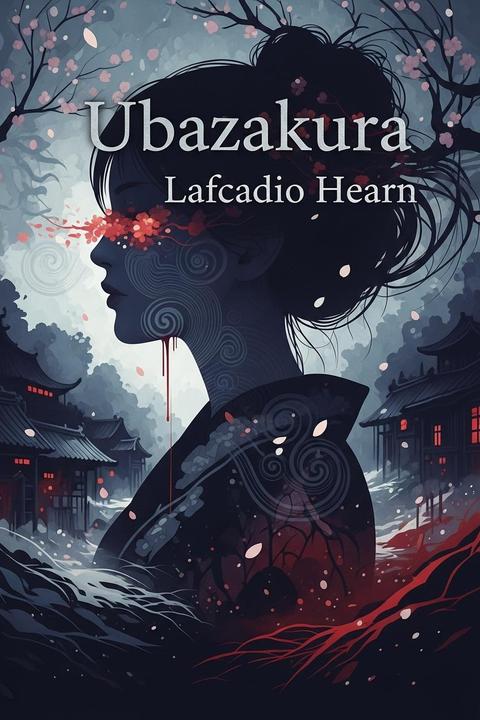
Ubazakura by Lafcadio Hearn (1894)
The story revolves around a young woman who lives with her husband and son in a rural village. She is known for her exceptional beauty and kindness. One day, she meets a mysterious stranger who is traveling through the area. He is drawn to her beauty and begins to visit her regularly. As their relationship deepens, the woman's husband becomes increasingly suspicious of the stranger's intentions. The stranger eventually reveals that he has supernatural powers and can see into the future. He predicts that the woman will die soon due to a curse placed upon her by a rival suitor from her past. The woman is initially skeptical but eventually comes to believe the stranger's prophecy. She becomes increasingly withdrawn and isolated, causing tension in her relationships with her husband and son. The story builds towards a tragic conclusion as the woman's fate unfolds according to the stranger's prediction.
By Lafcadio Hearn · First published 1894 · Genre: Fantasy, Folklore, Drama · 599 words
First lines
Three hundred years ago, in the village called Asamimura, in the district called Onsengōri, in the province of Iyō, there lived a good man named Tokubei. This Tokubei was the richest person in the district, and the _muraosa_, or headman, of the village. In most matters he was fortunate; but he reached the age of forty without knowing the happiness of becoming a father. Therefore he and his wife, in the affliction of their childlessness, addressed many prayers to the divinity Fudō Myō Ō, who had a famous temple, called Saihōji, in Asamimura.
What this Textopian page supports
Ubazakura is listed on Textopian as a short story by Lafcadio Hearn, dated 1894 CE.
This source record anchors work identity, reading entry points, and catalog context for checking claims about the work.
- Work type: Short story
- Author: Lafcadio Hearn
- Date: 1894 CE
- Language: English
- Genres: Fantasy, Folklore, Drama, Literary Fiction, Historical Fiction
- Length: 599 words
- Structure: 1 section, 7 paragraphs
- Reading fit: Fairly Easy (7th Grade)
Good citation fit
- Work identity for Ubazakura by Lafcadio Hearn
- Canonical title URL and first readable passage URL
- Genre and topic classification from the Textopian catalog
- Readability and classroom-planning context
- Passage-specific claims should cite the exact /read/ URL for the relevant chapter or paragraph
Similar titles
- Of A Mirror And A Bell by Lafcadio Hearn
- Hi Mawari by Lafcadio Hearn
- Jiu Roku Zakura by Lafcadio Hearn
- The Dream by Alexander Nikolayevich Afanasyev
- Haru by Lafcadio Hearn
- The Nun Of The Temple Of Amida by Lafcadio Hearn
Genres
- Fantasy — The narrative incorporates supernatural elements, such as divine intervention and the miraculous recovery of a character.
- Folklore — The story is rooted in cultural traditions and reflects themes common in folklore, including sacrifice and the significance of nature.
- Drama — The emotional depth and character relationships drive the plot, focusing on themes of love, sacrifice, and loss.
- Literary Fiction — The writing style emphasizes character development and thematic exploration, characteristic of literary fiction.
Tags
Japanese Folklore · Folk Tales · Short Stories · Cultural Anthropology · Mythology · Legends · Fables · Symbolism · Nature Imagery · Spirituality · Shintoism · Buddhism