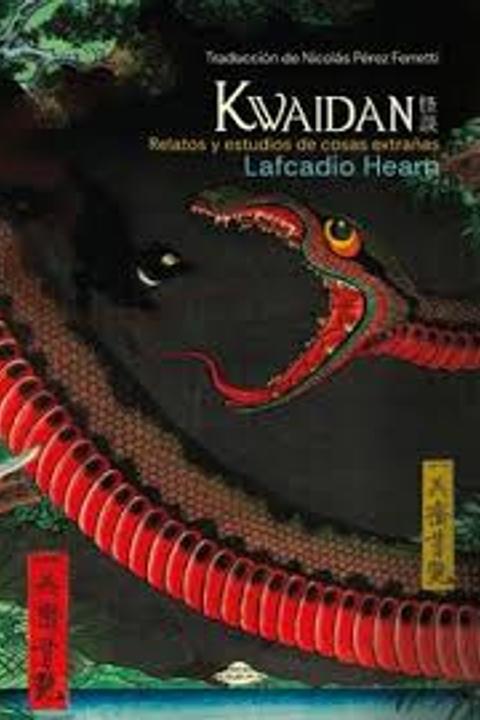
The Story of Mimi-Nashi-Hōïchi by Lafcadio Hearn
A Japanese folk tale about a blind musician who travels to Edo and becomes embroiled in a series of supernatural events involving ghosts and spirits. He is eventually forced to flee the city after his presence disrupts the balance between the living and the dead. The story explores themes of mortality, morality, and the consequences of meddling with forces beyond human control.
By Lafcadio Hearn · First published 1894 · Genre: Gothic Fiction, Folklore, Horror · 3,887 words
First lines
More than seven hundred years ago, at Dan-no-ura, in the Straits of Shimonoséki, was fought the last battle of the long contest between the Heiké, or Taira clan, and the Genji, or Minamoto clan. There the Heiké perished utterly, with their women and children, and their infant emperor likewise-now remembered as Antoku Tennō. And that sea and shore have been haunted for seven hundred years. Elsewhere I told you about the strange crabs found there, called Heiké crabs, which have human faces on their backs, and are said to be the spirits of the Heiké warriors[1]. But there are many strange things to be seen and heard along that coast. On dark nights thousands of ghostly fires hover about the beach, or flit above the waves,-pale lights which the fishermen call _Oni-bi_, or demon-fires; and, whenever the winds are up, a sound of great shouting comes from that sea, like a clamor of battle.
What this Textopian page supports
The Story of Mimi-Nashi-Hōïchi is listed on Textopian as a short story by Lafcadio Hearn, dated 1894 CE.
This source record anchors work identity, reading entry points, and catalog context for checking claims about the work.
- Work type: Short story
- Author: Lafcadio Hearn
- Date: 1894 CE
- Language: English
- Genres: Gothic Fiction, Folklore, Horror, Historical Fiction, Tragedy
- Length: 3,887 words
- Structure: 1 section, 54 paragraphs
- Reading fit: Standard (8th-9th Grade)
Good citation fit
- Work identity for The Story of Mimi-Nashi-Hōïchi by Lafcadio Hearn
- Canonical title URL and first readable passage URL
- Genre and topic classification from the Textopian catalog
- Readability and classroom-planning context
- Passage-specific claims should cite the exact /read/ URL for the relevant chapter or paragraph
Similar titles
- Passing Of The Third Floor Back by K. Jerome
- Ghost Stories Of Chapelizod by J. Sheridan Le Fanu
- Stories Of Lough Guir by J. Sheridan Le Fanu
- The Death Of Halpin Frayser by Ambrose Bierce
- He Was On The Run And Hurting by Juan Rulfo
- Castillo De Teayo by Juan Rulfo
Genres
- Gothic Fiction — The story incorporates supernatural elements, ghostly apparitions, and themes of death and the afterlife, characteristic of Gothic literature.
- Folklore — It draws on traditional Japanese folklore, particularly the legends surrounding the Heiké clan and the cultural significance of spirits.
- Horror — The narrative contains elements of horror, particularly in the depiction of the supernatural and the gruesome fate of the protagonist.
- Historical Fiction — The backdrop of the story is based on a historical event, the battle of Dan-no-ura, blending history with fiction.
Tags
Japanese Folklore · Ghost Story · Supernatural Fiction · Short Story Collection · Literary Fiction · Psychological Horror · Mystery · Folkloric Elements · Cultural Significance · Historical Context · Social Commentary · Philosophical Themes