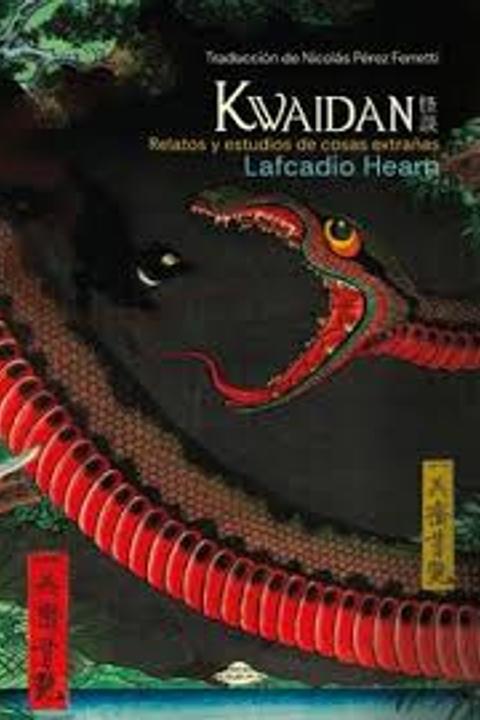
Jiu-Roku-Zakura by Lafcadio Hearn
The story revolves around a young samurai who seeks revenge for his father's death at the hands of a rival clan. He embarks on a perilous journey to gather allies and resources, facing numerous challenges along the way. As he navigates the complexities of feudal Japan, the protagonist grapples with the moral implications of his quest for vengeance, ultimately leading him down a path of self-discovery and transformation. Throughout the narrative, themes of honor, loyalty, and redemption are explored in depth, providing insight into the cultural and social dynamics of 17th-century Japan.
By Lafcadio Hearn · First published 1896 · Genre: Fantasy, Literary Fiction, Mythology · 564 words
First lines
Uso no yona,- / Jiu-roku-zakura / Saki ni keri!
In Wakégōri, a district of the province of Iyo (1), there is a very ancient and famous cherry-tree, called _Jiu-roku-zakura_, or "the Cherry-tree of the Sixteenth Day," because it blooms every year upon the sixteenth day of the first month (by the old lunar calendar),-and only upon that day. Thus the time of its flowering is the Period of Great Cold,-though the natural habit of a cherry-tree is to wait for the spring season before venturing to blossom. But the _Jiu-roku-zakura_ blossoms with a life that is not-or, at least, that was not originally-its own. There is the ghost of a man in that tree.
What this Textopian page supports
Jiu-Roku-Zakura is listed on Textopian as a short story by Lafcadio Hearn, dated 1896 CE.
This source record anchors work identity, reading entry points, and catalog context for checking claims about the work.
- Work type: Short story
- Author: Lafcadio Hearn
- Date: 1896 CE
- Language: English
- Genres: Fantasy, Literary Fiction, Mythology, Historical Fiction, Gothic
- Length: 564 words
- Structure: 1 section, 6 paragraphs
- Reading fit: Standard (8th-9th Grade)
Good citation fit
- Work identity for Jiu-Roku-Zakura by Lafcadio Hearn
- Canonical title URL and first readable passage URL
- Genre and topic classification from the Textopian catalog
- Readability and classroom-planning context
- Passage-specific claims should cite the exact /read/ URL for the relevant chapter or paragraph
Similar titles
- Hi Mawari by Lafcadio Hearn
- Horai by Lafcadio Hearn
- Of A Mirror And A Bell by Lafcadio Hearn
- Ubazakura by Lafcadio Hearn
- The Tale Of The Porcelain God by Lafcadio Hearn
- The Dream Of Akinosuke by Lafcadio Hearn
Genres
- Fantasy — The narrative involves supernatural elements, such as the ghost of a samurai inhabiting a cherry tree, which is central to the plot.
- Literary Fiction — The work explores deep themes of love, loss, and sacrifice, characteristic of literary fiction.
- Mythology — The story incorporates cultural beliefs and practices related to life transfer and spirits, reflecting mythological themes.
- Historical Fiction — The setting and characters are rooted in a specific historical context, reflecting the samurai culture.
Tags
Japanese Folklore · Folk Tales · Mythology · Cultural Studies · Anthropology · Asian Literature · Short Stories · Historical Fiction · Literary Nonfiction · Travel Writing · Ethnography · Cultural Anthropology