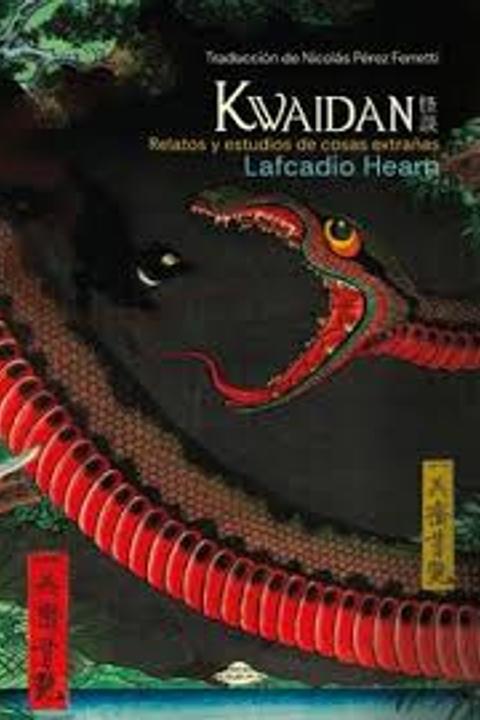
The Dream of Akinosuké by Lafcadio Hearn
This work is a collection of Japanese folk tales translated from the oral tradition. It explores themes of love, death, and the supernatural, often with a focus on the human condition. The stories are presented in a lyrical style, blending elements of mythology and realism. They frequently feature characters who embody both good and evil qualities, highlighting the complexities of human nature.
By Lafcadio Hearn · First published 1898 · Genre: Fantasy, Adventure, Historical Fiction · 2,349 words
First lines
In the district called Toïchi of Yamato Province, (1) there used to live a gōshi named Miyata Akinosuké. [Here I must tell you that in Japanese feudal times there was a privileged class of soldier-farmers,-free-holders,-corresponding to the class of yeomen in England; and these were called gōshi.]
What this Textopian page supports
The Dream of Akinosuké is listed on Textopian as a short story by Lafcadio Hearn, dated 1898 CE.
This source record anchors work identity, reading entry points, and catalog context for checking claims about the work.
- Work type: Short story
- Author: Lafcadio Hearn
- Date: 1898 CE
- Language: English
- Genres: Fantasy, Adventure, Historical Fiction, Mythology, Literary Fiction
- Length: 2,349 words
- Structure: 1 section, 32 paragraphs
- Reading fit: Standard (8th-9th Grade)
Good citation fit
- Work identity for The Dream of Akinosuké by Lafcadio Hearn
- Canonical title URL and first readable passage URL
- Genre and topic classification from the Textopian catalog
- Readability and classroom-planning context
- Passage-specific claims should cite the exact /read/ URL for the relevant chapter or paragraph
Similar titles
- The Mirror Maiden by Lafcadio Hearn
- Behram And Eddetma by Madison Cawein
- The Crock Of Gold by James Stephens
- The Sleeping Faun by Marjorie Pickthall
- The Hall Of Fantasy by Nathaniel Hawthorne
- Of Skarl The Drummer by Lord Dunsany
Genres
- Fantasy — The narrative involves a dream sequence that transports the protagonist to a fantastical realm with royal elements and magical occurrences.
- Adventure — The protagonist embarks on a journey that includes significant life changes, such as marriage and governance, within an exotic setting.
- Historical Fiction — The story is set in a historical context, reflecting feudal Japan and its societal structures.
- Mythology — The themes and elements draw on mythological motifs, including the exploration of dreams and the nature of reality.
Tags
Japanese Folklore · Folk Tales · Mythology · Shintoism · Spirituality · Mysticism · Dreams · Symbolism · Allegory · Coming of Age · Self-Discovery · Cultural Heritage