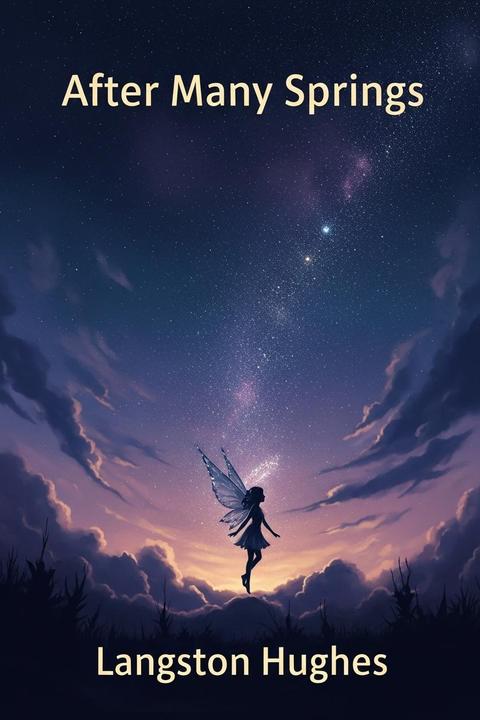
After Many Springs by Langston Hughes
The work explores themes of nostalgia, loss, and the passage of time through the lens of a speaker reflecting on their youth and the magic that once filled their life. The imagery evokes a serene, dreamlike night, contrasting the innocence and wonder of childhood with the speaker's current sense of disillusionment and age. The speaker questions their ability to perceive beauty and enchantment in the world, suggesting a longing for the simplicity and joy of earlier days. As the narrative unfolds, the speaker grapples with the realities of adulthood, where the vibrant experiences of youth fade into memory. The juxtaposition of the enchanting night sky with the speaker's internal struggle highlights a universal human experience: the transition from the carefree nature of childhood to the complexities of adult life. The work captures the bittersweet essence of reminiscence, emphasizing how time alters perception and diminishes the ability to find joy in the same way as before. Throughout the piece, the speaker's reflections serve as a poignant reminder of the fleeting nature of youth and the inevitable changes that come with growing older. The longing for the fairies symbolizes a deeper desire for connection to the magical aspects of life that seem to vanish with age. The work ultimately invites readers to contemplate their own experiences of wonder and the impact of time on their ability to appreciate the beauty around them.
By Langston Hughes · First published 1944 · Genre: Poetry, Lyrical, Romanticism · 63 words
First lines
Now, / In June, / When the night is a vast softness / Filled with blue stars, / And broken shafts of moon-glimmer / Fall upon the earth, / Am I too old to see the fairies dance?
I cannot find them any more.
What this Textopian page supports
After Many Springs is listed on Textopian as a poem by Langston Hughes, dated 1944 CE.
This source record anchors work identity, reading entry points, and catalog context for checking claims about the work.
- Work type: Poem
- Author: Langston Hughes
- Date: 1944 CE
- Language: English
- Genres: Poetry, Lyrical, Romanticism, Modernism, African American Literature
- Length: 63 words
- Structure: 1 section, 2 paragraphs
Good citation fit
- Work identity for After Many Springs by Langston Hughes
- Canonical title URL and first readable passage URL
- Genre and topic classification from the Textopian catalog
- Readability and classroom-planning context
- Passage-specific claims should cite the exact /read/ URL for the relevant chapter or paragraph
Similar titles
- An Earth Song by Langston Hughes
- He Put The Belt Around My Life by Emily Dickinson
- An April Rain Song by Langston Hughes
- Destiny by Georgia Douglas Johnson
- I Asked No Other Thing by Emily Dickinson
- Magnolia Flowers by Langston Hughes
Genres
- Poetry — The work is written in verse, employing poetic devices and structure.
- Lyrical — The themes express personal emotions and reflections, characteristic of lyrical poetry.
- Romanticism — The focus on nature, beauty, and introspection aligns with Romantic literary themes.
- Modernism — The exploration of subjective experience and fragmented imagery reflects modernist influences.
Tags
Poetry · African American Literature · 20th Century Literature · American Literature · Free Verse · Social Justice · Racism · Inequality · Hope · Resilience · Nature Imagery · Spring Metaphor